Two friends of mine have deer who visit their yard on a regular basis. The does happily tolerate my friends' presence in the yard, as they're picking up sticks or watering the flowers. If, however, my friends have guests, and a guest goes into the yard -- the deer bolt. I found that interesting, and wondered on what basis the deer judge some humans to be threats and some not. Do deer have extensive memories, I wondered? To find out, I ordered the only book I could find that seem to have a chapter on deer intelligence, Whitetail Savvy.
While I was waiting for it to come in, however, I read a book in my local library: Giant Whitetails. That shares stories of the author and his brother bow-hunting particularly sizable bucks, with a chapter following each tale on lessons learned. The bow-hunting aspect is an important part of this book, because it involves a lot more work and cunning on the hunter's part. This particular author is an obsessive watcher of the fields, studying the contours of the land and the evidence of animals using it to figure out what trails deer use when, so he can find a good spot to lay in wait. An interest in hunting deer is probably a given in reading this book.
Whitetail Savvy, on the other hand, is a comprehensive study of deer -- principally the whitetails that fill the forests throughout the United States, but with the occasional mention of western pronghorns and elk. The author is an award winning photographer and extremely seasoned student of deer, who has created quite the book here. After reviewing the various species of deer and their kin, Rue delivers information on deer anatomy and behavior, including the senses and emotions. Although I'm fairly inundated with the culture of deer hunting (most of my kin's houses are decorated with buck heads, and even I have a big photograph of a deer standing near a foggy stream in my living room), I've apparently absorbed next to no actual information about deer. The photographs certainly merit mention; deer are inherently graceful and beautiful animals, and Rue's photographs demonstrate that grace in many forms. His work also covers the. red in tooth in claw aspect of nature, however; with shots of cougars devouring deer, or of parasitical worms infesting the noses of deer. (You're...welcome to that sudden mental image.) Although the section on deer intelligence was disappointingly slim, consisting mostly of anecdotes (in contrast to the tables of data present in other chapters; this is a serious study), I was fascinated throughout, and especially by the chapters on behavior.
Pursuing the flourishing life and human liberty through literature.
"Once you learn to read, you will be forever free." - Frederick Douglass
Showing posts with label Nature. Show all posts
Thursday, May 2, 2019
Monday, March 11, 2019
A Forest in the Clouds
© 2018 John Fowler
336 pages
John Fowler’s A Forest in the Clouds is his account of studying gorillas alongside famous naturalist Dian Fossey. Although I picked it up for the gorillas (as one would), the memoir is overwhelmed by Fossey, who by Fowler’s account was an astonishingly eccentric and belligerent woman who viewed the science lab as a necessary evil to allow her to live on the mountain near the wildlife she loved. Fowler presents Fossey as a mercurial control freak who regarded any gathering of students as a potential mutiny and waged a private war against local poachers. Fowler contends that Fossey had little use for most people, especially the locals who she constantly verbally abused (employing both sounds imitating the gorillas and a polyglot mishmash of profanities to do so), and the amount of time readers spend in this unpleasant company does not make for an enjoyable book. The narrative is easy to read, but the poor gorillas are nearly relegated to the background; Fowler writes about what they’re doing often enough, but there’s little to learn about them here, besides the fact that their noses can be used like fingerprints, and they have no qualms about peeing all over a human they’re affectionately holding on to. I’ve never read anything else about Fossey, so I don’t know if Fowler’s memory is perfect or exaggerating Fosser any. I’ll say this, though: my attempt to find background info on the African setting let me to this stunning photo.
© 2018 John Fowler
336 pages
John Fowler’s A Forest in the Clouds is his account of studying gorillas alongside famous naturalist Dian Fossey. Although I picked it up for the gorillas (as one would), the memoir is overwhelmed by Fossey, who by Fowler’s account was an astonishingly eccentric and belligerent woman who viewed the science lab as a necessary evil to allow her to live on the mountain near the wildlife she loved. Fowler presents Fossey as a mercurial control freak who regarded any gathering of students as a potential mutiny and waged a private war against local poachers. Fowler contends that Fossey had little use for most people, especially the locals who she constantly verbally abused (employing both sounds imitating the gorillas and a polyglot mishmash of profanities to do so), and the amount of time readers spend in this unpleasant company does not make for an enjoyable book. The narrative is easy to read, but the poor gorillas are nearly relegated to the background; Fowler writes about what they’re doing often enough, but there’s little to learn about them here, besides the fact that their noses can be used like fingerprints, and they have no qualms about peeing all over a human they’re affectionately holding on to. I’ve never read anything else about Fossey, so I don’t know if Fowler’s memory is perfect or exaggerating Fosser any. I’ll say this, though: my attempt to find background info on the African setting let me to this stunning photo.
Monday, January 22, 2018
The Truth about Nature
The Truth About Nature: A Family's Guide to 144 Myths about the Great Outdoors
© 2014 Stacey Torno and Ken Keller
212 pages
Great news, kids. The tyranny of mom is over: no longer do you have to wait 45 minutes after eating to go swimming. Turns out you can wolf down a hot dog mid-stroke and nary a thing will happen, except for maybe a really soggy hot dog bun. Or...an attack by sea gulls. That misconception and 143 others are debunked in The Truth about Nature, which collects misinformation about the natural world passed down from one generation to another, alongside columns like "Strange but True", or facts that seem outrageous but which are really truth -- because that's just how nature rolls. I stumbled upon this book at the library and was immediately attracted by the cover. It's written for juvenile audiences, and is written not just to flush out old information but to sharpen scientific appraisal: the authors often charge the reader with evaluating just how they might find out that a particular information is bunk, prompting them to imagine different possibilities and how they might evaluate them The collected misconceptions themselves range from folk wisdom ("Moss grows on the north side of trees") to entries that I think were just fudged a bit and thrown in. There's a section on how clouds aren't actually white, as they can also be grey -- and sometimes, oak trees don't have acorns, because it's not the right season. Well...okay, but that doesn't strike me as a "myth" in the same way that "touching a toad will give you warts" does. At least one debunked fact -- that rabbits are rodents -- was a surprise to me. Turns out they're lagomorphs. Also, they don't eat carrots, but I kind of figured. They also don't sing opera, or foil the engineering schemes of malevolent coyotes.
While this is intended for younger audiences -- probably late elementary and early middle -- adult readers who are in the mood for some light reading will also find it enjoyable.
© 2014 Stacey Torno and Ken Keller
212 pages
Great news, kids. The tyranny of mom is over: no longer do you have to wait 45 minutes after eating to go swimming. Turns out you can wolf down a hot dog mid-stroke and nary a thing will happen, except for maybe a really soggy hot dog bun. Or...an attack by sea gulls. That misconception and 143 others are debunked in The Truth about Nature, which collects misinformation about the natural world passed down from one generation to another, alongside columns like "Strange but True", or facts that seem outrageous but which are really truth -- because that's just how nature rolls. I stumbled upon this book at the library and was immediately attracted by the cover. It's written for juvenile audiences, and is written not just to flush out old information but to sharpen scientific appraisal: the authors often charge the reader with evaluating just how they might find out that a particular information is bunk, prompting them to imagine different possibilities and how they might evaluate them The collected misconceptions themselves range from folk wisdom ("Moss grows on the north side of trees") to entries that I think were just fudged a bit and thrown in. There's a section on how clouds aren't actually white, as they can also be grey -- and sometimes, oak trees don't have acorns, because it's not the right season. Well...okay, but that doesn't strike me as a "myth" in the same way that "touching a toad will give you warts" does. At least one debunked fact -- that rabbits are rodents -- was a surprise to me. Turns out they're lagomorphs. Also, they don't eat carrots, but I kind of figured. They also don't sing opera, or foil the engineering schemes of malevolent coyotes.
While this is intended for younger audiences -- probably late elementary and early middle -- adult readers who are in the mood for some light reading will also find it enjoyable.
Sunday, January 15, 2017
In the Land of the Tiger
In the Land of the Tiger: A Natural History of the Indian Subcontinent
© 1997 Valmik Thapar
285 pages
Imagine a Planet Earth episode focused entirely on India, and then presented in book form. The result is In the Land of the Tiger, which takes readers on a guide through the lush natural landscape of the Indian subcontinent, starting from the mountains and following the rivers to the coast, from there visiting islands before examining other disparate areas of the land. This volume is replete both with photos and picturesque writing, displaying a soul-stirring variety of animals. Many I had no idea existed, like the Hoolock gibbon, India's only ape, and the pied hornbill. The expanse of human settlement has pushed many animals into new territories and created interesting adapational behavior: for instance, although lions typically hunt in prides, those who live in India's forested margins must become solo artists. There are also elephants who swim in the open sea between different island. (There is an extraordinary shot of an elephant swimming, taken from below. Talk about perilous photography!) Land of the Tiger makes more cultural references than Planet Earth or related series did, connecting animals to Hindu religion and folk medicines. I've been slowly guiding through this the past few days, savoring the photos and writing -- what a great start for the Discovery of Asia series!
When I finished this book I noticed that Land of the Tiger was actually a BBC nature series. I was more on the nose than I realized!
© 1997 Valmik Thapar
285 pages
Imagine a Planet Earth episode focused entirely on India, and then presented in book form. The result is In the Land of the Tiger, which takes readers on a guide through the lush natural landscape of the Indian subcontinent, starting from the mountains and following the rivers to the coast, from there visiting islands before examining other disparate areas of the land. This volume is replete both with photos and picturesque writing, displaying a soul-stirring variety of animals. Many I had no idea existed, like the Hoolock gibbon, India's only ape, and the pied hornbill. The expanse of human settlement has pushed many animals into new territories and created interesting adapational behavior: for instance, although lions typically hunt in prides, those who live in India's forested margins must become solo artists. There are also elephants who swim in the open sea between different island. (There is an extraordinary shot of an elephant swimming, taken from below. Talk about perilous photography!) Land of the Tiger makes more cultural references than Planet Earth or related series did, connecting animals to Hindu religion and folk medicines. I've been slowly guiding through this the past few days, savoring the photos and writing -- what a great start for the Discovery of Asia series!
When I finished this book I noticed that Land of the Tiger was actually a BBC nature series. I was more on the nose than I realized!
Labels:
2017 Discovery of Asia,
Asia,
India,
natural history,
Nature
Thursday, July 21, 2016
The Journey Home
The Journey Home: Some Words in Defense of the American West
© 1977 Edward Abbey
242 pages
The desert is no place for decent men, which is why Edward Abbey likes it so much. Born on the eastern seaboard, on a farm between the cities and the woods, young Abbey was seized by wanderlust and wandered westward. There he found mysterious monoliths, painted deserts, winding canyons penetrated only by the foolhardy, and interminable expanses of prickly plants and even pricklier critters. Prickly might well describe Abbey -- or irascible, or cantankerous, or resentful, even indolent. Most of those terms are self-applied here as Abbey describes first his journey to the American west, his finding a home in Arizona, and his disgust at realizing that Industrial Civilization was following close on his heels. They ruined the view with power lines, flooded canyons with dams, and filled the air with smoke -- and so he writes, not to defend pretty views but to defend the very idea of wildness. Man is wild, can't be broken completely -- and he needs undisturbed space to go crazy in every once in a while.
There are two reasons to read books by Edward Abbey; the first is for his descriptive writing, which wholly absorbed me when I first read Desert Solitaire years ago. The man is a grumpy poet writing prose; he describes the land like a lover, though he doesn't use so intimate a language as say, the author of Song of Solomon. Certainly he finds enough here to wax poetic about. Making cloudbanks marvelous in Desert Solitaire was child's play; here he even makes a poisonous tick sound intriguing. The early book is biographical, but once he arrives at the mountains, they take over, for there are small ranges all over the southwest. The second is for Abbey's personality, which is...colorful, to say the least, and a delight in small doses. Rough-hewn is Abbey; there's no machine-made box to slide him in. He is a passionate loather of big business and big government, but his contempt for the EPA lies in the fact that it isn't doing enough to curb the industrialization of the west, that it sides with the power plants and oilers over the small ranchers and rambling eccentrics. His passion borders on reckless. He writes that his motto regarding wilderness hikes is "be prepared", but that his practice is to go off half-cocked, daring Nature to do its worst. One story has him utterly destroying his fiance's brand new gift-from-daddy convertible to transverse a washed-out road. That particular relationship didn't survive the long hike back. In another account, he follows a mountain lion's tracks and encounters the fearsome creature, poetry and power in one awe-inspiring package.
What Abbey fears most is the triumph of deary mediocrity. He can appreciate the city, as he does in here in a piece on Hoboken and Manhattan. It's not a loving appreciation, but he does recognize that urban life has its consolations. But man is too wild a thing for the city, and the city itself can only be endured for long if there is some place to escape to. Abbey likens it to prisoners of Siberia, able to endure their brutal treatment by the sight of the beckoning expanse of forest; never mind that the forest has its own dangers, it is there -- unconquered, open, a warren of escape. Abbey shudders to see Tuscon and Phoenix marching toward one another, soon to form one long contiguous blob of parking lots and neon -- and not just because their unchecked growth is draining water reserves or concentrating filth, but because it makes escape ever more difficult. We crave adventure, Abbey writes, danger -- the wilderness offers it. Abbey If we live in constant security and predictability, we're effectively living the life of zoo animals. We climb mountains for the same reason we fill the air with soaring music and vibrant poetry: our souls are restless and craving. Craving what? Something to do, some meaning, some thrusting of ourselves into reality.
There is a lot to ponder in this slim little collection of essays and bar-room ramblings given life in paper. Certainly, as far as 'current' crises go, the book is dated. I am certain many battles have been lost since the decades since Abbey first discovered the soul-stilling expanse of the west. Given Abbey's gruffness here, I would refer new readers to Desert Solitaire...but once a friendlier introduction is made then by all means return here to experience more of that beautiful description, that delightful cussedness, that adventurous what-the-hell-carpe-diem view Abbey took to life, its appeal aided by his thoughtfulness.
© 1977 Edward Abbey
242 pages
The desert is no place for decent men, which is why Edward Abbey likes it so much. Born on the eastern seaboard, on a farm between the cities and the woods, young Abbey was seized by wanderlust and wandered westward. There he found mysterious monoliths, painted deserts, winding canyons penetrated only by the foolhardy, and interminable expanses of prickly plants and even pricklier critters. Prickly might well describe Abbey -- or irascible, or cantankerous, or resentful, even indolent. Most of those terms are self-applied here as Abbey describes first his journey to the American west, his finding a home in Arizona, and his disgust at realizing that Industrial Civilization was following close on his heels. They ruined the view with power lines, flooded canyons with dams, and filled the air with smoke -- and so he writes, not to defend pretty views but to defend the very idea of wildness. Man is wild, can't be broken completely -- and he needs undisturbed space to go crazy in every once in a while.
There are two reasons to read books by Edward Abbey; the first is for his descriptive writing, which wholly absorbed me when I first read Desert Solitaire years ago. The man is a grumpy poet writing prose; he describes the land like a lover, though he doesn't use so intimate a language as say, the author of Song of Solomon. Certainly he finds enough here to wax poetic about. Making cloudbanks marvelous in Desert Solitaire was child's play; here he even makes a poisonous tick sound intriguing. The early book is biographical, but once he arrives at the mountains, they take over, for there are small ranges all over the southwest. The second is for Abbey's personality, which is...colorful, to say the least, and a delight in small doses. Rough-hewn is Abbey; there's no machine-made box to slide him in. He is a passionate loather of big business and big government, but his contempt for the EPA lies in the fact that it isn't doing enough to curb the industrialization of the west, that it sides with the power plants and oilers over the small ranchers and rambling eccentrics. His passion borders on reckless. He writes that his motto regarding wilderness hikes is "be prepared", but that his practice is to go off half-cocked, daring Nature to do its worst. One story has him utterly destroying his fiance's brand new gift-from-daddy convertible to transverse a washed-out road. That particular relationship didn't survive the long hike back. In another account, he follows a mountain lion's tracks and encounters the fearsome creature, poetry and power in one awe-inspiring package.
What Abbey fears most is the triumph of deary mediocrity. He can appreciate the city, as he does in here in a piece on Hoboken and Manhattan. It's not a loving appreciation, but he does recognize that urban life has its consolations. But man is too wild a thing for the city, and the city itself can only be endured for long if there is some place to escape to. Abbey likens it to prisoners of Siberia, able to endure their brutal treatment by the sight of the beckoning expanse of forest; never mind that the forest has its own dangers, it is there -- unconquered, open, a warren of escape. Abbey shudders to see Tuscon and Phoenix marching toward one another, soon to form one long contiguous blob of parking lots and neon -- and not just because their unchecked growth is draining water reserves or concentrating filth, but because it makes escape ever more difficult. We crave adventure, Abbey writes, danger -- the wilderness offers it. Abbey If we live in constant security and predictability, we're effectively living the life of zoo animals. We climb mountains for the same reason we fill the air with soaring music and vibrant poetry: our souls are restless and craving. Craving what? Something to do, some meaning, some thrusting of ourselves into reality.
There is a lot to ponder in this slim little collection of essays and bar-room ramblings given life in paper. Certainly, as far as 'current' crises go, the book is dated. I am certain many battles have been lost since the decades since Abbey first discovered the soul-stilling expanse of the west. Given Abbey's gruffness here, I would refer new readers to Desert Solitaire...but once a friendlier introduction is made then by all means return here to experience more of that beautiful description, that delightful cussedness, that adventurous what-the-hell-carpe-diem view Abbey took to life, its appeal aided by his thoughtfulness.
Sunday, July 3, 2016
Death Comes for the Archbishop
© 1927 Willa Cather
297 pages
Poor New Mexico -- so far from God, so close to the United States. The Pope can't help the tide of American -- and very Protestant -- settlement that is sure to follow Polk's war against Mexico, but the church in the southwest can be strengthened. To that end he dispatches Jean-Marie Latour to Santa Fe, there to serve as bishop. Aided by his faithful friend, Joseph Vaillant, Latour tarries with the people of New Mexico for decades before being buried by a doting multitude. Cather combines beautiful descriptions of the landscape -- especially of the Sangre de Cristo mountains -- with lovely little stories about the bishop growing to know and love his new parishioners. Theirs is a world of danger, of ferocious storms, unforgiving heat, occasional Apache raids, and plenty of brigands. Worse yet, the Americans are coming, and as they continue gaining land at Mexico's expense, the bishop's province grows, stretching from the Rockies to Mexico. He complains, good-naturedly, that it is hard for a poor bishop on a mule to keep pace with the march of history, with thousands of square miles of responsibility placed under his care.
The bishop and his companion compel interest for their gentleness; while he has come to restore discipline in a land where the priests have taken to siring families instead of nurturing the family of the church, he does not rush in where angels fear to tread. He realizes he is in a wholly new environment, and sees in the Indians -- the Apache, the Hopi, the Pueblo, and other peoples who were never reached by Spanish missionaries or forgot them -- a civilization with wisdom and conviction as deep as his. He is awed by the ancientness of the land and the people upon it, When he is wronged, as he is by a schismatic priest who refuses to accept oversight, he is still quick to forgive. The sheer abundance of tenderness here, as generously proportioned as the western skies, make it a perfectly lovely read -- and all the more when Cather's brilliant descriptive writing is taken into account, creating an image of the Southwest with beauty that penetrates even the viewers' bones.
© 1927 Willa Cather
297 pages
Poor New Mexico -- so far from God, so close to the United States. The Pope can't help the tide of American -- and very Protestant -- settlement that is sure to follow Polk's war against Mexico, but the church in the southwest can be strengthened. To that end he dispatches Jean-Marie Latour to Santa Fe, there to serve as bishop. Aided by his faithful friend, Joseph Vaillant, Latour tarries with the people of New Mexico for decades before being buried by a doting multitude. Cather combines beautiful descriptions of the landscape -- especially of the Sangre de Cristo mountains -- with lovely little stories about the bishop growing to know and love his new parishioners. Theirs is a world of danger, of ferocious storms, unforgiving heat, occasional Apache raids, and plenty of brigands. Worse yet, the Americans are coming, and as they continue gaining land at Mexico's expense, the bishop's province grows, stretching from the Rockies to Mexico. He complains, good-naturedly, that it is hard for a poor bishop on a mule to keep pace with the march of history, with thousands of square miles of responsibility placed under his care.
The bishop and his companion compel interest for their gentleness; while he has come to restore discipline in a land where the priests have taken to siring families instead of nurturing the family of the church, he does not rush in where angels fear to tread. He realizes he is in a wholly new environment, and sees in the Indians -- the Apache, the Hopi, the Pueblo, and other peoples who were never reached by Spanish missionaries or forgot them -- a civilization with wisdom and conviction as deep as his. He is awed by the ancientness of the land and the people upon it, When he is wronged, as he is by a schismatic priest who refuses to accept oversight, he is still quick to forgive. The sheer abundance of tenderness here, as generously proportioned as the western skies, make it a perfectly lovely read -- and all the more when Cather's brilliant descriptive writing is taken into account, creating an image of the Southwest with beauty that penetrates even the viewers' bones.
Wednesday, June 29, 2016
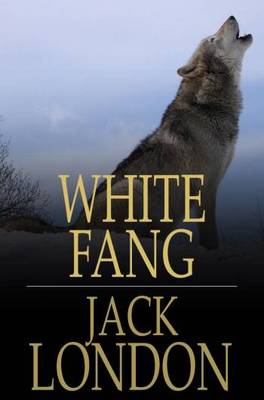
White Fang
White Fang
© 1906 Jack London
pp. 1- 101, Tales of the North.
White Fang revisits the theme of the Wild versus civilization from The Call of the Wild and reverses it. Whereas in Call a soft California dog was thrown into the Alaskan wilderness and forced to call upon his instincts to survive, finding joy running with wolves after his master is killed, in White Fang a dog/wolf hybrid is lured from the wild into the camps of man. First published in Outing Magazine, the story begins with two men being tracked by an eerie creature, a she-wolf who understands man. It is she who will give birth to a cub, and rear him in a wilderness of even-more dangerous predators like the Canadian lynx, and it is her own youth spent in an Indian camp that will first introduce the cub to man. Three-quarters wolf, there is virtually nothing of the dog in him, only a respect for Man's strength and a willingness to submit to it in exchange for shelter and food. Yet there is more to man's relationship with wolves and dogs than sheer animal dominance.
Here again London touches on Nietzsche's superman myth, and again rejects it; just as he did in The Sea Wolf and Martin Eden. White Fang is shaped by fear, hunger, and rejection to be a creature mighty in strength, desperately cunning, and comfortable only in solitude. He knows one law: kill or be killed, eat or be eaten, intimidate or cower. Every memory of tenderness, either from his cub days or his early adoption by an Yukon native, is erased after he falls into the captivity of dog-fighters. Yet he is not lost; just as Wolf Larsen was defeated by a man who combined wild strength with moral courage, so too is White Fang's savagery tamed by persistent and intelligently guided affection, care that teaches him other laws -- care that reignite the what little of the dog exists within him. Considering that The Call of the Wild was my first novel, and that every single thing I've read by Jack London has proven unforgettable, it's hard to believe White Fang has taken me this long to read. It combines adventure with a narrative that speculates on how a dog might, in coming of age, grow to understand the world. The writing is winsome as usual, dramatic and - occasionally, unexpectedly - with flashes of laughter. (London has given me a most excellent insult -- "If you don't mind me saying, you're seventeen kinds of damn fool, all of them different, and then some!")
Related:
The Sea-Wolf, Jack London.
© 1906 Jack London
pp. 1- 101, Tales of the North.
"An' right here I want to remark,' Bill went on, 'that that animal's familiarity with camp-fires is suspicious an' immoral.'
'It knows for certain more'n a self-respectin' wolf ought to know,' Henry agreed
White Fang revisits the theme of the Wild versus civilization from The Call of the Wild and reverses it. Whereas in Call a soft California dog was thrown into the Alaskan wilderness and forced to call upon his instincts to survive, finding joy running with wolves after his master is killed, in White Fang a dog/wolf hybrid is lured from the wild into the camps of man. First published in Outing Magazine, the story begins with two men being tracked by an eerie creature, a she-wolf who understands man. It is she who will give birth to a cub, and rear him in a wilderness of even-more dangerous predators like the Canadian lynx, and it is her own youth spent in an Indian camp that will first introduce the cub to man. Three-quarters wolf, there is virtually nothing of the dog in him, only a respect for Man's strength and a willingness to submit to it in exchange for shelter and food. Yet there is more to man's relationship with wolves and dogs than sheer animal dominance.
Here again London touches on Nietzsche's superman myth, and again rejects it; just as he did in The Sea Wolf and Martin Eden. White Fang is shaped by fear, hunger, and rejection to be a creature mighty in strength, desperately cunning, and comfortable only in solitude. He knows one law: kill or be killed, eat or be eaten, intimidate or cower. Every memory of tenderness, either from his cub days or his early adoption by an Yukon native, is erased after he falls into the captivity of dog-fighters. Yet he is not lost; just as Wolf Larsen was defeated by a man who combined wild strength with moral courage, so too is White Fang's savagery tamed by persistent and intelligently guided affection, care that teaches him other laws -- care that reignite the what little of the dog exists within him. Considering that The Call of the Wild was my first novel, and that every single thing I've read by Jack London has proven unforgettable, it's hard to believe White Fang has taken me this long to read. It combines adventure with a narrative that speculates on how a dog might, in coming of age, grow to understand the world. The writing is winsome as usual, dramatic and - occasionally, unexpectedly - with flashes of laughter. (London has given me a most excellent insult -- "If you don't mind me saying, you're seventeen kinds of damn fool, all of them different, and then some!")
Related:
The Sea-Wolf, Jack London.
Sunday, May 15, 2016
The Deep: Extraordinary Creatures of the Abyss
The Deep: the Extraordinary Creatures of the Abyss
253 pages
© 2007 Claire Nouvian
I've been enjoying a gallery book devoted to the extraordinary creatures of the deep sea these past two weeks. Edited by Claire Nouvian, The Deep collects some of the best photography produced by the study of the ocean floor in the last decade, along with pieces by marine biologists and geologists commenting on the submarine ecosystem. The sheer abundance of life on the surface of the Earth boggles the mind, but more than 90% of the planet's estimated biomass is within the oceans. The Deep is first and foremost a collection of photographs, presented in full-page or two-page spreads. They are a marvel; while some creatures have vaguely familiar shapes, resembling weird fish or weird octupi, the majority are...sights into themselves. Some are transparent, others string themselves with organic lights, putting bacteria to work. They exist in a world without light. While some only live in the deep seasonally, ascending to warmer and brighter waters when there's more food for the taking, others never leave the seafloor. Some feast on the remains of the upper level of the ocean, like the vast carcasses of whales; others life off of chemicals seeping from the sea floor or being expelled. New species are constantly being discovered here, and many do not even have names; they exist as images that astound the mind with their alienness. What a treasure Earth is!
253 pages
© 2007 Claire Nouvian
I've been enjoying a gallery book devoted to the extraordinary creatures of the deep sea these past two weeks. Edited by Claire Nouvian, The Deep collects some of the best photography produced by the study of the ocean floor in the last decade, along with pieces by marine biologists and geologists commenting on the submarine ecosystem. The sheer abundance of life on the surface of the Earth boggles the mind, but more than 90% of the planet's estimated biomass is within the oceans. The Deep is first and foremost a collection of photographs, presented in full-page or two-page spreads. They are a marvel; while some creatures have vaguely familiar shapes, resembling weird fish or weird octupi, the majority are...sights into themselves. Some are transparent, others string themselves with organic lights, putting bacteria to work. They exist in a world without light. While some only live in the deep seasonally, ascending to warmer and brighter waters when there's more food for the taking, others never leave the seafloor. Some feast on the remains of the upper level of the ocean, like the vast carcasses of whales; others life off of chemicals seeping from the sea floor or being expelled. New species are constantly being discovered here, and many do not even have names; they exist as images that astound the mind with their alienness. What a treasure Earth is!
Thursday, May 5, 2016
Diving Companions
Diving Companions: Sea Lion - Elephant Seal - Walrus
© 1974 Jacques-Yves Cousteau
304 pages
Before David Attenborough, there was Jacques-Yves Cousteau, who helped invent SCUBA gear and used it in expeditions across the globe to explore the unknown right here on Earth: the life of the oceans. The journeys of the Calypso and her exploring minisubmarine resulted in a series of books about whales, dolphins, and the like, but Diving Companion collects Cousteau's adventures with more far-flung creatures: sea lions, elephant seals, and walruses. The book combines a travel diary and nature commentary, throwing in a little Eskimo anthropology as a bonus. Unusually for the series, there''s also a chapter on the coastlines and islands of Alaska, which were studied enroute to the Artic. There, sea otters receive some lingering and affectionate attention.
The stars themselves are a related family, cow-like creatures which at some point took to the sea again. Most of them make their habitat in cold zones, protecting themselves with large sheaths of fat. Their diets vary from species to species; sea lions are quick enough to go for fish, while elephant seals are relegated to less-fleet-footed starfish. Although they are all wary of human contact, being hunted species, the crew of the Calypso found them approachable from a crawl. (The humans literally crawled on the beach and became one with the herd.) In an effort to see how they might adjust to living and working in humans, Cousteau's men attempted to capture test subjects and keep them on the boat, both in a cage and in a large pool. The elephant seals, the grumpiest and most intimidating of the three, thwarted every attempt at capture. Two sea lions were brought on board the Calypso and seemed to adjust to captivity, even keeping near the boat when unleashed, but they exhibited a marked sadness and were eventually freed. An orphaned walrus pup was also adopted, and because of its young age grew very much attached to the humans. Although much of the book is certainly dated now, like the balance established between the Eskimos and the walrus population which nourished them, as well as the increasingly-dangerous state of elephant sea concentration onto one island, these are creatures worth reading about -- especially the beautiful sea lions.
© 1974 Jacques-Yves Cousteau
304 pages
Before David Attenborough, there was Jacques-Yves Cousteau, who helped invent SCUBA gear and used it in expeditions across the globe to explore the unknown right here on Earth: the life of the oceans. The journeys of the Calypso and her exploring minisubmarine resulted in a series of books about whales, dolphins, and the like, but Diving Companion collects Cousteau's adventures with more far-flung creatures: sea lions, elephant seals, and walruses. The book combines a travel diary and nature commentary, throwing in a little Eskimo anthropology as a bonus. Unusually for the series, there''s also a chapter on the coastlines and islands of Alaska, which were studied enroute to the Artic. There, sea otters receive some lingering and affectionate attention.
The stars themselves are a related family, cow-like creatures which at some point took to the sea again. Most of them make their habitat in cold zones, protecting themselves with large sheaths of fat. Their diets vary from species to species; sea lions are quick enough to go for fish, while elephant seals are relegated to less-fleet-footed starfish. Although they are all wary of human contact, being hunted species, the crew of the Calypso found them approachable from a crawl. (The humans literally crawled on the beach and became one with the herd.) In an effort to see how they might adjust to living and working in humans, Cousteau's men attempted to capture test subjects and keep them on the boat, both in a cage and in a large pool. The elephant seals, the grumpiest and most intimidating of the three, thwarted every attempt at capture. Two sea lions were brought on board the Calypso and seemed to adjust to captivity, even keeping near the boat when unleashed, but they exhibited a marked sadness and were eventually freed. An orphaned walrus pup was also adopted, and because of its young age grew very much attached to the humans. Although much of the book is certainly dated now, like the balance established between the Eskimos and the walrus population which nourished them, as well as the increasingly-dangerous state of elephant sea concentration onto one island, these are creatures worth reading about -- especially the beautiful sea lions.
Labels:
Canada,
Jacques-Yves Cousteau,
Nature,
science,
sea stories
Saturday, March 28, 2015
The Adventures of Henry Thoreau
The Adventures of Henry Thoreau: A Young Man's Unlikely Path to Walden Pond
© 2014 Michael Sims
384 pages
Shortly before retreating for two years to his self-built cabin at Walden Pond, Henry David Thoreau accidentally started a forest fire. A simple attempt at having fish for lunch reduced 300 acres of woodlands to charcoal, and very nearly ignited Concord. The village pariah would eventually be pardoned, for the town had known him before his attempt at civic ignition; they knew his reputation as the nice if odd boy from a respectable family of teachers and pencil merchants. Before Henry David Thoreau loomed large over American literary history, eventually helping inspire the environmental and civil rights movements, Henry was that nice if odd boy. The Adventures of Henry Thoreau examines Henry's life outside of Walden, giving a history of his life as he lived it -- as a boy, as an awkward, courting teenager, as a adventure-thirsty young man who explored the whole lengths of rivers with his brother.
Michael Sims puts a human face to the man who has cast such a long shadow over American history. Here, Henry is no icon, but a frequently distracted student who barely gets into Harvard and who itches to escape it. Throughout his life, his abiding passion is the outdoors. Raised a Unitarian, Henry was already predisposed to look askance at traditional religion. For him, spirituality was an individual journey, and he communed with God best in the outdoors, skipping church to take long walks in the wilderness. He idealized Nature, and revered the native Americans as having lived more closely connected to it. But his lust for the natural wasn't limited to getting "moony-eyed over mountains"; his mind also had a scientific cast, and those long hours of meticulous study resulted in one work of technical import. These aren't solitary quests, either; young Henry is companionable. He takes long walks into the woods with remarkable friends, like Ralph Waldo Emerson and Nathaniel Hawthorne; spends weeks on a river with his brother, and even takes classes of children into the wild to teach them how to observe, investigate, and come to understand the world around them. As the books wear on, however, these connections fall away; he leaves his work as a teacher, his brother dies, and his object of affection rejects him on the advice of her father that Henry's prospects are too dismal to make him a fit husband. Throughout, he escapes increasingly more into solitude, and though he dies at home, with family watching over him, he seems a lonely figure sometimes substituting philosophy for people. He sought an authentic life free of distractions, and produced extraordinary work as a thinker -- but in light of the ordinary happiness of his early years, one wonders if the later monkishness was truly necessary.
Related:
I to Myself: from the Journal of Henry David Thoreau, Henry David Thoreau
Walden, Henry David Thoreau
"On Civil Disobedience", Henry David Thoreau
* "moony-eyed over mountains", as a skeptical professor of mine once described those who identify as spiritual, but not religious
© 2014 Michael Sims
384 pages
Shortly before retreating for two years to his self-built cabin at Walden Pond, Henry David Thoreau accidentally started a forest fire. A simple attempt at having fish for lunch reduced 300 acres of woodlands to charcoal, and very nearly ignited Concord. The village pariah would eventually be pardoned, for the town had known him before his attempt at civic ignition; they knew his reputation as the nice if odd boy from a respectable family of teachers and pencil merchants. Before Henry David Thoreau loomed large over American literary history, eventually helping inspire the environmental and civil rights movements, Henry was that nice if odd boy. The Adventures of Henry Thoreau examines Henry's life outside of Walden, giving a history of his life as he lived it -- as a boy, as an awkward, courting teenager, as a adventure-thirsty young man who explored the whole lengths of rivers with his brother.
Michael Sims puts a human face to the man who has cast such a long shadow over American history. Here, Henry is no icon, but a frequently distracted student who barely gets into Harvard and who itches to escape it. Throughout his life, his abiding passion is the outdoors. Raised a Unitarian, Henry was already predisposed to look askance at traditional religion. For him, spirituality was an individual journey, and he communed with God best in the outdoors, skipping church to take long walks in the wilderness. He idealized Nature, and revered the native Americans as having lived more closely connected to it. But his lust for the natural wasn't limited to getting "moony-eyed over mountains"; his mind also had a scientific cast, and those long hours of meticulous study resulted in one work of technical import. These aren't solitary quests, either; young Henry is companionable. He takes long walks into the woods with remarkable friends, like Ralph Waldo Emerson and Nathaniel Hawthorne; spends weeks on a river with his brother, and even takes classes of children into the wild to teach them how to observe, investigate, and come to understand the world around them. As the books wear on, however, these connections fall away; he leaves his work as a teacher, his brother dies, and his object of affection rejects him on the advice of her father that Henry's prospects are too dismal to make him a fit husband. Throughout, he escapes increasingly more into solitude, and though he dies at home, with family watching over him, he seems a lonely figure sometimes substituting philosophy for people. He sought an authentic life free of distractions, and produced extraordinary work as a thinker -- but in light of the ordinary happiness of his early years, one wonders if the later monkishness was truly necessary.
Related:
I to Myself: from the Journal of Henry David Thoreau, Henry David Thoreau
Walden, Henry David Thoreau
"On Civil Disobedience", Henry David Thoreau
* "moony-eyed over mountains", as a skeptical professor of mine once described those who identify as spiritual, but not religious
Wednesday, May 21, 2014
Ninety Percent of Everything
Ninety Percent of Everything: Inside Shipping, the Invisible Industry That Puts Clothes on Your Back, Gas in Your Car, and Food on Your Plate.
© 2013 Rose George
287 pages
What is 1300 feet long, travels the distance to the Moon nearly annually, and is nigh-invisible? The answer is any container ship, fleets of which convey the overwhelming majority of all goods traded between cities and continents, but which most people never think about. This may be so because so few people work in modern sea-shipping, or because in the age of terrorism ports are severed from the cities they serve, blocked away by miles of walls and checkpoints. In Ninety Percent of Everything, journalist Helen George spends several months aboard a ship owned by Maersk, a Danish commercial giant, meeting the men and women who keep the fleets float in an effort to understand their experience and the importance of the shipping enterprise in the 21st century.
Like the containers the ships are filled with, Ninety Percent is a glorious grab-bag of topics; a little history, a little science, a little travel, a little military action on the high seas. The Maersk Kendal, George's home for most of the trip, is lead by Captain Glenn, a man who lived through the revolution in shipping that followed "the Box", or the advent of containerization. Once a young seaman on a tramp steamer that moved from port to port, picking up small articles, he witnessed the death of old harbors that were closed to make room for the far larger equipment needed to handle the containers. He is a romantic figure who can navigate the seven seas on a sextant alone, even if the march of time has forced him to spend his days a wheelhouse that resembles a computer lab. Steaming from city to city, through monsoons and canals, ships like his can arrive in a harbor and completely turn over hundreds or thousands of containers in less than 24 hours before departing into the night.
The seamen's experience remains as it has for thousands of years -- lonely, dangerous, and often boring. The views from the ship are of nothing but a long expanse of boxes piled another, and the work is similarly dull for most, constantly cleaning and painting the ship, or tending the house-sized engine. Most sailors come from developing countries the world over, and especially from the Philippines since their ability to speak English is prized. Dismal and unnoted as the work is, like most jobs it's better than starving. As the captain of the Kendal laments, even today when the fast container ships have reduced the globe from the world to a village, their crews are treated like the 'mere scum of the earth'. Ms. George also includes a segment spent on a military vessel hunting Somalian pirates (taking a decidedly unromantic attitude towards the sea-going thugs who are the object of so much fascination by the western press), and visits a portside organization that does its best to ameliorate the condition of the sailors, offering them counseling and sending them goods from home. Although the book concerns modern shipping, George keeps it grounded in history as she can, retelling the story of World War 2's merchant marine sailors who endured the same danger for the same purpose as the Navy, but with little honor or compensation rendered. One positive aspect of the sailors' experience is their time spent in the company of the sea's abundance of life, especially dolphins
Ninety Percent of Everything succeeds in going aboard the massive machine that is a container ship and giving its lifeless expanse of hull and rows of containers a human face; for all the automation, the sealanes still remain the province of sailors who have brain enough to engineer solutions against fickle winds and waves. While George doesn't spend a great deal of time about the mechanics of shipping (nor should she, seeing how that territory was well done in The Box), her account of the human side makes for fantastic reading. Her Yorkshire ancestors would surely be pleased.
© 2013 Rose George
287 pages
UK Title: Deep Sea and Foreign Going: Inside Shipping [...]
What is 1300 feet long, travels the distance to the Moon nearly annually, and is nigh-invisible? The answer is any container ship, fleets of which convey the overwhelming majority of all goods traded between cities and continents, but which most people never think about. This may be so because so few people work in modern sea-shipping, or because in the age of terrorism ports are severed from the cities they serve, blocked away by miles of walls and checkpoints. In Ninety Percent of Everything, journalist Helen George spends several months aboard a ship owned by Maersk, a Danish commercial giant, meeting the men and women who keep the fleets float in an effort to understand their experience and the importance of the shipping enterprise in the 21st century.
Like the containers the ships are filled with, Ninety Percent is a glorious grab-bag of topics; a little history, a little science, a little travel, a little military action on the high seas. The Maersk Kendal, George's home for most of the trip, is lead by Captain Glenn, a man who lived through the revolution in shipping that followed "the Box", or the advent of containerization. Once a young seaman on a tramp steamer that moved from port to port, picking up small articles, he witnessed the death of old harbors that were closed to make room for the far larger equipment needed to handle the containers. He is a romantic figure who can navigate the seven seas on a sextant alone, even if the march of time has forced him to spend his days a wheelhouse that resembles a computer lab. Steaming from city to city, through monsoons and canals, ships like his can arrive in a harbor and completely turn over hundreds or thousands of containers in less than 24 hours before departing into the night.
The seamen's experience remains as it has for thousands of years -- lonely, dangerous, and often boring. The views from the ship are of nothing but a long expanse of boxes piled another, and the work is similarly dull for most, constantly cleaning and painting the ship, or tending the house-sized engine. Most sailors come from developing countries the world over, and especially from the Philippines since their ability to speak English is prized. Dismal and unnoted as the work is, like most jobs it's better than starving. As the captain of the Kendal laments, even today when the fast container ships have reduced the globe from the world to a village, their crews are treated like the 'mere scum of the earth'. Ms. George also includes a segment spent on a military vessel hunting Somalian pirates (taking a decidedly unromantic attitude towards the sea-going thugs who are the object of so much fascination by the western press), and visits a portside organization that does its best to ameliorate the condition of the sailors, offering them counseling and sending them goods from home. Although the book concerns modern shipping, George keeps it grounded in history as she can, retelling the story of World War 2's merchant marine sailors who endured the same danger for the same purpose as the Navy, but with little honor or compensation rendered. One positive aspect of the sailors' experience is their time spent in the company of the sea's abundance of life, especially dolphins
Ninety Percent of Everything succeeds in going aboard the massive machine that is a container ship and giving its lifeless expanse of hull and rows of containers a human face; for all the automation, the sealanes still remain the province of sailors who have brain enough to engineer solutions against fickle winds and waves. While George doesn't spend a great deal of time about the mechanics of shipping (nor should she, seeing how that territory was well done in The Box), her account of the human side makes for fantastic reading. Her Yorkshire ancestors would surely be pleased.
Labels:
commerce,
goods/services,
journalism,
military,
Nature,
Rose George,
sea stories,
shipping,
transportation,
travel
Monday, February 3, 2014
When Elephants Weep
When Elephants Weep: the Emotional Lives of Animals
© 1995 Jeffrey Masson and Susan McCarthy
291 pages
Related:
Any work by Frans de Waal or Jane Goodall
Silent Thunder: Among the Elephants
© 1995 Jeffrey Masson and Susan McCarthy
291 pages
Humans pride themselves on not being animals,
going so far as to describe any behavior we’re shamed of as
‘animal’. Beasts have rude instincts; we
have exalted Emotions, gifts of the
gods. We may begrudgingly grant animals
fear, or perhaps even affection – but love? Joy? Aesthetic reverence? In When
Elephants Weep, authors Masson and McCarthy explores the spectrum of animal
emotions, from recording the patently obvious to flirting with anthropomorphism. In their view, animals across the kingdom can share the same basis emotions, and
offered as evidence are hundreds of anecdotal claims of animals expressing
behavior interpreted as emotional. Most of the subjects are mammals, but birds
pepper the text and even insects make a stray appearance. Although anecdotes are dismissed as evidence among purists of
the scientific method, many of the
primate examples are corroborated in Jane Goodall and Frans de Waal’s work, and
considering their frequency and similarity – and the fact that these two scientists made
observations on different populations of chimpanzees -- many of the examples are respectable enough.
The author does reach sometimes, but the
agenda here isn’t so much as to present an body of evidence convincing skeptics
that animals have emotions as it is to
create room for suspecting they do; in the book's conclusion, the author argues that considering the diversity of emotions animals seem to display, we should treat them with more consideration; if they are capable of loneliness, despair, grief, and the like, perhaps keeping them in captivity or experimenting on them at length is more than problematic. The variety of examples is commendable; there are primates, cetaceans, elephants, lions, tigers, and yes even bears. Emotions are easier to believe among the higher mammals, and some -- anger, happiness, sadness -- more likely than more esoteric feelings, like awe at a sunset. The authors use any account that brings to mind human emotions, but
When Elephants Weep is enjoyable more as a reflection on animal behavior and than a sterling scientific enterprise, but enjoyable all the same.
Related:
Any work by Frans de Waal or Jane Goodall
Silent Thunder: Among the Elephants
Wednesday, December 4, 2013
Down the River
Down the River
© 1982 Edward Abbey
In Desert Solitaire, Edward Abbey collected contemplative pieces he had written while a park ranger in the high desert, putting his passion for the wilderness into action by working to conserve it. The volume mixed poetic descriptions of the wild beauty of the desert with reflection on the value of wilderness; not as an avenue of resources yet-to-be-exploited, but as a place for reflection and the realization of an authentic life. Down the River follows the same course, though the pieces here are connected not to a season living as a park ranger, but to various adventures Abbey embarked upon while exploring the rivers of the American Southwest. Abbey simultaneously recounts his journeys with friends with the thinking the landscape inspired, and since often he made a journey to find something out, those thoughts are not as random as might be supposed. In one essay Abbey explores an area that will soon be off limits to him, for it will be shut to the public to protect an incoming missile installation. Here his descriptions of what is seen combine with condemnation of the military-industrial complex and thoughts on Cold War geopolitics in general. This at least has a happy ending, for Abbey’s kindred spirits in the region were able to rouse enough local protest to prompt President Reagan to put off building the complex. This is certainly a happier piece than the similar essay in Desert Solitaire which saw him exploring Glen Canyon River shortly before it was dammed up. There are a few odds and ends, like his faux-review of Zen and the Art of Motorcycle Maintenance from the perspective of a Hells Angel who critiqued the book on its mechanical advice. This is presented in all seriousness.
Although not quite on the level of Desert Solitaire, Down the River is worth reading purely for its opening essay, “Down the River with Henry David Thoreau”. Abbey is a modern Thoreau, in that their works see them retreating into Nature in search of a more authentic life; they find solace and fullness in the wilderness, and distantly removed from ‘civilization’ they can reflect both on its merits and flaws more objectively. The principle difference is that while Thoreau is a gentle Puritan from the forest; Abbey a cantankerous free spirit in the desert. Thoreau ruminates, Abbey complains, but while Thoreau is a lonely sage of the wilderness, Abbey is almost never alone and always in the middle of a good time. Whether he's touring with cowboys in Desert Solitaire or swapping jibes with boatmen here in Down the River, Abbey is plainly enjoying the wilderness. Regardless of the sheer animal pleasure Abbey takes in the wild, he is thoughtful, as well. Thoreau appears through the volume, for in Abbey’s words his is a spirit which has only grown larger through the ages as we continue to replace the wild with lifelessness. In addition to again defending the virtues of the wilderness -- both for its own sake, in its beauty, and for the practical importance the wild has as a place of refuge or comparison for the civilized man -- Abbey continues his grousing against the 20th century's fondness for size and complexity, in abandoning small, resilience farms run by homesteaders for massive agribusinesses run by men in suits whose every solution is even more energy- and system-dependent.
Again I owe a debt of gratitude to the commenter who suggested I might like Abbey a few years ago.
Related:
Desert Solitaire, Edward Abbey
Walden, I to Myself, Henry David Thoreau
The Unsettling of America, Wendell Berry, which he references
Small is Beautiful, E.F. Schumacher
© 1982 Edward Abbey
In Desert Solitaire, Edward Abbey collected contemplative pieces he had written while a park ranger in the high desert, putting his passion for the wilderness into action by working to conserve it. The volume mixed poetic descriptions of the wild beauty of the desert with reflection on the value of wilderness; not as an avenue of resources yet-to-be-exploited, but as a place for reflection and the realization of an authentic life. Down the River follows the same course, though the pieces here are connected not to a season living as a park ranger, but to various adventures Abbey embarked upon while exploring the rivers of the American Southwest. Abbey simultaneously recounts his journeys with friends with the thinking the landscape inspired, and since often he made a journey to find something out, those thoughts are not as random as might be supposed. In one essay Abbey explores an area that will soon be off limits to him, for it will be shut to the public to protect an incoming missile installation. Here his descriptions of what is seen combine with condemnation of the military-industrial complex and thoughts on Cold War geopolitics in general. This at least has a happy ending, for Abbey’s kindred spirits in the region were able to rouse enough local protest to prompt President Reagan to put off building the complex. This is certainly a happier piece than the similar essay in Desert Solitaire which saw him exploring Glen Canyon River shortly before it was dammed up. There are a few odds and ends, like his faux-review of Zen and the Art of Motorcycle Maintenance from the perspective of a Hells Angel who critiqued the book on its mechanical advice. This is presented in all seriousness.
Although not quite on the level of Desert Solitaire, Down the River is worth reading purely for its opening essay, “Down the River with Henry David Thoreau”. Abbey is a modern Thoreau, in that their works see them retreating into Nature in search of a more authentic life; they find solace and fullness in the wilderness, and distantly removed from ‘civilization’ they can reflect both on its merits and flaws more objectively. The principle difference is that while Thoreau is a gentle Puritan from the forest; Abbey a cantankerous free spirit in the desert. Thoreau ruminates, Abbey complains, but while Thoreau is a lonely sage of the wilderness, Abbey is almost never alone and always in the middle of a good time. Whether he's touring with cowboys in Desert Solitaire or swapping jibes with boatmen here in Down the River, Abbey is plainly enjoying the wilderness. Regardless of the sheer animal pleasure Abbey takes in the wild, he is thoughtful, as well. Thoreau appears through the volume, for in Abbey’s words his is a spirit which has only grown larger through the ages as we continue to replace the wild with lifelessness. In addition to again defending the virtues of the wilderness -- both for its own sake, in its beauty, and for the practical importance the wild has as a place of refuge or comparison for the civilized man -- Abbey continues his grousing against the 20th century's fondness for size and complexity, in abandoning small, resilience farms run by homesteaders for massive agribusinesses run by men in suits whose every solution is even more energy- and system-dependent.
Again I owe a debt of gratitude to the commenter who suggested I might like Abbey a few years ago.
Related:
Desert Solitaire, Edward Abbey
Walden, I to Myself, Henry David Thoreau
The Unsettling of America, Wendell Berry, which he references
Small is Beautiful, E.F. Schumacher
Labels:
American West,
Edward Abbey,
essays,
Nature,
rivers,
social criticism,
Society and Culture
Thursday, November 14, 2013
Into Thin Air
Into Thin Air: A Personal Account of the Mt. Everest Disaster
291 pages
© 1997 Jon Krakauer
When Outside magazine dispatched Jon Krakauer to join an expedition to climb Mount Everest in 1996 to investigate its commercialization, the opportunity allowed him to fulfill a lifelong dream of climbing to its top -- but in May 1996, that dream turned quickly into a nightmare, as Krakauer was intimate witness to one of Everest's greatest climbing disasters. Into thin Air is his record of the experience, written less to fulfill Outside's hopes for an examination of profiteering and more as a way of coming to terms with the loss of so many people he'd spent nearly four weeks with. It is at first exciting, then harrowing; an inspiring, longer climb up to the heights of human endeavor that crashes quickly, sliding down a boulder-filled crevasse into the abyss.
Mount Everest stands as the highest above-ground mountain in the world, being part of the Himalayan mountain range that forms the border of Tibet and Nepal. The difficulty in ascending it lies not merely with the frequent winds, biting cold, or the fact that parts of the approach are icy, narrow, or so steep that they require technical skills with ropes to surmount. Nor is the difficulty limited to Everest's status as a natural gauntlet resembling an old-school video game, in which climbers must dodge falling rocks and ice missles from above while simutaneously hoping the ground underneath them doesn't give way. The greatest obstacle to human ascent is the fact that much of the peak towers so high that oxygen levels are but a third of what they are at sea level. Even ordinary respiatory requirements would find that amount insufficient, and a person dropped onto the peak by magic or a transporter would find himself unconscious in minutes. But climbing nearly 30,000 feet -- the cruising altitude of a transcontinental jet, like the Airbus Krakauer took to Nepal -- requires considerably more. Even when relying on canisters of bottled oxygen, those who near the peak are operating on mental and physical vapors; their bodies find the effort of digestion so hard at that height that they prefer to consume muscle tissue for fuel. Physically exhausted and mentally handicapped at the peak, the difficulty in scaling Everest is returning to the ground safely. This proves tragically true with Krakauer's expedition.
In spite of the difficulty, Mount Everest is enormously popular both among serious mountaineers as well as rich would-be outdoorsmen who are anxious to prove their manliness by subduing the world's greatest physical challenges. When Krakauer joined a commercial expedition -- Adventure Consulants, run by an enthusiastic mountaineer named Rob Hall -- he was among nearly fifty people intending to climb up at once. That number included not only another commercial group, Mountain Madness, but various teams from Taiwan and South Africa, and a few enterprising individuals like a young Swede who bicycled from Europe to Nepal before hoofing it up the mountain. The price for trying is enormous; even before equipment and plane fare are factored in, Nepal requires licenses to climb that start at $10,000 a head -- or $25,000 for individuals working alone. Commercial guides like Hall and his nascent rival Scott Fischer (of Mountain Madness) charge even more, up to $65,000 in Hall's case. That cost overs not only the guides' expertise, but their prepatory work; not only had Hall made the summit seven times prior, but he employed a crew of local Sherpas to establish ropes and create caches of supplies for his clients. For all their experience and preparation, however, humans high upon the peak of Everest are very subject to the wrath of Nature.
Though Jon Krakauer -- an experienced mountaineer -- was the first of his group to make the summit, and returned safely to one of their staging camps before nightfall, few of his team were as lucky. A fantastic storm hit the mountain as dozens of individuals were in the middle of climbing or descending, and it would be their undoing. Fierce winds not only destroyed physical guides, like the ropes, and flattened tents, but they prevented climbers from making progress at all; on narrow ledges and icy paths, any movement in the wrong direction could lead to death -- and it did. They had to stay where they were, and every moment brough them closer to disaster, because once they exhausted their oxygen bottles, they would quickly become weak and delerious, if not not fatally hill; high altitude and low pressure are lethal to a human body unadapted for either. As their brains were deteriorating, their bodies were increasingly numbed by the cold. Even those who had found a secure place to rest were not exempt from dangers of low oxygen or prolonged exposure. Once the storm hit on May 10, a disaster was born and people began to die at rates unseen outside of a slasher film. Some were taken by the cold, others thrown into darkness by the wind. Those involved in the commercial expeditions were the most badly ravaged, in part because of their location and in part because they lost their leadership -- and once the guides were gone, a team of mountain-climbing novices were no match for the fury of of an awakened mount. In a final chapter, Krakaurer -- whose authorial voice loses its edge as the disaster waxes, becoming increasingly desperate -- tries to explain what happened. Why was the 1996 expedition so lethal? He puts forth a few guesses; the sheer number of people on the slopes, practically inviting catastophe, and the fact that their guide had never encountered a storm before. His prior ascents had all been blessed with clear skies, so reliably perfect for climbing that Hall regarded May 10 as an auspicious day for himself: all of his summits were achieved on that day.
Into thin Air is a gripping look into what it takes -- and what it can cost -- to climb Mount Everest, though it leaves one wondering why on Earth anyone would do it after Sir Edmund Hillary. There is no reward for the hours of agony; the vista is barren and lifeless. Even Krakauer, who had dreamed of Everest, recorded that at the peak, he was too exhausted to care about his success.
291 pages
© 1997 Jon Krakauer
When Outside magazine dispatched Jon Krakauer to join an expedition to climb Mount Everest in 1996 to investigate its commercialization, the opportunity allowed him to fulfill a lifelong dream of climbing to its top -- but in May 1996, that dream turned quickly into a nightmare, as Krakauer was intimate witness to one of Everest's greatest climbing disasters. Into thin Air is his record of the experience, written less to fulfill Outside's hopes for an examination of profiteering and more as a way of coming to terms with the loss of so many people he'd spent nearly four weeks with. It is at first exciting, then harrowing; an inspiring, longer climb up to the heights of human endeavor that crashes quickly, sliding down a boulder-filled crevasse into the abyss.
Mount Everest stands as the highest above-ground mountain in the world, being part of the Himalayan mountain range that forms the border of Tibet and Nepal. The difficulty in ascending it lies not merely with the frequent winds, biting cold, or the fact that parts of the approach are icy, narrow, or so steep that they require technical skills with ropes to surmount. Nor is the difficulty limited to Everest's status as a natural gauntlet resembling an old-school video game, in which climbers must dodge falling rocks and ice missles from above while simutaneously hoping the ground underneath them doesn't give way. The greatest obstacle to human ascent is the fact that much of the peak towers so high that oxygen levels are but a third of what they are at sea level. Even ordinary respiatory requirements would find that amount insufficient, and a person dropped onto the peak by magic or a transporter would find himself unconscious in minutes. But climbing nearly 30,000 feet -- the cruising altitude of a transcontinental jet, like the Airbus Krakauer took to Nepal -- requires considerably more. Even when relying on canisters of bottled oxygen, those who near the peak are operating on mental and physical vapors; their bodies find the effort of digestion so hard at that height that they prefer to consume muscle tissue for fuel. Physically exhausted and mentally handicapped at the peak, the difficulty in scaling Everest is returning to the ground safely. This proves tragically true with Krakauer's expedition.
In spite of the difficulty, Mount Everest is enormously popular both among serious mountaineers as well as rich would-be outdoorsmen who are anxious to prove their manliness by subduing the world's greatest physical challenges. When Krakauer joined a commercial expedition -- Adventure Consulants, run by an enthusiastic mountaineer named Rob Hall -- he was among nearly fifty people intending to climb up at once. That number included not only another commercial group, Mountain Madness, but various teams from Taiwan and South Africa, and a few enterprising individuals like a young Swede who bicycled from Europe to Nepal before hoofing it up the mountain. The price for trying is enormous; even before equipment and plane fare are factored in, Nepal requires licenses to climb that start at $10,000 a head -- or $25,000 for individuals working alone. Commercial guides like Hall and his nascent rival Scott Fischer (of Mountain Madness) charge even more, up to $65,000 in Hall's case. That cost overs not only the guides' expertise, but their prepatory work; not only had Hall made the summit seven times prior, but he employed a crew of local Sherpas to establish ropes and create caches of supplies for his clients. For all their experience and preparation, however, humans high upon the peak of Everest are very subject to the wrath of Nature.
Though Jon Krakauer -- an experienced mountaineer -- was the first of his group to make the summit, and returned safely to one of their staging camps before nightfall, few of his team were as lucky. A fantastic storm hit the mountain as dozens of individuals were in the middle of climbing or descending, and it would be their undoing. Fierce winds not only destroyed physical guides, like the ropes, and flattened tents, but they prevented climbers from making progress at all; on narrow ledges and icy paths, any movement in the wrong direction could lead to death -- and it did. They had to stay where they were, and every moment brough them closer to disaster, because once they exhausted their oxygen bottles, they would quickly become weak and delerious, if not not fatally hill; high altitude and low pressure are lethal to a human body unadapted for either. As their brains were deteriorating, their bodies were increasingly numbed by the cold. Even those who had found a secure place to rest were not exempt from dangers of low oxygen or prolonged exposure. Once the storm hit on May 10, a disaster was born and people began to die at rates unseen outside of a slasher film. Some were taken by the cold, others thrown into darkness by the wind. Those involved in the commercial expeditions were the most badly ravaged, in part because of their location and in part because they lost their leadership -- and once the guides were gone, a team of mountain-climbing novices were no match for the fury of of an awakened mount. In a final chapter, Krakaurer -- whose authorial voice loses its edge as the disaster waxes, becoming increasingly desperate -- tries to explain what happened. Why was the 1996 expedition so lethal? He puts forth a few guesses; the sheer number of people on the slopes, practically inviting catastophe, and the fact that their guide had never encountered a storm before. His prior ascents had all been blessed with clear skies, so reliably perfect for climbing that Hall regarded May 10 as an auspicious day for himself: all of his summits were achieved on that day.
Into thin Air is a gripping look into what it takes -- and what it can cost -- to climb Mount Everest, though it leaves one wondering why on Earth anyone would do it after Sir Edmund Hillary. There is no reward for the hours of agony; the vista is barren and lifeless. Even Krakauer, who had dreamed of Everest, recorded that at the peak, he was too exhausted to care about his success.
Sunday, August 18, 2013
What Are People For? (Comments & Selections)
What Are People For?
© 1990, 2010 (2nd Edition) Wendell Berry
210 pages
Wendell Berry is a softly outspoken critic of the triumph of inhumanity. What are People For? collects essays both literary and critical, with topics ranging from poetry to economy, but settling most around the meaningful life and obstacles to it. Before locavorism and community-supported agriculture, Berry preached the diverse benefits of local, organic agriculture: before James Howard Kunstler, he talked about the value of Place, and mourned the destruction of it by the expansion of sprawl. But Berry is no progressive prodigy: he is, in fact, a traditionalist, who sees great value in a nation of small agriculturists and great danger in one of big agribusiness corporations and consumers. Berry sits in judgment of a modernity that destroys families, communities, people's connection to the land, and their ability to derive pleasure and independence from it. He has little regard for economic arguments for Free Markets that allow tumorously huge food-factories to drive out the little farmer: he moved by a man of flesh and blood, more concerned with his "fellow humans, neighbors, children of God, and citizens of the Republic" than economic principles and statistics that prove people are better off even as their places are destroyed by progress. You can't stop progress, Berry might say with a sigh, but you can wish mightily for it to choke on its own exhaust.
One need not agree with Berry in entirety to appreciate his work, and I have found this collection of his essays, the first I've read (aside from "Health is Membership" in The Plain Reader), to be full of a great many humbling, gracious, and troubling thoughts. Below are a few excerpts.
-----------------------------------------------------------------------------------------------
"Waste"
The truth is that we Americans, all of us, have become a kind of human trash, living our lives in the midst of a ubiquitous damned mess of which we are at once the victims and the perpetrators, but we must count ourselves among the guilty nonetheless. In my household we produce much of our own food and try to do without as many frivolous 'necessities' as possible -- and yet, like everyone else, we must shop, and when we shop we must bring home a load of plastic, aluminum, and glass containers designed to be thrown away, and 'appliances' designed to wear out quickly and be thrown away.
I confess that I am angry at the manufacturers who make these things. There are days when I would be delighted if certain corporate executives could somehow be obliged to eat their products. I know of no good reason why these containers and all other forms of manufactured 'waste' -- solid, liquid, toxic, or whatever -- should not be outlawed. There is no sense and no sanity when objecting to the desecration of the flag while tolerating and justifying and encouraging as a daily business the desecration of the country for which it stands."
"Economy and Pleasure"
In the right sort of economy, our pleasure would not merely be an addition or by-product or reward; it would be both an empowerment of our work and its indispensable measure. Pleasure, Ananda Coomaraswamy said, perfects work. In order to have leisure and pleasure, we have mechanized and automated and computerized our work. But what does this do but divide us ever more from one another and the world?
"The Pleasures of Eating"
"Like industrial sex, industrial eating has become a degraded, poor, and paltry thing. Our kitchens and other eating places more and more resemble filling stations, as our homes more and more resemble motels. 'Life is not very interesting,' we seem to have decided. 'Let its satisfactions be minimal, perfunctory, and fast'. We hurry through our meals to go to work and hurry through our work to 'recreate' ourselves in the evenings and on weekends and vacations. And then we hurry, with the greatest possible speed and noise and violence, through our recreation -- for what? To eat the billionth hamburger at some fast-food joint hellbent on increasing the 'quality' of our life? And all this is carried out in a remarkable obliviousness to the causes and effects, the possibilities and the purposes, of the life of the body in this world."
"Word and Flesh"
"Our understandable wish to preserve the planet must somehow be reduced to the scale of our competence -- that is, to the wish to preserve all its humble households and neighborhoods. [...]
We must achieve the character and acquire the skills to live much poorer than we do. We must waste less. We must do more for ourselves and each other. It is either that or continue merely to think and talk about changes that we are inviting catastrophe to make."
"Why I Am Not Going to Buy a Computer"
I should give my standard for technological innovation in my own work. They are as follows:
1. The new tool should be cheaper than the one it replaces.
2. It should be at least as small in scale as the one it replaces.
It should do work that is clearly and demonstrably better than the one it replaces.
4. It should use less energy than the one it replaces.
5. If possible, it should use some form of solar energy, such as that of the body.
6. It should be repairable by a person of ordinary intelligence, provided that he or she has the necessary tools.
7. It should be purchasable and repairable as near to home as possible.
8. It should come from a small, privately owned shop or store that will take it back for maintenance and repair.
9. It should not replace or disrupt anything good that already exists, and this includes family and community relationships.
© 1990, 2010 (2nd Edition) Wendell Berry
210 pages
Did the Lord say that machines oughta take the place of livin'? ("John Henry", Johnny Cash)
Wendell Berry is a softly outspoken critic of the triumph of inhumanity. What are People For? collects essays both literary and critical, with topics ranging from poetry to economy, but settling most around the meaningful life and obstacles to it. Before locavorism and community-supported agriculture, Berry preached the diverse benefits of local, organic agriculture: before James Howard Kunstler, he talked about the value of Place, and mourned the destruction of it by the expansion of sprawl. But Berry is no progressive prodigy: he is, in fact, a traditionalist, who sees great value in a nation of small agriculturists and great danger in one of big agribusiness corporations and consumers. Berry sits in judgment of a modernity that destroys families, communities, people's connection to the land, and their ability to derive pleasure and independence from it. He has little regard for economic arguments for Free Markets that allow tumorously huge food-factories to drive out the little farmer: he moved by a man of flesh and blood, more concerned with his "fellow humans, neighbors, children of God, and citizens of the Republic" than economic principles and statistics that prove people are better off even as their places are destroyed by progress. You can't stop progress, Berry might say with a sigh, but you can wish mightily for it to choke on its own exhaust.
One need not agree with Berry in entirety to appreciate his work, and I have found this collection of his essays, the first I've read (aside from "Health is Membership" in The Plain Reader), to be full of a great many humbling, gracious, and troubling thoughts. Below are a few excerpts.
-----------------------------------------------------------------------------------------------
"Waste"
The truth is that we Americans, all of us, have become a kind of human trash, living our lives in the midst of a ubiquitous damned mess of which we are at once the victims and the perpetrators, but we must count ourselves among the guilty nonetheless. In my household we produce much of our own food and try to do without as many frivolous 'necessities' as possible -- and yet, like everyone else, we must shop, and when we shop we must bring home a load of plastic, aluminum, and glass containers designed to be thrown away, and 'appliances' designed to wear out quickly and be thrown away.
I confess that I am angry at the manufacturers who make these things. There are days when I would be delighted if certain corporate executives could somehow be obliged to eat their products. I know of no good reason why these containers and all other forms of manufactured 'waste' -- solid, liquid, toxic, or whatever -- should not be outlawed. There is no sense and no sanity when objecting to the desecration of the flag while tolerating and justifying and encouraging as a daily business the desecration of the country for which it stands."
"Economy and Pleasure"
In the right sort of economy, our pleasure would not merely be an addition or by-product or reward; it would be both an empowerment of our work and its indispensable measure. Pleasure, Ananda Coomaraswamy said, perfects work. In order to have leisure and pleasure, we have mechanized and automated and computerized our work. But what does this do but divide us ever more from one another and the world?
"The Pleasures of Eating"
"Like industrial sex, industrial eating has become a degraded, poor, and paltry thing. Our kitchens and other eating places more and more resemble filling stations, as our homes more and more resemble motels. 'Life is not very interesting,' we seem to have decided. 'Let its satisfactions be minimal, perfunctory, and fast'. We hurry through our meals to go to work and hurry through our work to 'recreate' ourselves in the evenings and on weekends and vacations. And then we hurry, with the greatest possible speed and noise and violence, through our recreation -- for what? To eat the billionth hamburger at some fast-food joint hellbent on increasing the 'quality' of our life? And all this is carried out in a remarkable obliviousness to the causes and effects, the possibilities and the purposes, of the life of the body in this world."
"Word and Flesh"
"Our understandable wish to preserve the planet must somehow be reduced to the scale of our competence -- that is, to the wish to preserve all its humble households and neighborhoods. [...]
We must achieve the character and acquire the skills to live much poorer than we do. We must waste less. We must do more for ourselves and each other. It is either that or continue merely to think and talk about changes that we are inviting catastrophe to make."
"Why I Am Not Going to Buy a Computer"
I should give my standard for technological innovation in my own work. They are as follows:
1. The new tool should be cheaper than the one it replaces.
2. It should be at least as small in scale as the one it replaces.
It should do work that is clearly and demonstrably better than the one it replaces.
4. It should use less energy than the one it replaces.
5. If possible, it should use some form of solar energy, such as that of the body.
6. It should be repairable by a person of ordinary intelligence, provided that he or she has the necessary tools.
7. It should be purchasable and repairable as near to home as possible.
8. It should come from a small, privately owned shop or store that will take it back for maintenance and repair.
9. It should not replace or disrupt anything good that already exists, and this includes family and community relationships.
Do engines get rewarded for their steam? ("John Henry", Johnny Cash)
Wednesday, May 1, 2013
Chimpanzee Politics
Chimpanzee Politics: Power and Sex Among Apes
© 1983 Frans de Waal
256 pages
Back in the 1970s, primatologist Frans de Waal conducted one of the first extensive studies into the social structures of chimpanzees. Chimpanzee Politics is the result, establishing facts now taken for granted, namely that chimpanzee populations are organized by rank, which for males influences how successful they are are spreading their genes. It also illustrates their startling intelligence, both social and physical; de Waal witnessed chimpanzees collaborating to overcome obstacles, like electrified wire wrapped around the base of a tree that could provide a bounty of food in leaves, as well as engaging in Machiavelli-level manipulation to increase their status within the community. Admittedly, some of this is subjective, but only some, and de Waal's ideas were confirmed by other researchers' observations of different populations, like Jane Goodall's Gombe Valley project. Chimpanzee Politics makes for fascinating reading if you've an interest in our fellow primates: de Waal's work indicates that leadership, even in a sheltered environment like the zoo enclosure in Arnhem where he did his work -- comes with responsibilities, like keeping order. Alpha males haven't simply brute-forced their way into the top of the sexing order; they're seemingly expected to protect the weak against the strong and settle disputes. de Waal also points out that leadership in a chimpanzee tribe isn't limited to brute force: he demonstrates how an older, deposed chimpanzee was able to maintain a position of immense influence by continuing playing two young contenders for the seat of power off of one another. It's rather like a game of Survivor, with less whining and more fur -- and instead of being voted off, you get beaten senseless. de Waal's study did have its limitations: the chimpanzees did not interact with other tribes, nor did they compete for food, so important aspects of the equation are missing. He did compare his experiences with those of Goodall's, however, and his general conclusions aren't at odds with those she reached in Through a Mirror.
Related:
© 1983 Frans de Waal
256 pages
Back in the 1970s, primatologist Frans de Waal conducted one of the first extensive studies into the social structures of chimpanzees. Chimpanzee Politics is the result, establishing facts now taken for granted, namely that chimpanzee populations are organized by rank, which for males influences how successful they are are spreading their genes. It also illustrates their startling intelligence, both social and physical; de Waal witnessed chimpanzees collaborating to overcome obstacles, like electrified wire wrapped around the base of a tree that could provide a bounty of food in leaves, as well as engaging in Machiavelli-level manipulation to increase their status within the community. Admittedly, some of this is subjective, but only some, and de Waal's ideas were confirmed by other researchers' observations of different populations, like Jane Goodall's Gombe Valley project. Chimpanzee Politics makes for fascinating reading if you've an interest in our fellow primates: de Waal's work indicates that leadership, even in a sheltered environment like the zoo enclosure in Arnhem where he did his work -- comes with responsibilities, like keeping order. Alpha males haven't simply brute-forced their way into the top of the sexing order; they're seemingly expected to protect the weak against the strong and settle disputes. de Waal also points out that leadership in a chimpanzee tribe isn't limited to brute force: he demonstrates how an older, deposed chimpanzee was able to maintain a position of immense influence by continuing playing two young contenders for the seat of power off of one another. It's rather like a game of Survivor, with less whining and more fur -- and instead of being voted off, you get beaten senseless. de Waal's study did have its limitations: the chimpanzees did not interact with other tribes, nor did they compete for food, so important aspects of the equation are missing. He did compare his experiences with those of Goodall's, however, and his general conclusions aren't at odds with those she reached in Through a Mirror.
Related:
- Author interview on Point of Inquiry, discussing his new book, The Bonobo and the Atheist.
- Our Inner Ape, Frans de Waal
- Through a Window, Jane Goodall
Friday, February 10, 2012
Desert Solitaire
Desert Solitaire: A Season in the Wilderness
© 1968 Edward Abbey
269 pages
Journey to the expansive southwestern American desert and take it in -- the vast stretches of open ground, bounded by mountains and broken by marvelously intriguing rock formations that catch the imagination. Tarry there with Edward Abbey, seeking shelter from the blazing sun under his homemade ramada, and listen to him talk a while about the fragile beauty of these lands, the importance of preserving them, and of human life in general. Such is the promise of Desert Solitaire, an immensely satisfying collection of meditations on the wilderness.
I was introduced to Edward Abbey a few weeks ago via a comment on a blog; the author's listed quotations seemed compelling, and so I decided to sample his works at my local library. It carries only one of Abbey's works, his first nonfiction piece. He spent two years working as a park ranger in the Arches National Park, and offers Desert Solitaire as a memorial of that time spent. He writes not only about the beauties of the park itself, but shares a collection of meditative essays. Abbey describes himself as an 'earthist'; he finds profound meaning in nature, and the wilderness a sanctuary from the noisy busy-ness of of modernity -- soulless jobs, endless petty responsibilities, an ugly and neverending cycle of meaningless tasks. Wilderness' place as a refuge from this is one of the reasons he champions its preservation; not only from development, but from attempts to commodify the experience through "industrial tourism", a destructive approach that turns nature from an experience that must be earned into an attraction that is merely seen..and then passed on. Although a work of prose, Abbey's writing often waxes poetic. The chapter "Water", in which he describes the life of a summer storm in the desert, is worth reading itself alone.
Abbey passion and style enraptured me. It reminds me of nothing so much as Henry David Thoreau's Walden; only instead of living deliberately in a lush forest beside Walden Pond, Abbey spends his in the wild, untamed west, spending his nights under the stars and writing of vast canyons and cowboys. The authors share a common spirit; both are ill at ease and disgusted with society's mindless norms and find respite from the intrusiveness in the wild. As with Walden, I found Desert Solitaire inspiring and thought-provoking. I highly recommend it.
© 1968 Edward Abbey
269 pages

Journey to the expansive southwestern American desert and take it in -- the vast stretches of open ground, bounded by mountains and broken by marvelously intriguing rock formations that catch the imagination. Tarry there with Edward Abbey, seeking shelter from the blazing sun under his homemade ramada, and listen to him talk a while about the fragile beauty of these lands, the importance of preserving them, and of human life in general. Such is the promise of Desert Solitaire, an immensely satisfying collection of meditations on the wilderness.
I was introduced to Edward Abbey a few weeks ago via a comment on a blog; the author's listed quotations seemed compelling, and so I decided to sample his works at my local library. It carries only one of Abbey's works, his first nonfiction piece. He spent two years working as a park ranger in the Arches National Park, and offers Desert Solitaire as a memorial of that time spent. He writes not only about the beauties of the park itself, but shares a collection of meditative essays. Abbey describes himself as an 'earthist'; he finds profound meaning in nature, and the wilderness a sanctuary from the noisy busy-ness of of modernity -- soulless jobs, endless petty responsibilities, an ugly and neverending cycle of meaningless tasks. Wilderness' place as a refuge from this is one of the reasons he champions its preservation; not only from development, but from attempts to commodify the experience through "industrial tourism", a destructive approach that turns nature from an experience that must be earned into an attraction that is merely seen..and then passed on. Although a work of prose, Abbey's writing often waxes poetic. The chapter "Water", in which he describes the life of a summer storm in the desert, is worth reading itself alone.
The clouds multiply and merge, cumuli-nimbi piling up like whipped cream, like mashed potatoes, like sea foam, building upon one another into a second mountain range greater in magnitude than the terrestial range below.
The massive forms jostle and grate, ions collide, and the sound of thunder is heard over the sun-drenched land. More clouds emerge from the empty sky, anvil-headed giants with glints of lightening in their depths. An armada assembles and advances, floating on a plane of air that makes it appear, from below, as a fleet of ships must look to the fish in the sea.
Abbey passion and style enraptured me. It reminds me of nothing so much as Henry David Thoreau's Walden; only instead of living deliberately in a lush forest beside Walden Pond, Abbey spends his in the wild, untamed west, spending his nights under the stars and writing of vast canyons and cowboys. The authors share a common spirit; both are ill at ease and disgusted with society's mindless norms and find respite from the intrusiveness in the wild. As with Walden, I found Desert Solitaire inspiring and thought-provoking. I highly recommend it.
Labels:
American West,
Edward Abbey,
essays,
Nature,
social criticism,
Society and Culture
Saturday, January 21, 2012
The Oceans
The Oceans
© 2000 Ellen J. Prager with Sylvia A. Earle
314 pages

Seventy percent of the Earth's surface is covered in water, constituting a vast and largely unknown world of its own -- vitally important to ours, but scarcely explored and barely understood. Beneath the placid (but sometimes storm-tossed) surface lay valley with depths that have never been plumbed; volcanic mountains; great beasts whose size staggers the imagination, and creatures so bizarre that they could just as easily hail from another world. The Oceans is a brief but substantial introduction to this fascinating and vitally important element of our planet.
Life began in the oceans, albeit in very different waters from the ones we delight in today. Prager opens the book with a history of 'evolution's drama', following the growth and divergence of life through th Paleozoic and Mesozoic eras, ending with our own Cenozoic. The oceans have been home to a marvelous variety of life throughout the ages, and the authors devote the rest of the book to understanding the current oceanic environment, examine its chemical, geologic, and biological aspects in turn. Even those of us who don't live near a coast experience the ocean's effects on our lives, through weather; a separate section covers hurricanes, monsoons, El Niño effects, sea level changes, and the increasing impact of global warming. Given how much of our economies -- indeed, planetary life itself -- depends on the health of the seas, an understanding of them is crucial, especially for those in political and economic leadership. Unfortunately, humans -- not known for being the most farsighted of creatures -- have been steadily destroying that environment for decades. In "A Once-Bountiful Sea", the authors examine the kinds of damage being done, but offer some encouragement in the fact that some governments are taking the issue seriously, if only out of economic reality and not out of concern for the global environment. The final chapter looks to the future of oceanography, for what we know is dwarfed by what we don't; only 95% of the ocean have been explored. The best is yet to come.
While the subject is fascinating by itself, and utterly relevant, Ellen Prager also proves to be an excellent guide through the oceans, not drowning the reader in details but still delivering depth. She proves talented at explaining fundamental processes in a lucid way -- for instance, showing how waves worth. She's the author of several other books (Sex, Drugs, and Sea Slime: the Ocean's Oddest Creatures and Why They Matter; Furious Earth: the Science and Nature of Earthquakes, Volcanoes, and Tsunamis, among others), and I'll definitely be looking into them in the future.
Related:
© 2000 Ellen J. Prager with Sylvia A. Earle
314 pages

Seventy percent of the Earth's surface is covered in water, constituting a vast and largely unknown world of its own -- vitally important to ours, but scarcely explored and barely understood. Beneath the placid (but sometimes storm-tossed) surface lay valley with depths that have never been plumbed; volcanic mountains; great beasts whose size staggers the imagination, and creatures so bizarre that they could just as easily hail from another world. The Oceans is a brief but substantial introduction to this fascinating and vitally important element of our planet.
Life began in the oceans, albeit in very different waters from the ones we delight in today. Prager opens the book with a history of 'evolution's drama', following the growth and divergence of life through th Paleozoic and Mesozoic eras, ending with our own Cenozoic. The oceans have been home to a marvelous variety of life throughout the ages, and the authors devote the rest of the book to understanding the current oceanic environment, examine its chemical, geologic, and biological aspects in turn. Even those of us who don't live near a coast experience the ocean's effects on our lives, through weather; a separate section covers hurricanes, monsoons, El Niño effects, sea level changes, and the increasing impact of global warming. Given how much of our economies -- indeed, planetary life itself -- depends on the health of the seas, an understanding of them is crucial, especially for those in political and economic leadership. Unfortunately, humans -- not known for being the most farsighted of creatures -- have been steadily destroying that environment for decades. In "A Once-Bountiful Sea", the authors examine the kinds of damage being done, but offer some encouragement in the fact that some governments are taking the issue seriously, if only out of economic reality and not out of concern for the global environment. The final chapter looks to the future of oceanography, for what we know is dwarfed by what we don't; only 95% of the ocean have been explored. The best is yet to come.
While the subject is fascinating by itself, and utterly relevant, Ellen Prager also proves to be an excellent guide through the oceans, not drowning the reader in details but still delivering depth. She proves talented at explaining fundamental processes in a lucid way -- for instance, showing how waves worth. She's the author of several other books (Sex, Drugs, and Sea Slime: the Ocean's Oddest Creatures and Why They Matter; Furious Earth: the Science and Nature of Earthquakes, Volcanoes, and Tsunamis, among others), and I'll definitely be looking into them in the future.
Related:
- Virtually anything by Jacques-Yves Cousteau.
Labels:
natural history,
Nature,
oceanography,
planetary science,
science
Wednesday, September 28, 2011
Walking with Dinosaurs
Walking with Dinosaurs: A Natural History
© 1999 Tim Haines
288 pages
A dull pre-dawn light spreads across the horizon, illuminating a landscape covered in forest. Rivers trace silvery lines through the dense vegetation, and along their banks icy puddles are melting. It is the beginning of spring at the South Pole.
Take a trip into another world, a world perfectly alien yet somehow familiar -- a world like Earth, but without ice caps, with a surface covered by massive ferns and an endless variety of strangely beautiful and terrifying creatures, the dinosaurs. For 160 million years these great beasts were the dominant species, as ubiquitous as we mammals are today -- but 65 million years ago, their time on Earth came to a terrifying end. Tim Haines walks us through their lives, from the appearance of the first small dinos (220 MYA) to their end. As they rose to rule, the Earth changed beneath their feet, Pangaea giving way to the familiar arrangements of continents we know today. The result is a fascinating and visually stunning work reminiscent of David Attenborough's The Lives of series.
After a short introduction in which Haines makes general observations about dinosaur evolution and the problems inherent in attempting to piece together their behavior, our tour of the past is divided into six sections, spanning from the Triassic (dawn of the dinosaurs) to the late Cretaceous, which is home to familiar beasties like the Tyrannosaurus Rex and the Triceratops. In between, nearly every species of dinosaur familiar to pop culture is mentioned, with the odd exception of velocioraptors, who became so popular after the release of Jurassic Park. Each setting focuses on a local ecosystem, and begins by introducing the climate and our players. We then follow the various species of dinosaurs through a year, season , or even an entire lifecycle.
Most of the text is presented as a documentary -- based partly in fact, partly in inference, and partly on reasonable guesses. The author mentions that one species of flying dinosaurs spent most of its life riding on the backs of a larger species: in the introduction, he points out that this is completely speculative, as barring time-travel it's not as though we could witness such an event, nor are fossil records likely to comment on interspecies relations. Set off in large blocks throughout the chapters are sections which are strictly scientific, explaining the contributions of a particular geological formation, or commenting on the evolution of birds. Visually, Walking with Dinosaurs is stunning -- a marvel. The quality is astounding for a work done in 1999: the pictures look like photographs, and the creatures aren't merely flat inserts in a background. Somehow they have been modeled in such a way as to appear real, as though they were looking the reader in the eye as he gazes in wonder at their size, their form, their coloration -- such savage power and grace! Haines and the visual artists have truly made the world of the Mesozoic come alive with incredible detail, and I'd recommend this easily to anyone interested in dinosaurs -- especially readers who have children.
Related:
New dinosaurs label (retroactively applied to Dinosaur Lives by Jack Horner, as well as Michael Crichton's two novels.)
© 1999 Tim Haines
288 pages

Take a trip into another world, a world perfectly alien yet somehow familiar -- a world like Earth, but without ice caps, with a surface covered by massive ferns and an endless variety of strangely beautiful and terrifying creatures, the dinosaurs. For 160 million years these great beasts were the dominant species, as ubiquitous as we mammals are today -- but 65 million years ago, their time on Earth came to a terrifying end. Tim Haines walks us through their lives, from the appearance of the first small dinos (220 MYA) to their end. As they rose to rule, the Earth changed beneath their feet, Pangaea giving way to the familiar arrangements of continents we know today. The result is a fascinating and visually stunning work reminiscent of David Attenborough's The Lives of series.
After a short introduction in which Haines makes general observations about dinosaur evolution and the problems inherent in attempting to piece together their behavior, our tour of the past is divided into six sections, spanning from the Triassic (dawn of the dinosaurs) to the late Cretaceous, which is home to familiar beasties like the Tyrannosaurus Rex and the Triceratops. In between, nearly every species of dinosaur familiar to pop culture is mentioned, with the odd exception of velocioraptors, who became so popular after the release of Jurassic Park. Each setting focuses on a local ecosystem, and begins by introducing the climate and our players. We then follow the various species of dinosaurs through a year, season , or even an entire lifecycle.
Most of the text is presented as a documentary -- based partly in fact, partly in inference, and partly on reasonable guesses. The author mentions that one species of flying dinosaurs spent most of its life riding on the backs of a larger species: in the introduction, he points out that this is completely speculative, as barring time-travel it's not as though we could witness such an event, nor are fossil records likely to comment on interspecies relations. Set off in large blocks throughout the chapters are sections which are strictly scientific, explaining the contributions of a particular geological formation, or commenting on the evolution of birds. Visually, Walking with Dinosaurs is stunning -- a marvel. The quality is astounding for a work done in 1999: the pictures look like photographs, and the creatures aren't merely flat inserts in a background. Somehow they have been modeled in such a way as to appear real, as though they were looking the reader in the eye as he gazes in wonder at their size, their form, their coloration -- such savage power and grace! Haines and the visual artists have truly made the world of the Mesozoic come alive with incredible detail, and I'd recommend this easily to anyone interested in dinosaurs -- especially readers who have children.
Related:
New dinosaurs label (retroactively applied to Dinosaur Lives by Jack Horner, as well as Michael Crichton's two novels.)
Labels:
archaeology,
dinosaurs,
natural history,
Nature,
science
Wednesday, December 29, 2010
This Week at the Library (29 December)


I also read Isaac Asimov's The Golden Door, a history of the United States from Reconstruction following the Civil War through to the conclusion of the Great War. This period of history happens to be one of my favorites, and Asimov titled his book by drawing from Emma Lazarus' "The New Colossus", engraved upon the Statue of Liberty in New York which welcomed so many immigrants.
"Keep ancient lands, your storied pomp!" cries she
With silent lips. "Give me your tired, your poor,
Your huddled masses yearning to breathe free,
The wretched refuse of your teeming shore.
Send these, the homeless, tempest-tost to me,
I lift my lamp beside the golden door!"
I rather like the poem. Asimov's history is breezily readable, suitable for younger readers as well as older ones who want an introduction to the period, a refresher, or some mild entertainment: I picked up some trivia while reading it. Asimov's istypically fair and more idealistic than cynical.
Next week's potentials:
- Seize the Fire, Michael A. Martin. I actually read this yesterday, but I meant for it to be "this" week's Trek reading. Because my library visit and TWATL post have occcured on Wednesday for so long, I tend to think of it as starting a new 'week'.
- Over the Hills: A Midlife Escape Across America by Bicycle, David Lamb. This is the third or fourth book I've read this year in which someone decided to journey across the continent, but the idea of throwing oneself into nature, of seeing where the road goes and having an adventure along the way, appeals to me.
- In a Sunburned Country, in which Bill Bryson explores Australia.
- The Evolution of God, by Robert Wright -- because God is Not One: The Eight Rival Religions That Run the World and Why Their Differences Matter was checked out.
- The Burning Land, Bernard Cornwell. The most recent book in the Saxon Chronicles series, which means next week I'll have no Uhtred to enjoy. Whatever will I do?
- I also have a book on the weather, because on Christmas morning while watching the rain fall I realized that though I understand the water cycle, I have no idea what high- and low-pressure systems mean and why they bring the kind of weather they do.
Labels:
America,
Gilded Age,
history,
Isaac Asimov,
Nature,
week in review
Subscribe to:
Comments (Atom)