Showing posts with label American Literature. Show all posts

Sunday, January 27, 2019

The Whale

The Whale, or, Moby-Dick
© 1851 Herman Melville
630 pages


The Whale, alternatively called Moby-Dick,  is a comprehensive  19th century guide to whaling and whales from a novelist who decided to take a hand at writing nonfiction. Such a thing was not unusual in those days, as many people were amateur naturalists -- Darwin, for instance, originally intended to be a country parson who dabbled in geology.  Melville used his prior whaling experience and considerable passion for the subject as the basis of his research, though -- novelist as he was -- he could  not help but insert a splash of narrative into the  scientific survey.   It's an interesting distraction, of course, but even the spectre of an obsessed captain with a pegleg in search of revenge doesn't cover over the fact that Melville, for all his interest in the subject, is still...off. He insists that whales are fish, for instance.   The fictional element is quite interesting in its own right, of course,   featuring an young chap with a hunger for adventure befriending a strange man from the far corners of the world, and then being thrown into the rough and tumble world of whaling while the ship sails towards its doom, badgering every other ship it meets with queries on whether they've seen The Whale or not.  This fictional aspect has a mythic quality about it, especially given the origins of the name Ahab -- a king who angered God by turning to idolatry and who was later destroyed and his body tossed to the dogs in judgment.  Returning, however, to the main course -- whales, their behavior,  the hunting of them --  I wish Melville had imposed more organization.  While there's  a great deal of information here, I don't quite understand why it's still regarded as a classic of scientific literature, alongside The Origin of Species and On the Motions of the Heavenly Spheres.


Please note that the above paragraph is a thoroughly tongue-in-cheek ribbing of Moby-Dick, a book that would be as short as The Old Man and the Sea if the voluminous content about whales, whaling, whale-boats, and Wales were removed and the story left alone  I enjoyed this book and this review for all the wrong reasons!

Thursday, September 7, 2017

The Republic of Imagination

The Republic of Imagination: America in Three Books
Other edition subtitle: A Case for Fiction
© 2014 Azar Nafisi
352 pages


When Azar Nafisi taught literature in Iran, she dreamed of America. Not the United States, the government of which had been making itself decidedly unpopular in Iran, but "America" -- an idea, a dream, where people were free to pursue their own lives, to grow and flourish without a shah or a thought-police militia's interference.  She discovered and explored this America via its literature,  an experience which is partially shared in her Reading Lolita in Tehran.  When she came to the United States to teach literature, another Iranian immigrant disgustedly told her that these people were not what she was looking for. Americans weren't passionate about literature the way Iranians were -- not even their own.   Although Nafisi rejected his resignation,  the fate of the humanities - literature, particularly --  weighs on her in writing this, and the experiences that she and others have had wrestling with American literature are offered here as proof of what serious engagement with literature can provide.

Nafisi's subtitle, America in Three Books, takes reader through Huckleberry Finn,   Sinclair Lewis' Babbitt, and Carson McCuller's The Heart is a Lonely Hunter.  Nafisi describes all of these as subversive, and links them as Individualist experiences --  the individual against conformity, consumerism, and their own lonely anguish.  My own experience with American literature has been so paltry that I haven't read two of the three books mentioned,  but Nafisi's strikes me as a fair take on Huckleberry Finn -- both because he resists being 'sivilized' and shut up in doors, and because his instinctive human sympathy for a friend of his outweighs the dictum of the day that his friend is a slave who should be punished for escaping.   Nafisi's intent is to connect themes in literature with our lives, so amid the literary discussion are events from Nafisi's life, and conversations (or arguments) she has had with Americans and Iranians. Those who have read Lolita in Tehran will remember the style from that book. Nafisi's deep love of literature puts her slightly at odds with the political currents she is otherwise sympathetic to: she abhors the knee-jerk reaction the academy has to classics, of automatically dismissing them because they are old and by the wrong people.  Literary criticism has missed the point altogether; instead of embracing works like a friend or lover to relate with, the books are beaten to death and the corpses picked at..  (To borrow from Douglas Adams:  “If you try and take a cat apart to see how it works, the first thing you have on your hands is a non-working cat.")  Similarly, she is not a friend of the 'common core', and its sterile treatment of education as nothing more than mounds of Gradgrind facts to memorize.

When I first heard this title, it resonated with me, making me think of both the Greek cosmopolis -- an ideal republic admitting all with reason as citizens -- and another republic, one that absorbing a tradition makes us a member of, allowing us to learn and fight with a lecture from Cicero, or an argument from Aquinas or de Montaigne. Nafisi's conviction that literature unites people across political boundaries led me on, however, as her republic of the imagination is a little more ethereal. It's a place where people escape to -- a place where people can find connection even if they live in a dehumanizing state. But it's not merely a place of escape; in her epilogue, Nafisi admonishes those who demand trigger warnings on books and cry out for safe places. The world is not a safe space.  Even if you live in a perfectly bland place, a Pleasantview right out of 1950s television, you may fall in love or lose a parent or find yourself facing some other emotional storm. Literature, Nafisi argues, prepares us for these storms: it fixes our feet, steels our spine, clears our mind.   We must embrace its challenges, not shrivel away from them.

While I suspect anyone reading a book subtitled America in Three Books would already regard fiction as important,  for me this was a welcome exposure to a couple of books I've only heard a little about,  an encouraging reminder about the universality of good literature.

Related:
Reading Lolita in Tehran, Azar Nafisi
Reading More Than Lolita in Tehran, Fatehmeh Keshavarz

Wednesday, July 5, 2017

East of Eden

East of Eden
© 1952 John Steinbeck
580 pages

Why did Cain kill Abel?  East of Eden explores that question via a family saga, one that stretches across North America, spanning the continent as well as the generations;  a story that begins at the end of the Civil War ends only at the end of the Great War.  It's the story of two families and one individual, a woman who bares more resemblance to the apocryphal Lilith than to Eve. When I approached East of Eden, I did so only as a story about brothers; I had no idea that Steinbeck mixed in his own family history, let alone that he regarded the book as his magnum opus. Only time can tell if I will remember this story as vividly as I do that of the Joads ,in The Grapes of Wrath...but I wouldn't bet against it.

Readers who retain a familiarity with the Hebrew bible will remember that Genesis is essentially a family epic, particularly following the line of Abraham: he has a son, Isaac, who has two boys, who fight, and the victor thereof (Jacob) creates an entire litter of boys with more fighting ensuing, taking the family story to Egypt and back, until the family has become a nation.  East of Eden begins with a man and his two sons, who fight, and their story will take one brother not to Egypt but to the Salinas valley of California.  That brother, Adam Trask, wants to build a life and farm for himself in the west, but his ideals and dreams are shot when he himself is shot by a woman he shrouded with lies and hope: his wife.  Adam's sons grow up, bearing the names Aaron and Caleb,  and their own dram

East of Eden leaves a great deal to mull over.  There is a very obvious aspect of siblings vying for their father's affection;   Adam and Charles do this with their father, Cyrus, and  Adam's sons Aaron and Caleb echo it with him.  The homage to Genesis is deliberate, as several characters frequently ruminate over the meaning of the story in Genesis in which Cain grows distressed after his sacrifice to God is snubbed in favor of his brother's; that distress takes the form of murderous jealousy sentences later when Cain kills his brother and becomes an outcast, sojourning east of Eden.   Of particular interest is the fact that God "marked" Cain so that others would see him and not slay him-- saving judgment for God's own hand.  Several characters in East of Eden are 'marked', not through liver spots or birthmarks, but scarred through their own actions. These characters struggle with darkness; one is saturated by it, possessed by it -- and others  live in fear of themselves, wondering if they are doomed to persist in their vices. That question is the great theme of the book, the question of destiny: is our fate in our hands?  For the characters it all comes down to a single word, a word that fixates rabbis and Chinese wisemen and frustrated farmers alike.

What I appreciated most about East of Eden,  is that every character save the sociopath was conflicted. The "good", doted-on brothers frequently made mistakes, and their failures provoke the plot as much as the failures of the ''Cains'. Of course, this is a character-driven drama;  relationships here are all-important.  This was definitely a novel to savor..

Related:
Big Rock Candy Mountain, Wallace Stegner. Another family epic set in the West..


Friday, February 24, 2017

I Know Why the Caged Bird Sings

I Know Why the Caged Bird Sings
© 1969 Maya Angelou
304 pages


I Know Why the Caged Bird Sings is an autobiography in the form of a novel, following a young woman’s coming of age as she journeys from a small town in the South to the big city – and then there and back again.  Functionally abandoned by her parents, and constantly worried about her status as not only an awkward and homely girl from a family full of photogenic frames and faces, but being a racial outcast, Maguerite makes her way by a loving grandmother and brother and books aplenty. I read I Know Why the Caged Bird Sings largely out of peer pressure, since it is always mentioned in the hallowed company of books like The Scarlet Letter and Tom Sawyer, hailed as essential American and Southern literature.

Racism dominates Caged Bird just as the wilderness fills the reader’s experience in The Last of the Mohicans;  Angelou writes that segregation was so complete in Stamps, Arkansas that she hardly ever saw a white person.  In her younger years , Stamps’ white citizenry were phantoms who she scarcely regarded as human.  They were cold and distant authority figures, or ‘powhitetrash’ wretches who behaved like little barbarians yet expected the blacks of Stamps to defer to them.  On the rare occasions that Marguerite and her family entered the white side of Stamps to buy goods unavailable in their own neighborhoods, they ran the risk of being refused service – as happened with a dentist.

This book remains controversial because of several scenes of sexual violence, which I approached with some trepidation – intending to skim over them, if need be. There are three scenes like this within the same chapter, and Angelou renders them in a way to convey a child’s confusion and detachment – the sort of detachment one adopts while at the dentist, or in preparation for a surgery, a self-defense against panic. Following these scenes, Marguerite enters a mute period in which she reads more devotedly than ever, before finding a positive vision of womanhood in her community to guide her out of the darkness.

In her path to womanhood, Marguerite was provided with several examples, strong in their own way.   Central to her life is her grandmother, “Momma”, who operates a general store that is also the community center for Stamp’s black community.  While the store never makes them wealthy,  the family’s frugality and Momma’ adaptability allow them to weather even the Depression in mild comfort, lending money even to white business owners – including the dentist who considers his obligation merely fiscal, and refuses to budge from his policy of not treating blacks.    Momma and her family provide a safe haven for the main character and her brother, a haven not found when they visit or live with their parents.   Marguerite’s mother is beautiful and independent, but her world is full of violence; when Marguerite is raped, it is at the hand of one of her mother’s beaus. Her father, too, is handsome but not altogether reliable;  when he takes Marguerite to Mexico to buy supplies,  his drunken revelries force Maguerite as a young teenager to attempt driving for the first time in literal terra incognita – a mountainous descent in rural Mexico.   A third example for Marguerite is the mysterious Mrs. Flowers, who has a regal bearing and a full library, both of which inspire Maguerite to better things. For the most part, she takes those lessons to heart -- fighting a protracted campaign to become a streetcar conductor, the first black woman to enter the service. Yet at the end, she decides to have sex with a boy to determine that she is not a lesbian, promptly becomes pregnant, and after the delivery of her boy, the novel ends. It's as if a story of King David ended abruptly with his having Uriah killed so he could cover his petty lust with Bathsheba.  I know the person of Maguerite -- Maya Angelou -- went on to greatness, but as a novel by itself, it's a weird way to end things.


Sunday, February 19, 2017

Up from Slavery

Up From Slavery
© 1901 Booker T. Washington
332 pages


Up from Slavery is an hopeful reflection by Booker T. Washington on the future of black Americans and the American nation, as he reflects on the thirty-odd years since the abolition of slavery at the time of his writing.  But this is no mere memoir of slavery and reconstruction, for Washington's life as a teacher and founder of the Tuskegee Institute gives him a perspective on education; particularly, what sort of education most befits the cultivation of liberated men and women.  Washington's ideal education, put into practice at the Tuskegee Institute, is 'holistic' in that it places as much value on the practical -- trade skills, agriculture -- as it does book learning. It is moral and social, teaching self-ownership and self-sacrifice,   Although Washington craved knowing how to read even as a child, and his drive for self-improvement was such that he worked his way across a span of a hundred miles to attend school at the Hampton Institute,  he did not see book-learning as a magical solution to the problems of his fellow freedmen.  Some had taken earnestly to the veneer of education, but shared the same disdain towards work that had poisoned the plantation elite.  When he was asked to head the fledgling school for blacks anxious to  uplift themselves, he stressed the dignity of labor, the sense of ownership; he joined students in creating bricks, hewing wood, building the physical structure  of the school.  In this same vein, their practical skills built themselves, gave them the realization that they were capable of producing a good work that they and others could use and value. It is on that foundation that book-learning can rest, and so his students followed a Benedictine schedule of "pray and work", or in his case "study, work, and pray" -- occupied from 5:30 'til 10:00 pm.

Washington was a surprising author in many ways -- opening this memoir up with a joke, and offering insights that I would have never expected. For instance, his writing indicates not a trace of hostility towards the old elite, but rather pity and sympathy ;  his time spent among the wealthy and 'noble', in both America and in England, squelched any notion of viewing them as the enemy.  (If the reader wants to be cynical, he can conclude that Washington is dwelling most on those people like Carnegie who wanted to do some good with their wealth, and putting out of mind the less noble-minded.)   I didn't expect Washington to be as wary of reconstruction as he indicated; he voices suspicion that blacks placed into electoral office were being put there simply out of vengeance against the old aristocrats, and that this would create more racial strife.   On first reading, the Booker T. Washington of Up from Slavery reads rather like saint, a Gandhi-esque figure who endures all things because he hopes and works towards the redemption and progress of all humanity.  I suspect I should read more about Washington to get a better view of the man, but I'm highly partial to his worldview here,  his disdain for the multitude in the cities who "live by their wits" and who would have profited themselves more had they grown up on the land,   living with both body and mind.  His optimism was, alas, misplaced in some respects as the Klan -- which he dismisses as a dead thing which no one would tolerate 'now' -- was reborn with greater power in the 1920s.   His fear that looking to the government for every thing would create a new servility has unfortunately been realized...not just in blacks, but in all of us.   Even so, if illiterate slaves like Frederick Douglass and Booker T Washington could  in their respective youths realize a hunger to conduct themselves like men, sovereign actors in their own lives, there's hope for us all.


Tuesday, September 20, 2016

America First

America First: Its History, Culture, and Politics
© 1995 Bill Kauffman
296 pages


For slightly over a year prior to the attack at Pearl Harbor, there existed a civic organization of nearly a million people called the America First Committee. It dedicated itself to stymieing the attempts of D.C. and Hollywood to embroil the United States in yet another European war  Despite its name, this book isn’t about them, though Kauffman does honor their heritage in the expanse of people it celebrates here. America First hails writers and politicians commenting on not just foreign policy, but the American spirit.   Here collected are the broadsides and literary stabs of men and women from across the political spectrum, from across the country,  from across income brackets -- who have resisted the idea that America needs to be great to be wonderful.  Politically, their concerns are straightforward: they are against foreign wars and against involvement in organizations that jeopardize American sovereignty. This isn’t merely a rehash of Ain’t my America, with added rebukes for NATO;  instead, Kauffman  shares the ardent love of these writers for America in itself via literary reflection. These authors don’t love it for what it could be – a global player, even a global savior – but for what it is, a vast land of beauty and promise, with a healthy individualistic tradition that protects people not only from the state, but the danger of social smothering.

Kauffman begins in the early 20th century, examining the populist and progressive backgrounds of many who later joined America First. They included Amos Pinchot, written out of the Progressive movement for his strident anti-imperialism. (The rough riding-Caesar, Teddy, referred to him as the party's lunatic fringe.)  Teddy's pistol-packing  daughter Alice Roosevelt also appears,  vexed at both Wilson's League of Nations and her cousin's entire administration. After the war, Kauffman pivots again to literary types -- Jack Kerouac and that magnificent son of the desert, Ed Abbey. Another dear fellow, Wendell Berry, is quoted a few times. (One reason I'm so fond of Kauffman, besides his punchy writing filled with words like katzenjammer: we're both fond of men like those two, plus Dorothy Day.)  Kauffman finishes the book with a section on the contemporary of this 'peculiar nationalism', one that wants to celebrate America as America, not as another frustrated and penniless empire. Writing in the early 1990s, he saw in the campaign of Ross Perot great promise. Here at last was a sign that Americans were escaping the bonds of the establishment -- and there were other kooky fellows like Pat Buchanan waiting to do their part, too.  (Buchanan is hailed as convert to the cause; while previously supporting military adventures in Grenada, he's since written numerous books  urging Americans to focus on the home front --  protecting American industry, discouraging immigration, etc.)  Twenty years later, here we are again, faced with the most depressing candidates in American history.

The high point of America First are the long-forgotten authors whom Kauffman exhumes. Hamlin Garland, Amos Pinchot, Harold Frederic -- who knows these names, other than Kauffman and his readers?  On the low end, a fair few of the people chronicled here carry  the faint aroma of xenophobia.  To their wholly-legitimate fear of railroad monopolies (who controlled their only means of getting produce to market) and of banks (to whom they were often in hock), they added the specter of immigrants with strange cultures swelling the ranks of New York  voting machines, or surging into the heartland and taking what few opportunities were there.  "Americanism" had its dark side, manifested most obviously in the Klan -- who, in their 1920s iteration, seduced many by targeting outsiders. Kauffman doesn't mention this, and while he always acknowledges racial tinges to populist criticism, he doesn't dwell on it. He is more interested in the quiet pride and content people can take in simply being home, in taking solace in the simple pleasures like good company and a family recipe for blackberry cobbler.   Kauffman's own embrace of homebodies from across political camps -- he is a localist with an affection for Gene Debs, who always won his conservative hometown's presidential devotes on the merits of his being a good neighbor --  is well reflected in one chapter's closing remarks:

Who should 'run' America? No one. Or 250 million single individuals.[...] As Americans from Emerson to Mencken have known, following leaders is a fool's game. Only when we restore to Americans their birthright -- local self-government in prideful communities that respect the liberties of every dentist and Baptist and socialist and lesbian and hermit and auto parts dealer -- will we remember what it means to be an American, first."

In commenting on the Harold Frederic novel for which he did a screenplay, Copperhead, Kauffman wrote that the essential tragedy of the story was that its characters had lost sight of the human. They contended against one another not as neighbors, but as ideological nemeses.  That is how the Civil War nearly destroyed their town -- not by artillery fire, but by the fire of their self-righteous rage.   While American money and attention is constantly devoted to defending Europe, defending  southeast Asia, managing the middle east,  and policing the seven seas, there's little time or opportunity for tending to each other.

Related:


Sunday, September 18, 2016

Words from little America


"There are many, many Americas -- there's a televised America, one that consists of The View and Katie Couric and Jenner -- there's that America. But then there's the America I experience, the America you never see on television. It's the America of little churches and baseball and backyard gardens and such...it's much more modest, humane, and interconnected. It's produced most of the good things we have in this country -- the most interesting pieces of art, novels, literature, political eruptions..." (Bill Kauffman, interview on Poetry Night at the Ballpark

Spring in Town, Grant Wood. Used as the cover for Kauffman's Look Homeward, America!
And now, selections from yet another Kauffman survey of literature:

"American literature, in order to be great, but must be national, and in order to be national must deal with conditions peculiar to our own land and climate. Every sincere writer must write of the life he knows best and for which he cares most." (Hamlin Garland, p. 29)

"The privileged classes will profit by this war. It takes attention of the people off economic issues, and perpetuates the unjust system they have put upon us. Politicians profit by this war. It buries issues they dare not meet. What do the people get out of this war? The fighting, and the taxes. What are we going to get out of this war? Endless trouble, complications, expense. Republics cannot go into the conquering business and remain republics." (Tom Watson speaking of the Spanish-American War, p. 36)

"Liberty is what we're for, That's why we're progressive. We hate the modern increases of governmental powers and functions. We do not want government big. We want it small. That's why we're conservative. A true progressive must at this time often be a conservative."  (William Hard, The Nation, p. 59)

"But for my children, I would have them keep their
distance from the thickening center, corruption
Never has been compulsory, when the cities lie at the
monster's feet there are left the mountains." 
 (Robinson Jeffers, p.73)

"America -- the literary map of it, apparently, shows three cities;  New York, Chicago, and New Orleans; then a stretch inhabited by industrious Swedes who invariably (after an edifying struggle) become college professors or rich farmers; then a noble waste still populated by cowpunchers speaking the purest 1870; finally, a vast domain called Hollywood. But actually, there are portions of the United States not included in this favorite chart." (Sinclair Lewis, p. 122)


"John, it is empire you all want, and it is empire that you have got, and at such a small price when you come to think of it."
"What price is that?" Hay could tell from the glitter in Adams' eye that the reply would be highly unpleasant.
"The American republic. You've finally got rid of it. For good."
(pp. 133-134, Gore Vidal. Quoting Empire.)

"The shameful abandonment of early American political values -- liberty, decentralism, self-rule -- explains, I submit, the strident hostility to Gore Vidal. For Vidal is an authentic champion of a peculiarly American patriotism, vastly nobler than that of the typewriter hawks and blow-dried Republicans of Washington, D.C.

With the countenance of an antebellum aristocrat and a flair for the eloquent savagery once so common in America political writing, Gore Vidal is the avenging wraith of Henry Adams made flesh, merciless in dissecting the Empire-lovers and power-lusting intellectuals. He is the finest writer of our age, [...] a polemicist at least the equal -- probably the superior -- of Mencken and Paine. So let the heathen rage. Vidal's historical novels and fulgurant essays will outlast his carping contemporaries."
(Bill Kauffman, 139-140)

"The price of empire is America's soul, and that price is too high." (William Fulbright, p. 143)

"Where're your papers?"
"My what?"
"Your I.D. -- draft card, social security, driver's license."
"Don't have none. Don't need none. I already know who I am."
(Edward Abbey, p. 158. Quoting The Brave Cowboy)

"Patriotism is not the love of air conditioning or the interstate highway system or the government or the flag or power or money or munitions. It is the love country." (Wendell Berry, p.  163)


"I heard a great laugh, the greatest laugh in the world, and there came this rawhide old-timer Nebraska farmer with a bunch of other boys into the diner; you could hear his raspy crises clear across the plains, across the whole gray world of that day. Everybody else laughed with him. He didn't have a care in the world and had the hugest regard for everybody. I said to myself, 'Wham, listen to that man laugh. That's the West, here I am in the West....It was the spirit of the West sitting right next to me. I wish I knew his whole raw life and what the hell he'd been doing all these years besides laughing and yelling like that. Whooee, I told my soul."  
(Jack Kerouac, p. 170. Quoted from On the Road)

"Our ever loyal press, famously ignorant of history, panicked at the prospect of revolt by the lowing herd of revenue cows, and insisted that this queer [left-right] coalition was a freakish thing, spectacular but brief and (thank God) unstable. It had been whipped up into a frenzy by irresponsible demagogues, and once the dust cleared the kine would revert to kind. A little rebellion now and then isn't such a bad thing, after all, as long as the dissenters know that it's just a game and when the morning dawns they've got to get up and go to work and do their eight-hour stint as cogs in the great wheel of the interdependent global economy."
(Bill Kauffman, pp. 187-188, on press reaction to NAFTA resistance.)


"No construct is more holy to the priests of the establishment than the comfy seesaw of Left and Right, with its utterly predictable motions. Those sit astride the plans can be sure of a pleasant ride; they need never fear being thrown. Bullies who threaten the playground, such as Huey Long, Malcolm X, and George Wallace, are disposed of with impressive dispatch."
(Bill Kauffman, p. 218)

"Who should 'run' America? No one. Or 250 million single individuals. Every man a king, every woman a queen, as the martyr Huey Long once sang. [...] As Americans from Emerson to Mencken have known, following leaders is a fool's game. Only when we restore to Americans their birthright -- local self-government in prideful communities that respect the liberties of every dentist and Baptist and socialist and lesbian and hermit and auto parts dealer -- will we remember what it means to be an American, first."
(Bill Kauffman, p. 231)

All quotations from:


Notable books:
Caesar's Column, Ignatius Donnelly
Crumbling Idols, Hamlin Garland
The Adventures of Wesley Jackson,  William Saroyan
The Brave Cowboy, Edward Abbey

Thursday, July 7, 2016

The Red Badge of Courage

The Red Badge of Courage
© 1895 Stephen Crane
170 pgs


Stephen Crane practically introduced Civil War historical fiction, writing this tale set during a war that was ended six years before his birth. The Red Badge of Courage is the account of a young soldier's baptism by fire when he eagerly joins Lincoln's war against the south, wondering -- as the day of battle draws near, caught in the grips of nervous anticipation -- if he can really pull it off. Will he be a daring soldier, or cower in the face of the enemy? He seems to survive his first brush with the southerners, but when they launch a second attack, an unexpected one, his inner reserve melts, and he flees the line for the safety of the wilderness. There he encounters the dead and dying, sees a friend fall before his very eyes, and responds by ashamedly returning to his regiment, where he distinguishes himself in action against the enemy, losing himself to a kind of battle madness. Crane's tale combines vivid descriptions of the landscape and battle -- the literary depiction of the enemy's fires reflected in a dark river at night is especially haunting -- with inane and repetitive dialogue. It is a pity Crane didn't live long to refine his craft.

Sunday, July 3, 2016

Death Comes for the Archbishop

Death Comes for the Archbishop
© 1927 Willa Cather
297 pages


Poor New Mexico -- so far from God, so close to the United States. The Pope can't help the tide of American -- and very Protestant -- settlement that is sure to follow Polk's war against Mexico, but the church in the southwest can be strengthened. To that end he dispatches Jean-Marie Latour to Santa Fe, there to serve as bishop.  Aided by his faithful friend, Joseph Vaillant,  Latour tarries with the people of New Mexico for decades before being buried by a doting multitude.  Cather combines beautiful descriptions of the landscape -- especially of the Sangre de Cristo mountains -- with lovely little stories about the bishop growing to know and love his new parishioners. Theirs is a world of danger, of ferocious storms, unforgiving heat,  occasional Apache raids, and plenty of brigands. Worse yet, the Americans are coming, and as they continue gaining land at Mexico's expense, the bishop's province grows, stretching from the Rockies to Mexico. He complains, good-naturedly, that it is hard for a poor bishop on a mule to keep pace with the march of history, with thousands of square miles of responsibility placed under his care.

The bishop and his companion compel interest for their gentleness; while he has come to restore discipline in a land where the priests have taken to siring families instead of nurturing the family of the church, he does not rush in where angels fear to tread. He realizes he is in a wholly new environment, and sees in the Indians -- the Apache, the Hopi, the Pueblo, and other peoples who were never reached by Spanish missionaries or forgot them -- a civilization with wisdom and conviction as deep as his.  He is awed by the ancientness of the land and the people upon it,  When he is wronged, as he is by a schismatic priest who refuses to accept oversight, he is still quick to forgive.  The sheer abundance of tenderness here, as generously proportioned as the western skies, make it a perfectly lovely read -- and all the more when Cather's brilliant descriptive writing is taken into account, creating an image of the Southwest with beauty that penetrates even the viewers' bones.


Friday, July 1, 2016

The Monkey Wrench Gang

The Monkey Wrench Gang
© 1975 Edward Abbey
352 pages

"Three things my daddy tried to learn me. 'Son', he always said, 'remember these three precepts and you can't go wrong. One, never eat at a place called Mom's. Two, never play cards with a man named Doc.'
'That's only two.'
'I can never recollect the third, and that's what worries me.'"


They say you can't stop progress, but with with plastic explosives, thermite, and a few friends, it's worth a shot.  The Monkey Wrench Gang is the madcap adventure story of four very disgruntled folk -- a brain surgeon with a predilection for chainsawing billboards, a wayward Mormon, a Green Beret out to wage a one-man war, and a lady-type --  who join together to wage a war of sabotage against the industrialists despoiling the Southwest. New Mexico, Utah, Arizona -- wherever there's an unguarded bulldozer, they'll gum its workings and set it on fire.  Where there's a bridge built at public expense for private gain, with smoggy air thrown in as a bonus gift, they'll blow it. And where there's a dam...they will dream and pray for a way to destroy it. The Monkey Wrench Gang chronicles their private beginnings, their chance meeting at the Grand Canyon, and their joint missions which draw down not only entirely too many helicopters, but the wrath of a bishop of the Mormons, who is working on his gubernatorial prospects and can't have a bunch of anarchists running around setting fire to his plans.   Time and again they narrowly escape, but eventually things go south. This is a novel for those who see in the wilderness relief from lunacy, who have wished for a "pre-cision" earthquake to topple the godawful constructs that often mar it.

The Monkey Wrench Gang is a adventure novel in which explosive sabotage mixes with similarly fiery dialogue and humor.  A reader who has already encountered Edward Abbey will see him again in these characters; his ardent love for the southwestern wilderness, the thoughtful yearning that it not be ruined, both for its sake and for humanity's, the contempt for the outsized.  It comes through in his characters' conversations with one another, in their narrative of their ambitions and plight.  Abbey is sometimes serious, sometimes farcical.  What he takes seriously is the desert wilderness, a vast landscape of breathtaking beauty: what he does not take seriously is ego of man, who thinks he can tame it. Tame it, never -- ruin it for others, maybe.  That's what Abbey and his characters aim against. They are against coal factories puffing vile plumes into the open air of the desert, against power lines and roads that only said factories and mines put to use;  against the invasion of the southwest by 'consumers" who want to check the Grand Canyon off their list, for whom the desert is not a profoundly moving  -- challenging, even -- experience, and merely a section of the photo album.   Each of the characters have their separate motives:  the Green Beret is furious that his home is being ruined by the same corporate SOBs who sent him to Vietnam, Seldom Seen Smith has lost his living because of the damned dam damming up the damned river, and the brain surgeon attributes growing health problems to the increasing amount of factories and mines. (The lady-type is involved because she majored in Classic French Literature, and what else are you going to do with that degree but blow up billboards?) .  Mostly, however, there is the conflict between the grand wilderness and the corporate-government complex that has delusions of grandeur but is only a major pain in the tuchus for the common man.  Abbey is, and his characters are shadows, of a kind of anarchism. Not the bomb-throwing type (they carefully set their bombs, no reckless flinging-about), but the kind that rages against the Man, embodied in the corporate-government complexes of power plants, mines, and the like.

I enjoyed The Monkey Wrench Gang,  having long found in Abbey a kindred spirit, at least as far as his small-is-beautiful political convictions and love for the wilderness go. (I hasten to add that I do not share Abbey's habit of billboard-sawing.)   Although Abbey's books were written during the dawn of the environmentalist movement, no one will find in him a stereotype. His characters, for instance, enthusiastically litter the highways they hate with beer cans,   because the vista has been so bespoiled that they are really only defacing the defacement.   While the Monkey Wrench Gang isn't exactly a moral mark to aim at, the dialogue makes this a fun novel, especially if you share Abbey's preference for decentralization. It's a nice rebels against the Man sort of tale, at any rate. Abbey is a man to spend time with. What a kick he must have been a few sheets to the wind...


Thursday, June 30, 2016

O Pioneers!

O Pioneers!
© 1913 Willa Cather
230 pages


The history of every country begins in the heart of a man or a woman.


Hannover, Nebraska, is a frontier town on the brink of failing, a temporary camp upon a wild landscape that refuses to give up its bounty. A growing stream of families are selling their land at a loss and retreating back to civilization, there to eke out meager if predictable incomes as employees of someone else.  Alexandra Bergson has been urged to follow them: here she is, managing a homestead and a number of younger siblings on her own, virtually an orphan. For ten years her father labored here, and all he achieved was to pay off debt. But Alexandra loves the land she buried her father in,  senses that the winds will turn, and above all -- believes in her father's dream.  And so, she committs herself to it -- managing her resentful brothers, eagerly seeking out new information and carefully experimenting,  Virtually everyone leaves her. In the decades to come she is the core of her family, the creator of its success, whose growing staff of immigrants dote on her.  Her aim in life  is to see to it that at least one of her younger siblings transcend the farm, to gain entry into the professional class by the fruits of her labor.   Young Emil does, and for a time all seems right with the world -- but domestic bliss is denied to virtually everyone here. The ending, in which Alexandra seems to realize her vocation at the farm is fulfilled and is reunited with a cherished childhood friend, leaves one feeling slightly...unfulfilled.  It has an air of resignation, almost, but at least the writing and characters make the story worthwhile.

Frontispiece:  Grant Wood's Fall Planting. Wood is best known for his American Gothic, though my favorite is Spring in Town.

Related:
Hannah Coulter, Wendell Berry

Wednesday, June 29, 2016

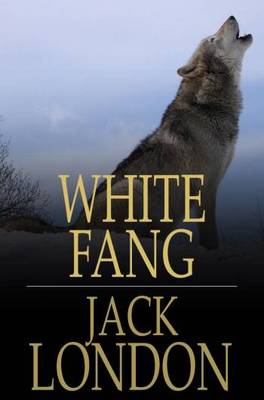
White Fang

White Fang
© 1906 Jack London
pp. 1- 101, Tales of the North.


"An' right here I want to remark,' Bill went on, 'that that animal's familiarity with camp-fires is suspicious an' immoral.'
'It knows for certain more'n a self-respectin' wolf ought to know,' Henry agreed

White Fang revisits  the theme of the Wild versus civilization from The Call of the Wild and reverses it.  Whereas in Call a soft California dog was thrown into the Alaskan wilderness and forced to call upon his instincts to survive, finding joy running with wolves after his master is killed,  in White Fang a dog/wolf hybrid is lured from the wild into the camps of man.  First published in Outing Magazine,  the story begins with two men being tracked by an eerie creature, a she-wolf who understands man. It is she who will give birth to a cub, and rear him in a wilderness of even-more dangerous predators like the Canadian lynx,  and it is her own youth spent in an Indian camp that will first introduce the cub to man.  Three-quarters wolf, there is virtually nothing of the dog in him, only a respect for Man's strength and a willingness to submit to it in exchange for shelter and food.  Yet there is more to man's relationship with wolves and dogs than sheer animal dominance.

 Here again London touches on Nietzsche's superman myth, and again rejects it; just as  he did in The Sea Wolf and Martin Eden.   White Fang is shaped by fear, hunger, and rejection to be a creature mighty in strength, desperately cunning, and comfortable only in solitude. He knows one law: kill or be killed, eat or be eaten, intimidate or cower. Every memory of tenderness, either from his cub days or his early adoption by an Yukon native, is erased after he falls into the captivity of dog-fighters.  Yet he is not lost; just as Wolf Larsen was defeated by a man who combined wild strength with moral courage, so too is White Fang's savagery tamed by persistent and intelligently guided affection,  care that teaches him other laws -- care that reignite the what little of the dog exists within him.  Considering that The Call of the Wild was my first novel, and that every single thing I've read by Jack London has proven unforgettable, it's hard to believe White Fang has taken me this long to read. It combines adventure with a narrative that speculates on how a dog might, in coming of age, grow to understand the world. The writing is winsome as usual, dramatic and - occasionally, unexpectedly - with flashes of laughter. (London has given me a most excellent insult -- "If you don't mind me saying, you're seventeen kinds of damn fool, all of them different, and then some!")

Related:
The Sea-Wolf, Jack London.

Monday, May 4, 2015

The Copperhead

The Copperhead
© 1893 Harold Frederic
108 pages


War can destroy a city without the first shell falling on it. Such was nearly the fate of Four Corners, New York, a small farming community in its upper reaches. Far removed from the battlefields of the Civil War, the village nonetheless suffered its injuries.  So far as Abner Beech was concerned, the world consisted of the Four Corners; the South was a distant land, its problems those of its own people. Before the crisis erupted, he was not alone in his sentiment:  most of his neighbors were kindred spirits, one Methodist lunatic excepting. That was Jee Hagadorn, from a long and illustrious line of puritanical scolds. He is, among other things, an Abolitionist, and once the war begins he ascends from the fellow everyone avoids to spearheading the town's support of the war effort. Abner Beech is astonished at how quickly his neighbors become enthusiastic about the prospect of great hordes of young men lining up to kill one another, and scandalized by the impending doom that lays in store for the Constitution in the wake of Abe Lincoln's assumption of war powers, and widespread support of it.   Beginning the book as a pillar of the community, Abner quickly falls from grace to become a pariah, spurned at church and forced by his own contrariness to keep to himself on his own farm.  Matters worsen as his own child marches off to war, wooed by the lunatic warmonger's daughter, and eventually he is subjected to  a torchbearing mob outside his home.  Although the original novel's Beech is not nearly as sympathetic as his dramatized counterpart  in Copperhead (the viewing of which prompted me to read this),  he is nonetheless heroic in both holding on to his principles, and his in being easy to forgive. The story ends on a happy note, indeed far happier than the movie's.  Modern readers will find Beech prickly, but the enduring lesson has not changed regardless. War is a sinister thing, able to turn friends into bitter enemies simply for holding the wrong opinion.


Wednesday, April 1, 2015

Little Women

Little Women
© 1868 Louisa May Alcott
528 pages


"But you see, Jo wasn't a heroine, she was only a struggling human girl like hundreds of others, and she just acted out her nature, being sad, cross, listless, or energetic, as the mood suggested. It's highly virtuous to say we'll be good, but we can't do it all at once, and it takes a long pull, a strong pull, and a pull all together before some of us even get our feet set in the right way."
Last year I began a course of American literature, purposely reading classics I'd heard of my entire life but never read. Little Women resumes that effort, and like A Scarlet Letter and Uncle Tom's Cabin, I found it a genuine surprise.  Originally written as a story for girls, it features the four girls of the March family -- Meg, Jo, Beth, and Amy -- as they grow up in America's 19th century. Aside from the odd jaunt to New York or Europe, this is domestic fiction, set in or around the March home, and filled with the quiet little episode of childhood. The sisters chatter endlessly as they see to their responsibilities, they run about outside having wild adventures in their minds, they piece together bold plans and see them fly apart -- they fight, they love.  The home life is punctuated with minor drama throughout -- a little scarlet fever here, a near-drowning there -- but there's no great quest, no calamitous struggle to overcome. There is merely the challenge of living life day to day, of growing as a result of its challenges and not giving into them.  Is it exciting? Well, no, but it's cozy, and even entertaining.  I read this to strike it off a list, but Alcott's sense of humor won me over. The book's gushing wholesomeness can be gathered from the fact that the girls interpret their lives according to John Bunyan's Pilgrim's Progress, but there's too much snark here for it to be saccharine. Jo and her neighbor-friend Laurie are especially fun: the word 'mischief' appears twenty times in the text, and every time they are getting up to it.  It's not that they're scheming, but Jo in particularly doesn't respond well to having to stuff her into a box of propriety, as she does when she and her sister go to make social calls at an overly pompous house. She doesn't desire an ordinary life, but yearns to write, and so she does -- but eventually becoming an aunt, she finds all the pleasures of ordinary family life besides. The relationships between the characters have especial appeal because they are developed through the years; the full book covers over a decade, and in it the characters mature from children to adults with children of their own. Though the voices of the characters alter as they increase in maturity, still there are the spots where childlike abandon erupts through. This is a tale full of warmth, good humor and more than a few one-liners.

Friday, December 5, 2014

Where the Red Fern Grows

Where the Red Fern Grows
© 1961 Wilson Rawls
245 pages


“I suppose there's a time in practically every young boy's life when he's affected by that wonderful disease of puppy love. I don't mean the kind a boy has for the pretty little girl that lives down the road. I mean the real kind, the kind that has four small feet and a wiggly tail, and sharp little teeth that can gnaw on a boy's finger; the kind a boy can romp and play with, even eat and sleep with.”

Few books bring back memories of boyhood as swiftly as Where the Red Fern Grows. I can still remember my third grade teacher beginning to read this out loud, and my having chills as soon as the narration opened on an older man rescuing a tired hound dog and fingering a trophy on the mantle, thinking of two dogs he had loved fiercely as a child.   Where the Red Fern Grows is a classic story of a boy’s yearning for puppies, and the adventures taken on once such friends were found.

 Billy Coleman, the narrator, is a remarkable boy:  raised in the wooded foothills of the Ozarks, a hunter and trapper from the day he could walk, he wants nothing more than a faithful hound at his side.  The price of a hound bred for hunting matches that of a mule, though, and is beyond his family’s means. Undaunted,  Billy earns money  hunting crawdads, picking blackberries, and selling small furs until he has the funds – and then, when there is delay about sending off for the puppies, takes off into the wilderness and advances into the big city of Tahlequah to take delivery of them personally.   Training them personally, teaching them every trick he’s heard of and witnessed in his long hours watching and trapping on his own,  he and they become an inseparable trio, utterly devoted to one another. When the hounds Big Dan and Little Anne tree their first raccoon, Billy keeps his promise to them  to ‘take care of the rest’ by laboring several days and nights at the tree, hatcheting away, and when his strength fails he prays for more.  The dark nights and fast-moving creeks of the Ozarks provide danger aplenty, but they whether it together, even becoming regional champions of coonhunting. Every story has its ending, though, every childhood must end, and so does Billy’s in a violent altercation with a mountain lion. Billy himself survives, but his remembers the losses.


 Where the Red Fern Grows has a brutal ending, especially for young boys who, like me, doted on their own dogs, and felt the desperate pain of separation from them when life’s twists and turns made it so.  Reading now as an adult, I expect the ending, and so it is not quite gut-wrenching. Rather, like the narrator, the ending frames all of the fond memories that unfold in the story that is told before, putting them into focus. I only read this book once or twice in my youth, during the early 90s, but its scenes have buried themselves in my brain. For me this was a visit with an old friend, whose face I have not seen in decades, but not forgotten a line of.   The boy is everything a boy could hope to be -- courageous, intelligent, and beloved, with a pair of friends and a family who cannot be bettered.  This is a book filled with love and adventure, and often the two are intertwined to great effect.  It's also a look back at an America with a frontier, where civilization is contained within scattered sanctuaries and the woods filled with danger and excitement. There are few stories that can be more enticing for a young reader, especially boys!  

Related:

Tuesday, July 8, 2014

Uncle Tom's Cabin

Uncle Tom's Cabin; or, Life Among the Lowly
© 1852 Harriet Beecher Stowe        
 500 pages


Written as an indignant response to the 1850 Fugitive Slave Law, Uncle Tom's Cabin shook the American landscape in the mid-19th century as few other novels could. A sounding condemnation of slavery, popular conception holds it responsible for fomenting a more strident attitude against slavery in the north and giving the Republican Party its great foothold in American history.  Still controversial today for not living up to 21st century mores, Uncle Tom's Cabin remains a beautiful morality play.

I entered Uncle Tom's Cabin with reservation, thinking it a propaganda piece considering that the author never journeyed into the south herself. Admittedly, it was propaganda the south had coming, but I'm not much for polemics whether they come in nonfiction or fiction. Uncle Tom's Cabin, however, is far more nuanced than I expected.  The story begins when two slaves, Harry and Tom, who are sold by their reluctant owner when his gambling debts erase all his other alternatives. Harry's mother is horrified to learn that her handsome young son will be separated from her, and flees with him north, across icy rivers hoping to find sanctuary in Canada.  The other, Tom, realizes that if he runs, more slaves will be sold and separated from their families to make up for the loss.  In what will become a recurring pattern, Tom sacrifices his own wellbeing for the sake of others, and is sold 'down the river'. Removed from Kentucky's comparatively lenient slavering practices, Tom soon finds himself in the deep south, subject to the worst of human nature. Though it is tempered by meeting people of goodness and mercy, what truly sustains Tom is his Christian faith.  Uncle Tom’s Cabin is at the same time an abolitionist argument and a work of Christian evangelism. The two for Stowe are one and the same. Just as Tom urges one fellow slave or master after another to admit to their sin's slavery  and subject themselves to Christ, Stowe urges her countrymen to admit to slavery's sin and embrace emancipation and colonization.

Stowe’s attack on slavery plays on both reason and the emotions. Throughout the novel, characters are cold-bloodedly separated from their loved ones, including mothers and small children, if the profit motive dictates, and the slave traders are as calculating as can be,  thinking about their slaves as nothing but cattle. Various characters against slavery, and others defend it.  Stowe is fairer to the south than expected; her novel’s most loathsome character is a northerner with a plantation, and  the two other white slaveholders who receive the most attention are utterly decent. Northerners are hypocritical idealists who don’t realize the sin of slavery is on their hands as well.  This harshness is presumably less to soften the blow against the South than it is to prick the northern conscience and call it to action.

 Although its now-dated language and attitudes toward slaves no doubt annoy the modern mind, Uncle Tom’s Cabin rises beyond such petty complaints. This is a story of redemption, of how a man can be bound in body, but not in spirit; degraded by law, but not in person. Just as Harry's mom Eliza  Eliza finds defense for her body in flight and arms, Tom finds defense for his spirit in acts of love;  ultimately he becomes a Christ figure – certainly for characters within the text, and perhaps Stowe hoped, for the American people as well. It's an outstandingly beautiful novel.


Friday, July 4, 2014

Common Sense

Common Sense
© 1776 Tom Paine


After the battles of Lexington and Concord that scotched any idea of peaceful reconciliation between Britain and its former colonies, but before the Declaration of Independence that stared the colonies on their march toward united nationhood,  rabble-rouser Tom Paine penned a now famous pamphlet intended  to fire up support for the glorious cause.  It's an ambitious little book, containing an argument  for independence , a review of America's material ability to take on the greatest power in the world, and a rebuttal of arguments for reconciliation, targeted mostly against Quakers.  While not as oft-quoted as "The Crisis",  he argues powerfully and leaves no doubt as to why it might have been so explosive at the time.

Paine's bone to pick with royal governance stems not merely from the fact that they are abusive, or incapable of effective administration considering the distance between Parliament and North America, a distance bridged only by months of sea travel; he is against monarchy [b]in principle[/b],  which is presumably why its publication was so dramatic.  He asks the reader to examine the origin of kings -- not a one of them fell from heaven. William of Normandy who fathered the English line was merely a successful French brigand; did his triumph on the battlefield suddenly imbue him with divine right? And even if it did, isn't it patently obvious that virtue is never inherited? What good king hasn't been followed by an execrable sons like Commodus?

The only real government is autonomous and here Paine's condemnation retains more value beyond historical consideration. While no one today argues for the divine right of kings, kings are still among us -- clothing themselves not in royal purple, but in republican brown or the humble uniform of military service. They are presidents and chairman, not imperators, but regardless of their language they still set their sights ahove the heights of the clouds and seek to rule people 'for their own good'.  While the king and parliament may make their case in tradition, Paine argues as a man of the enlightenment, looking toward the future and arguing to self-interest:  as long as America remains tethered to Britain, its trade and people will suffer every time the monarchies of Europe go to war, as is their wont. Far better to declare independence and then make a killing in trade while the the kings drag one another to hell.

A short, fiery piece, Common Sense merits its place in America's revolutionary imagination.


Wednesday, July 2, 2014

The Adventures of Tom Sawyer

The Adventures of Tom Sawyer
© 1876 Mark Twain
202 pages


            There is truly no better time to revisit The Adventures of Tom Sawyer than the summer, with its long, languid days bringing back memories of childhood liberty from school, and the mischievous episodes used  to fill them.  Tom Sawyer is the history of a boy, told by an aging boy – Mark Twain – whose own fond recollections of boyhood are obvious.  Tom is the quintessential boy;  wild, clever,  with a head full of adventures. The importance of memorizing  Bible verses may be lost on him, as is the value of whitewashing a fence – but he is not dull or lazy. How could he be when he spends days hard at work digging for treasure, or playing out The Tale of Robin Hood with his friends, delivering dialogue word-for-word from the book by memory?  Tom may struggle at being civilized,  but he has his own values to live up to. For all his youthful mischief, Tom is hard at play, practicing to be a man; he yearns to be the adventurous pirate, the gallant knight winning the favor of his lady love. In Tom’s case, such practice is fruitful, for his pursuit of pretend adventure will lead him headlong into actual danger when he and his friend Huck  witness a murder. In the months that follow, Tom must live up to the nobility he practiced to truly rescue damsels in distress, to truly defeat a dastardly villain, and win the prize for all his derring-do – genuine pirate treasure!  Could there be a better book for boys?