Showing posts with label adventure. Show all posts

Sunday, August 27, 2017

Dragon's Teeth

Dragon's Teeth
 © 2017 Michael Crichton
288 pages


Scientific discovery isn't always a gentlemanly affair.  Dragon's Teeth, published by the estate of Michael Crichton in his name, inserts a fictional character into the real-life feud of two paleontologists who went to such lengths to undermine the other that their rivalry was given the name "Bone Wars" and documented in books like Great Feuds in Science.    William Johnson, our main character, is an unwitting participant in the Bone Wars who signs up with Professor Marsh of Yale on a bet; he will join Marsh's summer expedition out west or forfeit $1000, no small sum in 1876.   Suspected of being a spy for Marsh's nemesis, Edward Cope,  Johnson is abandoned in Wyoming and forced to throw in with the man he'd been told to despise and fear.  That summer would see him help discover the first evidence of a "Brontosaurus", and later attempt to get the bones back to civilization despite being on the front lines of the Indian wars, with nearby towns like Deadwood scarcely more safe.  Although Dragon Teeth is not a typical Crichton novel,  it is a western adventure with a science twist.  The emphasis is on western adventure, however; Wyatt Earp is an important character in the second half of the book, and the story overall is one of a soft 'down-Easterner' learning how to be a man -- a real man, a man of the west whose hands are hard with work, aiding a mind quick enough to outwit gunslingers, avaricious treasure hunters, and lying dames.  Not your typical Crichton, but it's a fun combination of cowboys and dinosaurs.

Thursday, August 3, 2017

Cities of Gold

Cities of Gold: A Journey Across the American Southwest in Pursuit of Coronado
© 1992 Douglas Preston (Walter Nelson, Photographs)
480 pages


Sometimes, history has got to be pursued from the back of a horse.  Douglas Preston wasn't sure what took him to New Mexico -- he had a nice life in Manhattan before he abruptly decided to move to Santa Fe, to see the adobes washed in red sunlight --  but it took him further still, to the border of Arizona and Mexico.  There, along with a friend and a hired horse wrangler, he purposed to re-create the journey of Francisco  Vázquez de Coronado, the first Spainard to explore the Southwest.   They would discover the Four Corners as the Spanish did, on horseback -- carrying their own supplies,  following the water. Their mission -- to search what it might have been like to enter into these enormous spaces for the first time, and travel through them to the seven cities of Cibola.  Preston and company were warned against the pursuit; there was a very real chance such a journey would kill them. The desert is kind to no one, and Preston proposed to navigate through sheer wilderness, during the summer, amid a drought.  But fate is kind to fools, drunks, and Americans, and Preston's royal-flush team prospered through their wits, the kindness of strangers, and a mix of luck and grit.   The product is for me the best piece of travel writing I've yet read.

Along for the ride with Preston were a cantankerous neighbor of his, Walter, and a hired woodcutter who professed to be a horse wrangler.  Eusebius's only virtue for the reader proves to be his comic rage that reveals itself with every mesquite tree, barbed-wire fence, and thrown horse-shoe; the man is as experienced with horses as you or I. (His virtues for the party are practically nil, although his incompetence forced Walter and Doug to become jacks of all trades, which probably saved their lives after the fake-wrangler quit.)  The country they proposed to cross was desperately hostile. The voyage opened in a thick swath of mesquite trees, for instance, which turned a proposed one-day journey into four days of hacking, cussing, and chasing horses.   They crossed mountains so far off  the beaten track that the closest thing to a path was a cut made by the riders of the Pony Express.  Their journey takes them through the detritus of ruined civilizations and communities, the residents and their hopes long-dead -- both mysterious Anasazi remains, and the less mysterious array of abandoned silver boomtowns.   They encountered an array of interesting people: rattle-snaker trappers,  ranchers and cowboys, echoes of the dying Old West.  They also spent considerable time visiting with native Americans as they pass through  Zuni and Acoma reservations, learning some of their stories.  While the travelers were sometimes greeted with a shotgun, Doug and Walter certainly didn't look like tourists after the first few hundred miles of hard riding, and after explaining their mission, virtually everyone offered them hospitality with open arms and admiring eyes -- even from old ranchers who lived over a hundred miles from everybody else and did everything around their homesteads themselves.  (The only exception was a man who assured them that nobody named Coronado  came this way because the road hadn't been built until last year, and anyway that would have been trespassing.)

Cities of Gold expertly mixes adventure, history, photographs, and encounters with interesting people. As Doug and Walter pass through the landscape, so we learn the story of Coronado's exploration of the Southwest, and the story of the West in general: the trials of the Hopi, Apache, Zuni, and other people through the last two centuries, the triumphs and tribulations of traders, trappers, and gold-strikers;  the rise and fall of the cowboy. But there's more to the memoir than history, for both the Zuni and the cowboys have something to say about stewardship, of the husbandry of the land. They argue that the land has been much abused by outsiders who came in with great confidence and little knowledge, from the first ranches to the present Forestry Sevice.  Numerous citizens condemn the heavy-handedness of the Forestry Service's no-burn rule: the attempt to keep so much of the country in stasis is smothering it to death. The antelope herds that once flourished by eating young-growth forests, for instance, have dwindled as the old-growth cedars continue to expand, unchecked by fire.  As this journey was taken in 1989, I don't know if matters have improved. (What has not improved is Albuquerque traffic, which these two took horses through!)

While my prolonged fascination with the Southwest greased the skids here,  Cities of Gold  is most impressive.  The entire premise is awe-inspiring: this is a journey of a thousand miles on horseback, through thickets and quicksand, over mountains, across barren stretches of salt lakes and desert, through valleys and up mesas.  The people, as mentioned, are fascinating into themselves, both the living and the dead. I did not recognize the name Coronado before I began reading this book, and I learned enormous amounts about him, the native cultures, and the history of the West in general as I followed Doug and Walter through these magnificent, storied landscapes.


Saturday, April 8, 2017

The Merry Adventures of Robin Hood

The Merry Adventures of Robin Hood
© 1883 Howard Pyle
648 pages,  Duke Classics Edition.
(Other editions seem to have anywhere from 200 to 400 pages, which is odd.)


You who so plod amid serious things that you feel it shame to give yourselves up even for a few short moments to mirth and joyousness in the land of Fancy; you who think that life hath nought to do with innocent laughter than can arm no one; these pages are not for you. Clap to the leaves and go no farther than this, for I tell you plainly that if you go farther you will be scandalized by seeing good, sober folks of real history so frisk and caper in gay colors and motley that you would not know them but for the names tagged to them!


Rarely have I found a book more fun to read aloud than this, The Merry Adventures of Robin Hood.  We used to have a copy in the local public library, but despite  a childhood fondness for the scamp of Sherwood Forest, I've never read the stories of him.    That's been remedied this last week, as through this collection of stories gleaned from ballads and folk tales, I learned how Robin Hood became an outlaw, gathered his band, and lived a merry life in the woods while giving the corrupt and powerful some serious pain.  The first few hundred pages here count the beginnings of Robin's band, and thereafter address the various adventures the Merry Men had while resisting the Sheriff of Nottingham's agents.   The entire book brims over with singing,  non-lethal fighting,  and gloriously absurd speeches.  I say glorious because the pseudo-medieval speech patterns are put on, but are more funny than jarring. The characters delight in having fun with one another,  their conversations fully of whimsy and ending in 'lusty' laughs.

Having read this, I realize now that Disney's Robin Hood and Mel Brooks Men in Tights led me wrong. Now, I realize it may come as a blow that Mel Brooks took liberties with the stories, but stay with me.   Both of these Robin Hood interpretations share a common backstory in which Robin Hood is an enemy of King John principally because John is the usurper of his brother Richard's throne.   In this book, however,  Henry and Eleanor reign;  John and Richard only appear at the end and there's no drama associated with the succession question between John and Richard.   Robin Hood's status as an outlaw originates almost by accident: while strolling through the forest on his way to an archery contest, singing merrily, he encounters a group of men who make fun of his archery pretensions. He challenges them to a contest, but dismisses their wooden targets in favor of a deer which is much further away.  The men turn out to be foresters, or game wardens, and attempt to kill Robin -- and so he runs away.

What follows is a great many stories about Robin meeting various people, fighting with them, and then -- whether he win or lose, for he does lose at times -- being so impressed by their merry spirit, their quick wit, and their skills at fighting that he asks them to join his band.    All who are asked do, because the Merry Men have a fine old time drinking beer,  having contests, and eating as much deer as they like.  Whenever they run low on provisions, they watch the road and accost fat nobles and corrupt clergy,  treating them to a meal and then taking the victim-guest's entire purse as payment.  Part of the booty is retained for the Merry Men; the rest is given back to the poor, for that money was taken in taxes from them. Long live Robin Hood,  terror of the taxman!   Because Robin never bothers the poor or honest, he is looked to as a champion of the oppressed and goes on a few adventures to save people from the plots of the Sheriff of Nottingham or the Bishop of Hereford, the recurring villains here.   Eventually Robin Hood defeats the wicked pair, earns the favor of King Richard, and is made an Earl....but will drift back into Sherwood Forest for a reunion and a last attack by the Sheriff.

Merry Adventures is utterly fun to read.

Thursday, July 21, 2016

The Journey Home

The Journey Home: Some Words in Defense of the American West
© 1977 Edward Abbey
242 pages


The desert is no place for decent men, which is why Edward Abbey likes it so much. Born on the eastern seaboard,  on a farm between the cities and the woods,  young Abbey was seized by wanderlust and wandered westward. There he found mysterious monoliths, painted deserts, winding canyons penetrated only by the foolhardy, and interminable expanses of prickly plants and even pricklier critters.  Prickly might  well describe Abbey -- or irascible, or cantankerous, or resentful, even indolent.  Most of those  terms are self-applied here as Abbey describes first his journey to the American west, his finding a home in Arizona, and his disgust at realizing that Industrial Civilization was following close on his heels.  They ruined the view with power lines, flooded canyons with dams, and filled the air with smoke -- and so he writes, not to defend pretty views but to defend the very idea of wildness. Man  is wild, can't be broken completely -- and he needs undisturbed space to go crazy in every once in a while.

There are two reasons to read books by Edward Abbey; the first is for his descriptive writing, which wholly absorbed me when I first read Desert Solitaire years ago. The man is a grumpy poet writing prose; he describes the land like a lover, though he doesn't use so intimate a language as say, the author of Song of Solomon.   Certainly he finds enough here to wax poetic about. Making cloudbanks marvelous in Desert Solitaire was child's play; here  he even makes a poisonous tick sound intriguing.   The early book is biographical, but once he arrives at the mountains, they take over, for there are small ranges all over the southwest. The second is for Abbey's personality, which is...colorful, to say the least, and a delight in small doses.  Rough-hewn is Abbey; there's no machine-made box to slide him in. He is a passionate loather of big business and big government, but his contempt for the EPA lies in the fact that it isn't doing enough to curb the industrialization of the west, that it sides with the power plants and oilers over the small ranchers and rambling eccentrics.  His passion borders on reckless. He writes that his motto regarding wilderness hikes is  "be prepared", but that his practice is to go off half-cocked, daring Nature to do its worst. One story has him utterly destroying his fiance's brand new gift-from-daddy convertible to transverse a washed-out road. That particular relationship didn't survive the long hike back. In another account, he follows a mountain lion's tracks and encounters the fearsome creature, poetry and power in one awe-inspiring package.

What Abbey fears most is the triumph of deary mediocrity. He can appreciate the city, as he does in here in a piece on Hoboken and Manhattan. It's not a loving appreciation, but he does recognize that urban life has its consolations. But man is too wild a thing for the city, and the city itself can only be endured for long if there is some place to escape to. Abbey likens it to prisoners of Siberia, able to endure their brutal treatment by the sight of the beckoning expanse of forest; never mind that the forest has its own dangers,  it is there -- unconquered, open, a warren of escape.   Abbey shudders to see Tuscon and Phoenix marching toward one another, soon to form one long contiguous blob of parking lots  and neon -- and not just because their unchecked growth is draining water reserves or concentrating filth, but because it makes escape ever more difficult.  We crave adventure, Abbey writes, danger  -- the wilderness offers it.  Abbey If we live in constant security and predictability, we're effectively living the life of zoo animals.  We climb mountains for the same reason we fill the air with soaring music and vibrant poetry: our souls are restless and craving.  Craving what? Something to do, some meaning, some thrusting of ourselves into reality.

There is a lot to ponder in this slim little collection of essays and bar-room ramblings given life in paper.  Certainly, as far as 'current' crises go, the book is dated. I am certain many battles have been lost since the decades since Abbey first discovered the soul-stilling expanse of the west.  Given Abbey's gruffness here, I would refer new readers to Desert Solitaire...but once a friendlier introduction is made then by all means return here to experience more of that beautiful description, that delightful cussedness, that adventurous what-the-hell-carpe-diem view Abbey took to life, its appeal aided by his thoughtfulness.


Wednesday, June 29, 2016

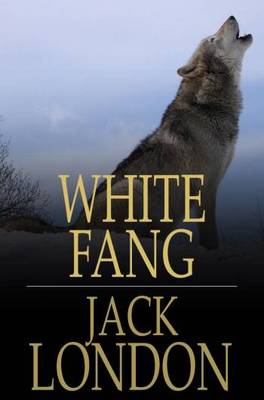
White Fang

White Fang
© 1906 Jack London
pp. 1- 101, Tales of the North.


"An' right here I want to remark,' Bill went on, 'that that animal's familiarity with camp-fires is suspicious an' immoral.'
'It knows for certain more'n a self-respectin' wolf ought to know,' Henry agreed

White Fang revisits  the theme of the Wild versus civilization from The Call of the Wild and reverses it.  Whereas in Call a soft California dog was thrown into the Alaskan wilderness and forced to call upon his instincts to survive, finding joy running with wolves after his master is killed,  in White Fang a dog/wolf hybrid is lured from the wild into the camps of man.  First published in Outing Magazine,  the story begins with two men being tracked by an eerie creature, a she-wolf who understands man. It is she who will give birth to a cub, and rear him in a wilderness of even-more dangerous predators like the Canadian lynx,  and it is her own youth spent in an Indian camp that will first introduce the cub to man.  Three-quarters wolf, there is virtually nothing of the dog in him, only a respect for Man's strength and a willingness to submit to it in exchange for shelter and food.  Yet there is more to man's relationship with wolves and dogs than sheer animal dominance.

 Here again London touches on Nietzsche's superman myth, and again rejects it; just as  he did in The Sea Wolf and Martin Eden.   White Fang is shaped by fear, hunger, and rejection to be a creature mighty in strength, desperately cunning, and comfortable only in solitude. He knows one law: kill or be killed, eat or be eaten, intimidate or cower. Every memory of tenderness, either from his cub days or his early adoption by an Yukon native, is erased after he falls into the captivity of dog-fighters.  Yet he is not lost; just as Wolf Larsen was defeated by a man who combined wild strength with moral courage, so too is White Fang's savagery tamed by persistent and intelligently guided affection,  care that teaches him other laws -- care that reignite the what little of the dog exists within him.  Considering that The Call of the Wild was my first novel, and that every single thing I've read by Jack London has proven unforgettable, it's hard to believe White Fang has taken me this long to read. It combines adventure with a narrative that speculates on how a dog might, in coming of age, grow to understand the world. The writing is winsome as usual, dramatic and - occasionally, unexpectedly - with flashes of laughter. (London has given me a most excellent insult -- "If you don't mind me saying, you're seventeen kinds of damn fool, all of them different, and then some!")

Related:
The Sea-Wolf, Jack London.

Friday, February 12, 2016

2001: A Space Odyssey

2001: A Space Odyssey
© 1986 Arthur C. Clark, Stanley Kubrick
316 pgs


At the dawn of the twenty-first century, mankind makes an extraordinary discovery: unmistakable evidence of life outside the environs of Earth. An object on the moon makes plain the fact that three million years ago, extraordinary and intelligent creatures were present…but who they were, and what their interest or relationship was with Earth, is a mystery with clues as far removed as Saturn. 2001: A Space Odyssey, is both the story of a physical journey through the Solar System in search of answers, and a fatalistic view of mankind’s evolution.

Surely there is a word for completely misinterpreting the plot of a story based on pop culture references. It would apply to my experience with 2001, which was far as I was concerned was wholly about an astronaut named Dave’s struggle with the sentient artificial intelligence running his ship – and running amok. As it turns out, HAL-9000 is dispatched in one chapter here, and the story is mostly about mankind’s progress toward…oblivion? Clark combines technological optimism and Cold War fatalism in such a way that the ending really threw me. Admittedly, I was poised to be thrown: a sequence in which the main character is taken on a journey through the Cosmos by a greater lifeform reminded me of similar voyages in Contact and Star Trek: The Next Generation. Suffice it to say, in 2001 the main character does not return to Earth with a transcendental view of the universe to share with his fellows for their betterment. It’s more like the ending to Beneath the Planet of the Apes; though considering that the book begins with ape-men learning to use tools to smack around their neighbors, I suppose it’s appropriate.

2001 is dated in its optimistic predictions about our establishing sizable, stable outposts on Mars and the Moon. There’s not a lot of science actually mentioned, though, so once one ignores the date, anachronisms almost cease. (Okay, so the Soviet Union isn't still around, and 'tablets' are around a few years before their time...) As an adventure set in space, it’s great fun, I knew what was coming with HAL, and even so the so realization by Dave that his computer was listening and moving against him succeeded. While there’s not a lot of hard science, 2001 does touch on a few heady topics, like the volatility of intelligence; considering the difficulties in managing human-made AI, the lead characters how we can reasonably expect to communicate with completely foreign intelligences. As unexpectedly grim as the ending was, I do appreciate Clarke for hinting that superior intelligence does not necessarily bring with it a “more evolved sensibility”. Naturally, I share Carl Sagan’s hope that if there are other intelligences out there, those with powers greater than ours, that their survival past ‘technological adolescence’ indicates they have their CRUSH KILL DESTROY instincts in check. That doesn't mean they would recognize us as beings whose life merits respect, though. We might be as incidental to them as flies upon an interstellar windshield.


Tuesday, September 15, 2015

Prince Caspian

Prince Caspian: The Return to Narnia
© 1951 C.S. Lewis
195 pages


  Once upon a time four children stumbled through an ordinary-looking wardrobe into another  world altogether, a place called Narnia where they became its kings and queens and fought great battles under the banner of a noble lion, its creator and champion.  Then they returned to their own ordinary lives, but not for long. A year after their return, the four siblings – Peter,  Lucy, Edmund, and Susan – found themselves snatched from a train station and deposited on a mysterious island.  They soon discovered that they had returned to Narnia, more than a millennium after their former reign. Their beloved talking animal friends had been slain or driven into hiding; their former favorite places were in ruins and surrendered to wilderness; their lord Aslan was absent, and cruel men ruled in their stead.   From a lone dwarf in the wild, the Penvensies learn what has happened since their departure, and decide to go to the aid of young Prince Caspian, the last human defender of Old Narnia.   Prince Caspian is a story in two parts; first, Caspian’s revolt against the evil kingdom he was technically heir to, the desperate war against his tyrannical uncle, and his grasping-at-straws move that called the four legends from the past to come to his aide.  The battle that follows has plenty of heroics, but most satisfying is the  character of Edmund; the once nasty boy who betrayed his family to the White Witch  is selfless here, the model of ‘nobility’.  It is a tale simple, fast, and sweet, with both gentle humor and adventure to stir the heart. 

Wednesday, December 17, 2014

Hatchet

Hatchet
© 1987 Gary Paulsen
195 pages


Hitching a ride on a small plane to meet his father in Alaska,  young Brian is left alone thousands of miles in air when his pilot succumbs to a heart attack.  The thirteen-year old is no pilot, but as he numbly sits taking in his perilous condition, he realizes he has to do something if he doesn't want to perish once the plane runs out of gas and careens into the thickly wooded Canadian wilderness. Taking his life into his hands, learning through trial and error how to control the plane in the air, when the time comes the young boy will guide the plane's failure with some measure of intelligence, sending it into a lake where he may scramble out into the water and swim for life.  Still alone, he must somehow  survive in the wild until help can reach him -- armed only with native brightness,  vague ideas about nature gleaned from various movies, and a little hatchet. Hatchet is the gripping story of a young man's endurance.

Although eventually rescued, Brian's summer sojourn in the wilderness is wrought with peril. From the moment he lands, he is assailed by woodland creatures great and small -- skunks, porcupines bears, wolves, and clouds of mosquitoes.  Struggling against feelings of hopelessness and despair, as well as against repeated injuries -- he really doesn't know what he's doing --   the young man slowly gains the experience and strength of spirit needed to prevail.  A boy accustomed to being taken care of his parents must build shelter, must find food, must outwit prey and predators alike. Nothing will be done for him, and he cannot stay still for a moment. Thrust into the struggle for existence, realizing it in full,  Brian quickly becomes a woodsman;  his senses and memory sharpened by necessity allow him to piece things together, allow him to invent solutions and find resources.  Some are encountered only by accident, as when he throws his hatchet at an invasive creature and the tool creates a shower of sparks upon crashing into a flint-flecked stone face. Other lessons he takes from experience, from long hours spent in observation, from series of mistakes. But he learns!  A primitive lean-to becomes a more sophisticated shelter, grubbing around for berries leads to fishing and hunting,  and timidity turns to courage.  This fantastic tale of adapting to the wilderness, of thriving against the elements, is not romanticized, however; even when he creates some measure of comfort for himself,  misery and disasters are never far away. It's an adventure, but one harsh and wild.

Related:
The Sea Wolf, Jack London
My Side of the Mountain, Jean Craighead George

Thursday, September 18, 2014

The Fellowship of the Ring

The Fellowship of the Ring, being the first part of the Lord of the Rings
© 1954 J.R.R Tolkien
570 pages


Not many birthday gift involves a life-threatening quest to defeat a Dark Lord and prevent the enslavement of all living creatures,  but Bilbo Baggins is an exceptional gift-giver.  Frodo Baggins had no idea when he accepted his uncle’s gift that it could hold so much trouble in store for him (nor did Bilbo, for that matter), but c’est la vie.  The ring belonged to an ancient, malevolent power, and the evil one wants it back.  No choice remains but to destroy it, so Frodo must venture from his safe home into the outlands, brimming with dangerous monsters and ancient mysteries.

Such is the beginning of the Lord of the Rings tale, its first two chapters gathered here as The Fellowship of the Ring.  Having struggled to get through The Hobbit, I was surprised by how immediately this story drew me in. There’s a basic simplicity to the story, from the overall morality theme – good is good, evil is evil, and ne’er the twain shall meet, except in combat --  and the imagery evoked. There’s nothing mysterious about a reader’s delight in the arcadian comforts of the Shire, or dread at the gloomy forests and hostile, forbidding crags.  Far from simple, however, is the delivery;  Tolkien is a master world-builder, whose characters move through a landscape full of its own history, and are enmeshed in actual cultures.  ‘Developed’ isn’t quite the word. Tolkien delivers an experience more than just a fantasy story;  his characters’ heads are full of stories, legends, and songs that they regale one another with, and offer insight into Middle Earth’s history – which is still being written with their own adventure. The experience delivered by Tolkien is more than a fantasy-adventure novel; his characters tell tales and sing songs in invented language that seem at first like garnish, but later prove to have lasting relevance. This is a story rich in imagination from the beginning,  the archetypical high-fantasy epic with settings that overwhelm the mind’s eye, complete with villains that resonate on a primeval level.

Although I’m only starting out on my personal quest to read through the adventure, I daresay I’m looking forward to it much more than Frodo and his companions, for whom doom looms large. Onward!

Wednesday, July 2, 2014

The Adventures of Tom Sawyer

The Adventures of Tom Sawyer
© 1876 Mark Twain
202 pages


            There is truly no better time to revisit The Adventures of Tom Sawyer than the summer, with its long, languid days bringing back memories of childhood liberty from school, and the mischievous episodes used  to fill them.  Tom Sawyer is the history of a boy, told by an aging boy – Mark Twain – whose own fond recollections of boyhood are obvious.  Tom is the quintessential boy;  wild, clever,  with a head full of adventures. The importance of memorizing  Bible verses may be lost on him, as is the value of whitewashing a fence – but he is not dull or lazy. How could he be when he spends days hard at work digging for treasure, or playing out The Tale of Robin Hood with his friends, delivering dialogue word-for-word from the book by memory?  Tom may struggle at being civilized,  but he has his own values to live up to. For all his youthful mischief, Tom is hard at play, practicing to be a man; he yearns to be the adventurous pirate, the gallant knight winning the favor of his lady love. In Tom’s case, such practice is fruitful, for his pursuit of pretend adventure will lead him headlong into actual danger when he and his friend Huck  witness a murder. In the months that follow, Tom must live up to the nobility he practiced to truly rescue damsels in distress, to truly defeat a dastardly villain, and win the prize for all his derring-do – genuine pirate treasure!  Could there be a better book for boys?

Monday, June 30, 2014

This week at the library: the Spirit of '76

Greetings, dear readers!

It's been a busy week for me, reading-wise, because work at the library has been slow. Oprah and Brad Pitt have been wandering around town filming for a movie,  and a lot of our usual patrons and traffic were diverted by a week of movie-making. I have had a great many hours to fill with nothing to fill with with, so I've been investigating the merits of Gutenberg.org on behalf of our patrons and doing some reading.   Most importantly, I  knocked off Good Natured, so that's another from the to-be-read list, which is getting smaller by the week.

Early on I finally managed whacking through The Last of the Mohicans, which stymied me several times as a child and theatened to do it again, but I was bound and determined to finish the darned thing. It's an early American frontier novel, the prototypical western, set in the French and Indian War (known in Europe as the Seven Years War). Two young women have decided to join their father at the front, which is questionably wise, and have to get there by trucking through the wilderness, filled with natural hazards and malevolent Indian politics.  They are lead by a white man raised by Indians through various spots of peril  until finally they reach some safety, despite having lost half their party. I liked the action scenes, but the dialogue -- grief. The crushing, mysterious wilderness of the colonial frontier has nothing on the thicket of words Cooper throws at the reader -- the occasional conversations in French were more comprehensible than his English at times.

I also encountered but did not read fully in part White Trash, which turned out to be a collection of essays on race and class. Some of the articles were engaging and promising, and others absolutely odious. One was so execrable -- featuring a young researcher who decided to live as "White Trash Girl" as an art project, pretending that her acting as vulgar as possible was a celebration of the common man,.  One interesting note about this collection is that the authors ground themselves in the academic left; it's very odd to see the Frankfurt School brought out to bear on 'queer trailer culture'.   Jim Goad used class distinctions in his Redneck Manifesto, but his had an authentic edge to it while these authors are simply trying too hard to be serious.

This week I will be focusing on the remainder of my Independence Day reading,  and then at the weekend perhaps take on another of the TBR books.

Quotable
"Yes, yes, I have heard that a young gentleman of vast riches, from one of the provinces far south, has got the place. He is over young, too, to hold such rank, and to be put above men whose heads are beginning to bleach; and yet they say he is a soldier in his knowledge, and a gallant gentleman!"
"Whatever he may be, or however he may be qualified for his rank, he now speaks to you and, of course, can be no enemy to dread."
The Last of the Mohicans


"Like the Biami, apes do not need reflective surfaces to gain self-awareness. They are used to watching themselves in the social mirror; the spectators' eyes."
p. 71, Good Natured


"A real patriot can seldom or ever speak popular language. A false one will never suffer himself to speak anything else."   Governor William Franklin, letter urging New Jersey legislature to seek reconciliation with Britain, 1776.
p. 23,  The American Tory.


The old moral order, however imperfect it may have een, at least moved toward the virtues by way of the passions. If men were self-concerned,  that order tried to expand the the scope of self-concern to include others, rather than commanding men to cease being concerned with themselves. To attempt the latter is both tyrannical and ineffective."
p. 129, The Closing of the American Mind


To Be Read Takedown Challenge

Antifragile, Nassim Nicholas Taleb
The Vikings, Robert Ferguson (6/7/14)                                       
Power, Inc; David Rothkopf (6/14/14)
An Edible History of Humanity, Tom Standage
Small-Mart Revolution, Michael Shuman
The World Until Yesterday, Jared Diamond (5/29/14)
Fighting Traffic: the Dawn of the Motor Age in the American City, Peter Norton
Earth, Richard Fortey
Good Natured, Frans de Waal (6/27/14)
Galileo's Finger, Peter Atkins

Tuesday, June 24, 2014

No Time Like the Past

No Time Like the Past
© 2014 Greg Cox
400 pages


Question: why is the heroic, resolute-looking face of James T. Kirk carved Rushmore-like into a mountainside in the middle of the Delta Quadrant?  In search of an answer, Seven of Nine is thrown across space and time into the middle of a firefight, whereupon she rescues Kirk and company from Orion pirates and enlists his and the Enterprise's help in returning home  Her quest for home won't be easy, and is made even more difficult by a bureaucrat's big mouth; after the pirates learn there's a woman from the future among them, they badger the Enterprise relentlessly, turning a mystery novel into a running battle. No Time Like the Past is a TOS novel with a Voyager twist, a fantastic adventure novel rendered by veteran author Greg Cox.


In the course of sorting out the mystery, Seven and the TOS crew will revisit the battlegrounds of some of the original series’ odder episodes, including “The Apple”.  Although some premises stretch plausibility (the planet riven by race war between people who are black on the right side, and white on the left, or the reverse),  Cox succeeds in fleshing them out enough for readers to take seriously. Cox has an easier job handling the characters; a veteran Trek author,  his Spock/McCoy salvos are right on the mark.  The Voyager crew are in character as well.  The story is one of a mystery-turned-scavenger hunt punctuated by frequent battle scenes and an explosive finale as the frustrated Orions try to  board and seize the Enterprise itself.  All this makes for a story that moves speedily along, with plenty of action and time spent with beloved and familiar characters.  Their interactions with Seven provide even more to enjoyed.  As they have no idea of her backstory, her cybernetic modifications horrify the doctor, but her rational personality and strength impress Kirk and Spock.  The big TOS three and Seven have a lot of fun together, the many scenes of peril aside, and so too will the reader.


Thursday, June 19, 2014

The Odyssey

The Odyssey
© 1884 trans. George Herbert Palmer, original author Homer
313 pages


Three years ago I read The Illiad, and intended to follow it shortly with The Odyssey. Like Odysseus, however, my own attention was blown of course. This is course a classic, second only to the aforementioned Homeric poem in terms of hallowedness. Virtually everyone knows the story;  a veteran of the war against Troy, the architect of its defeat, attempts to return home, only for a quick jaunt across the Aegean into a ten-year journey, full of monsters and the ill will of the gods. An early escape from the monster cyclops Polyphemus earns our hero Odysseus and his crew the enduring wrath of Poseidon, who throws every obstacle he can at them. Fortunately the clever hero is much-loved of Athena, goddess of craft, and she offers able assistance to both the hero and his young son.They'll need it, because while the master of the house is lost at sea, his manor is filled with suitors who want his wife Penelope to wed them. Literally eating him out of house and home, they intend to kill young Telemachus and force Penelope to wed.

I know the Odyssey as Odysseus' story, but his perilous adventures only occupy a fifth of the book. Instead the tale opens with the gods considering his plight, and Athena embarking on a mission to inspire young Telemachus to go searching for news of his father.  A third of the way in, the focus switches to Odysseus, who -- captive by a goddess who wants him to bed her --  makes his escape with a little help from his divine friends. After washing up on one island and massacring its inhabitants without so much as a cross word exchanged between them,  he is driven into the sea and finds refuge among an island of friendly folk who urge him to tell his story. Enter the cyclopes and the rest.  The book by and large consists of a great deal of dialogue, of people making speeches and delivering flourished stories to one another; Odysseus himself seems to use a different name, and invents a different backstory, every time he makes land.  Even after he's home safely, he spins a yarn for his father, seemingly for the pleasure of saying "Just kidding, it's me!"

Although the speeches and such aren't exactly scintillating reading, the language makes up for that a touch;  the Odyssey began as a oral tale, we know, and the expressive language and use of repetition bear that out. Athena is ever the grey-eyed, Odysseus lordly, the dawn rosy-fingered. (In one stance it is also fair-haired.)  The amount of names,  people and place, dropped here is staggering, putting even The Illiad to shame. I'm glad to have finally read the Odyssey, considering its place in western literature, and enjoyed much of it, but I think I have to count The Iliad my favorite of the two.


Wednesday, April 2, 2014

Raiders of the Nile


 Raiders of the Nile
© 2014 Steven Saylor
352 pages


  If fortune favors the foolish, young Gordianus of Rome must be foolish indeed. On his 22nd birthday, he lavishly adorns his slave-turned-love-interest, Bethesda, only to see her kidnapped when she is mistaken for a rich man’s companion.  The kidnappers, a notorious gang of thieves, cutthroats, and miscellaneous scoundrels intending to hold her for ransom, operate out of “The Cuckoo’s Nest”, hidden somewhere amid the Nile Delta.  To rescue his love from abuse and execution, Gordianus must track down outlaws even the king of Egypt is quailed by Soon wanted for murder and navigating the backside of a country on the verge of civil war, Gordianus is forced into trusting strangers at his peril. Although the young main character will later be wise and street-savvy, here he’s giving his real name to barkeeps at mysterious tarverns and accepting drinks from smiling strangers.  Such things generally lead to death, enslavement, or other misfortune in novels, but Gordianus lives a charmed life.  The book opens with him taking part in a grave robbery (the sacking of Alexander the Great’s tomb) , in a splash of action that introduces a mood that remains throughout. While most of Saylor’s novels are political-legal mysteries, Raiders of the Lost Nile is thoroughly a light historical action-adventure novel with a twist at the end. It’s highly speculative, of course, but enjoyable.