From Russia with Love
© 1957 Ian Fleming
253 pages
I've tried three times to read any of Ian Fleming's Bond novels, because he was an actual intelligence officer writing spy novels. Bond in the abstract is an interesting character, a posh international superspy with cool tech and a drinking habit. However, in practice I've fallen asleep during the one Bond movie I've watched (Skyfall, apologies) and don't fare much better with the novels. This particular novel opens in Russia, however, with no Bond in sight, and the plot is introduced quickly. The Russians believe that killing Bond will gravely weaken British intelligence, and recruit a femme fatale to lure him into position so that 007 can be deep-sixed in a scandalous way. Said fatale's cover story is that she's a Russian intelligence officer who fell in love with Bond by looking at his photograph, and now she wants to defect so she can be with him in person.
I really should have stopped reading there, but I persisted. (Seriously, who disguises an intel officer by pretending she's AN INTEL OFFICER?) I should note that I have an active dislike for novels with sex scenes in them -- I'll read science books about sexuality, no problems, but inflict fictional bedroom scenes on me and I'm sloooowly putting the book down -- and so I probably shouldn't have even TRIED a novel with this premise. There's just endless description of people's buttocks and breasts and yadayadayada. When Bond meets the fatale she's literally naked in his bed, and it's just....preposterous. I'd say "silly", a la Monty Python, but silly can be charming, whereas this is more like the 2016 US election. This is a rare DNF for me, as I stopped 75% through. There is a train at the end, though, and it's even the Orient Express.
Anyway, I don't think Fleming is for me. Fortunately there's plenty of spy novels with more explosives and less anatomical exposition.
Pursuing the flourishing life and human liberty through literature.
"Once you learn to read, you will be forever free." - Frederick Douglass
Showing posts with label Cold War Fiction. Show all posts
Friday, July 20, 2018
Monday, April 4, 2016
Lord of the Flies
Lord of the Flies
© 1954 William Golding
156 pages
A group of boys marooned on a tiny Pacific Island must work together, battling the elements and one another. If they don't adapt, they'll be voted off the island -- or thrown off. It's not Survivor, it's Lord of the Flies. You know the story, of course. A plane crash dumps a score or so of boys onto an island, an attempt at restoring civilized order is made, but it falls apart in tribalism and bloodshed. In taking a group of creme de la creme school children, some of them literally choir boys, and placing them in an idyllic setting that leads only to chaos and death, Golding offers not an adventure story but a reflection human nature.
The island not only abounds in food, but is predator-free. Coconuts, fresh water, and timber for making shelter are everywhere for the taking. Despite this, the boys become increasingly psychologically stressed, a plight made worse by the ambitions of one to become the next Chief. This idyllic bloodshed directly repudiates the myth of the noble savage, though, maintaining that there is something dark and irrational within man that will devour society from within if it is not tamed. Yet there is something irrational outside in this story, something that makes it a near-fantasy, because the boys are haunted by some Beast that attacks from the sea, from the trees, from the air. It's not simply a parachuted corpse they dread; at one point the Beast directly taunts one of the boys, and another time they enact murder under some sort of a mass delusion that one of their number is the Beast. What keeps the boys together as long as they were is the proud memory of being English, and therefore devoted to good order and setting things aright. The intelligent thing to do, maintains their leader Ralph, is to maintain a signal fire -- but the fun thing to do, the thing that enchants the senses and drives the boys to madness, is putting on war-paint and hunting pigs. The madness and chant of the hunt will so consume the boys that murder joins them on the island, though they are saved from destruction by Her Majesty's Ship, the Deus ex Machina.
This is a grim little story, of course, but a welcome rebuttal to those who today believe everything would be peachy-keen if it weren't for this politician or that program or lack thereof. The 'beast' isn't so mild that it can be drawn out of the sea with a hook.
© 1954 William Golding
156 pages
A group of boys marooned on a tiny Pacific Island must work together, battling the elements and one another. If they don't adapt, they'll be voted off the island -- or thrown off. It's not Survivor, it's Lord of the Flies. You know the story, of course. A plane crash dumps a score or so of boys onto an island, an attempt at restoring civilized order is made, but it falls apart in tribalism and bloodshed. In taking a group of creme de la creme school children, some of them literally choir boys, and placing them in an idyllic setting that leads only to chaos and death, Golding offers not an adventure story but a reflection human nature.
The island not only abounds in food, but is predator-free. Coconuts, fresh water, and timber for making shelter are everywhere for the taking. Despite this, the boys become increasingly psychologically stressed, a plight made worse by the ambitions of one to become the next Chief. This idyllic bloodshed directly repudiates the myth of the noble savage, though, maintaining that there is something dark and irrational within man that will devour society from within if it is not tamed. Yet there is something irrational outside in this story, something that makes it a near-fantasy, because the boys are haunted by some Beast that attacks from the sea, from the trees, from the air. It's not simply a parachuted corpse they dread; at one point the Beast directly taunts one of the boys, and another time they enact murder under some sort of a mass delusion that one of their number is the Beast. What keeps the boys together as long as they were is the proud memory of being English, and therefore devoted to good order and setting things aright. The intelligent thing to do, maintains their leader Ralph, is to maintain a signal fire -- but the fun thing to do, the thing that enchants the senses and drives the boys to madness, is putting on war-paint and hunting pigs. The madness and chant of the hunt will so consume the boys that murder joins them on the island, though they are saved from destruction by Her Majesty's Ship, the Deus ex Machina.
This is a grim little story, of course, but a welcome rebuttal to those who today believe everything would be peachy-keen if it weren't for this politician or that program or lack thereof. The 'beast' isn't so mild that it can be drawn out of the sea with a hook.
Saturday, February 20, 2016
The Moon is a Harsh Mistress
© 1966 Robert Heinlein
382 pages
So you say you want a revolution? Bozhemoi! The Moon is a Harsh Mistress combines politics and science fiction to follow a colonial rebellion…in space. In the year 2076, the residents of a Lunar penal colony tire of Earth’s mercantilist policies, which keep the “Loonies” impoverished. After a political rally is brutally crushed by the Lunar Authority, a few souls decide to homebrew a little regime change. The resulting story follows a conspiracy of three as it ripens into a popular revolt, defending itself against the indignant government of Earth.
The lunar settlements began as collections of Earth’s combined political and criminal refuse, but have since become full-fledged communities, with homesteading families and unique customs. Save for the authority invested in a man called the Warden, there is little overtly penal about the various settlements scattered about the lunar landscape. There are no walls, no chains – only the fact that long-term lunar residency makes a return trip to Earth virtually unthinkable, given the weakening of the body. The adjustments needed to operate on the moon are an important plot point later on, when earth-lubbing troops attempt an invasion. More interesting is a figure central to the plot and the revolution: the supercomputer used by the Lunar Authority to manage various systems. Unbeknowst to virtually everyone save the computer engineer (Manny) who serves as the main character, the central computer has been expanded so much that he has become both self-aware and mischievous; assisting in a revolt against the Lunar Authority is a joke right up his alley. Another area of interest are the social arrangements on Luna; because women are greatly outnumbered by men, polyandry is common.
Although I assumed from the start that the revolution would be a success, these various elements ensured that the novel remained thoroughly interesting. Kudos to Heinlein for borrowing from both American and Russian revolutionary mythology to inspire his conspiracy. Frankly, given that this book was written during the Cold War, I was surprised at the abundance of Russian names and slang; Heinlein wasn’t exactly a fellow traveler, referring to the Soviets as the ‘butchers of Budapest’. Welcome were the forays into political philosophy, as the conspirators argued over what the root problems facing them were, and how they should avoid them if a new government was created. (“If” because overt laws were unknown on the moon, replaced by rigorously-enforced customs.) One character describes himself as a rational anarchist, maintaining that – regardless of abstractions like “the state” – every man alone is responsible for the choices he makes. Nothing can be sloughed off onto the state, nothing excused. Moon is an overt expression of libertarianism, in both insisting that every man bears his own moral responsibility, and in denouncing those who attempt to claim control over another's life. Still, Mannie observes with a sigh, there seems to be some instinct within us to want to meddle.
Fifty years after publication, the political philosophy isn't the only relevant portion. Although modern readers will find the notion of one computer controlling the entire planet as rendered here (and in much of Asimov’s early fiction), fanciful, Heinlein is closer to the mark than is obvious. The sorts of mischief that Mike employs to aid the rebellion – providing information entrusted to him by the warden, spying via telephone hookups, providing secure channels of communication, disrupting services – are the same kinds of havoc cyberwarfare can wreck today. We do entrust the planet’s care to a machine: a network comprised of millions of computers, with more connection every day.
In Moon we have a novel with all manner of notable subjects which is at the same time an fun story in its own right. Oh, the ending is more or less foretold, but the author intrigues from the start by delivering the story in a pidgin English heavily flavored with Russian expressions. It seems odd on the first page, but seems natural within a few sentences. Heinlein provides a fair amount of humor, as when Manny receives a massive smooch from a lady rebel upon his induction into the nascent conspiracy and says "I'm glad I joined! What have I joined?" Most of it comes from Manny's own narration however, as when he is commenting on the mess that is being human. This will remain a favorite, I think, and one so brimming with argument that it merits frequent re-reading.
Friday, February 12, 2016
2001: A Space Odyssey
© 1986 Arthur C. Clark, Stanley Kubrick
316 pgs
At the dawn of the twenty-first century, mankind makes an extraordinary discovery: unmistakable evidence of life outside the environs of Earth. An object on the moon makes plain the fact that three million years ago, extraordinary and intelligent creatures were present…but who they were, and what their interest or relationship was with Earth, is a mystery with clues as far removed as Saturn. 2001: A Space Odyssey, is both the story of a physical journey through the Solar System in search of answers, and a fatalistic view of mankind’s evolution.
Surely there is a word for completely misinterpreting the plot of a story based on pop culture references. It would apply to my experience with 2001, which was far as I was concerned was wholly about an astronaut named Dave’s struggle with the sentient artificial intelligence running his ship – and running amok. As it turns out, HAL-9000 is dispatched in one chapter here, and the story is mostly about mankind’s progress toward…oblivion? Clark combines technological optimism and Cold War fatalism in such a way that the ending really threw me. Admittedly, I was poised to be thrown: a sequence in which the main character is taken on a journey through the Cosmos by a greater lifeform reminded me of similar voyages in Contact and Star Trek: The Next Generation. Suffice it to say, in 2001 the main character does not return to Earth with a transcendental view of the universe to share with his fellows for their betterment. It’s more like the ending to Beneath the Planet of the Apes; though considering that the book begins with ape-men learning to use tools to smack around their neighbors, I suppose it’s appropriate.
2001 is dated in its optimistic predictions about our establishing sizable, stable outposts on Mars and the Moon. There’s not a lot of science actually mentioned, though, so once one ignores the date, anachronisms almost cease. (Okay, so the Soviet Union isn't still around, and 'tablets' are around a few years before their time...) As an adventure set in space, it’s great fun, I knew what was coming with HAL, and even so the so realization by Dave that his computer was listening and moving against him succeeded. While there’s not a lot of hard science, 2001 does touch on a few heady topics, like the volatility of intelligence; considering the difficulties in managing human-made AI, the lead characters how we can reasonably expect to communicate with completely foreign intelligences. As unexpectedly grim as the ending was, I do appreciate Clarke for hinting that superior intelligence does not necessarily bring with it a “more evolved sensibility”. Naturally, I share Carl Sagan’s hope that if there are other intelligences out there, those with powers greater than ours, that their survival past ‘technological adolescence’ indicates they have their CRUSH KILL DESTROY instincts in check. That doesn't mean they would recognize us as beings whose life merits respect, though. We might be as incidental to them as flies upon an interstellar windshield.
© 1986 Arthur C. Clark, Stanley Kubrick
316 pgs
At the dawn of the twenty-first century, mankind makes an extraordinary discovery: unmistakable evidence of life outside the environs of Earth. An object on the moon makes plain the fact that three million years ago, extraordinary and intelligent creatures were present…but who they were, and what their interest or relationship was with Earth, is a mystery with clues as far removed as Saturn. 2001: A Space Odyssey, is both the story of a physical journey through the Solar System in search of answers, and a fatalistic view of mankind’s evolution.
Surely there is a word for completely misinterpreting the plot of a story based on pop culture references. It would apply to my experience with 2001, which was far as I was concerned was wholly about an astronaut named Dave’s struggle with the sentient artificial intelligence running his ship – and running amok. As it turns out, HAL-9000 is dispatched in one chapter here, and the story is mostly about mankind’s progress toward…oblivion? Clark combines technological optimism and Cold War fatalism in such a way that the ending really threw me. Admittedly, I was poised to be thrown: a sequence in which the main character is taken on a journey through the Cosmos by a greater lifeform reminded me of similar voyages in Contact and Star Trek: The Next Generation. Suffice it to say, in 2001 the main character does not return to Earth with a transcendental view of the universe to share with his fellows for their betterment. It’s more like the ending to Beneath the Planet of the Apes; though considering that the book begins with ape-men learning to use tools to smack around their neighbors, I suppose it’s appropriate.
2001 is dated in its optimistic predictions about our establishing sizable, stable outposts on Mars and the Moon. There’s not a lot of science actually mentioned, though, so once one ignores the date, anachronisms almost cease. (Okay, so the Soviet Union isn't still around, and 'tablets' are around a few years before their time...) As an adventure set in space, it’s great fun, I knew what was coming with HAL, and even so the so realization by Dave that his computer was listening and moving against him succeeded. While there’s not a lot of hard science, 2001 does touch on a few heady topics, like the volatility of intelligence; considering the difficulties in managing human-made AI, the lead characters how we can reasonably expect to communicate with completely foreign intelligences. As unexpectedly grim as the ending was, I do appreciate Clarke for hinting that superior intelligence does not necessarily bring with it a “more evolved sensibility”. Naturally, I share Carl Sagan’s hope that if there are other intelligences out there, those with powers greater than ours, that their survival past ‘technological adolescence’ indicates they have their CRUSH KILL DESTROY instincts in check. That doesn't mean they would recognize us as beings whose life merits respect, though. We might be as incidental to them as flies upon an interstellar windshield.
Thursday, July 16, 2015
A Canticle for Leibowitz
© 1960 Water M. Miller
320 pages
A thousand years ago, nuclear war swept the Earth, rendering to ashes the civilizations which inaugurated it. In the southwestern desert, however, there lies an outpost of another civilization – one far older Just as an epoch earlier, when the monasteries of the Catholic Church preserved classical learning amid Gothic chaos, here the clerical orders dutifully safeguard what fragments of knowledge they can find. Humanity is populated with genetic monsters and the landscape deadened by radiation, but in the monastery of the blessed Leibowitz there is hope. As the secular world begins to climb back to its feet, however, with new Charlemagne at the head, hope for a renaissance is mingled with anxious anticipation of what mankind will do to itself once it has recovered from the shock. Can we learn from our mistakes?
© 1960 Water M. Miller
320 pages
A thousand years ago, nuclear war swept the Earth, rendering to ashes the civilizations which inaugurated it. In the southwestern desert, however, there lies an outpost of another civilization – one far older Just as an epoch earlier, when the monasteries of the Catholic Church preserved classical learning amid Gothic chaos, here the clerical orders dutifully safeguard what fragments of knowledge they can find. Humanity is populated with genetic monsters and the landscape deadened by radiation, but in the monastery of the blessed Leibowitz there is hope. As the secular world begins to climb back to its feet, however, with new Charlemagne at the head, hope for a renaissance is mingled with anxious anticipation of what mankind will do to itself once it has recovered from the shock. Can we learn from our mistakes?
Maybe not, A Canticle
for Leibowitz mournfully concludes. The story unfolds in three parts,
appropriate for a novel in which the main characters are monks, and across
several thousand years. The first
section is set a thousand years after the Deluge of Flame, wherein Earth was
nearly sacrificed to its own bloodlust; this grim setting is made light
traveling by a most inept adept – a young, bumbling monk who discovers the
remains of a fallout shelter with scientific importance. In the second section, humanity is in the
midst of a rebirth, and in the third section, the wheel of destiny seems to
turn again. Canticle grins skull-like
even as its characters are in the midst of death. A seemingly immortal and comic wanderer,
having seen age past into age with his own eye, ties the stories together,
plaguing but fascinating each sections’ characters, is a guide. Not that he
narrates the story, nor ever sticks around for long, but he has seen enough of
the human condition to know not to take it too seriously.
The Cold War era saw a variety of works written in obvious
fear of what might happen if the bellicosity of the United States and the
Soviet Union resulted in actual war: On
the Beach, for instance, and Alas,
Babylon. Canticle is less concerned with immediate destruction, however, and
more with how the human spirit may cope with it, what truths the disaster might
bring to life. There’s an obvious exploration here of the tension between the
culture-preserving aspects of religion, and the change-inducing inquiry of
science, but I was impressed by how the monks sought to maintain dignity in
everything they did, even in the face of despair. One copies blueprints of a device from before
the Flame, but pours hours – years, even – into adding lavish illustrative
borders to it. The brothers fight against death; death
of the old culture and its knowledge and
the physical death of the survivors amid war and radiation poisoning.
This makes them unpopular, because death sometimes seems like the easiest
course of action. After the deluge, mobs killed scientists and other
intellectuals for bringing down ruin on them; the monks survived this
persecution only barely. When
civilization rebuilds and begins flirting with nuclear arms once more, leading to
new outbreaks of radiation poisoning, some attempt to flee the pain by
submitting themselves and their children to euthanasia camps. But the monks
inveigh against this, urging the afflicted not to take their lives into their
hands so cavalierly. Refuse to surrender to fear – live with dignity, trusting in God. It's a diffcult message, of course, but ensures that the novel remains relevant and even thorny in our own era, even though the terrors of the Cold War are over.
The novel's end is bittersweet, as mankind by and large repeats its mistakes. This is especially tragic given how long the humans of Canticle had lived with their ancestors' mistakes: they were the ones living with greatly heightened levels of serious genetic disorders, and a landscape ruined in part by the ravages. They were the ones forced to claw their way back from the stone age after reaction against technology inflicted a 'cultural revolution' of sorts. Yet they persisted in straying near the edge yet again. There are reasons to be optimistic, however; at novel's end, the church at least has realized a plan to prevent this from happening again, by sending out a colony mission. In our own lives, we survived decades of brinkmanship and incidents that could have turned deadly.. We'll never truly learn from our mistakes, but when the consequences are as forboding as immediate and wholesale destruction, there at least we may hesitate enough to save our lives.
Related:
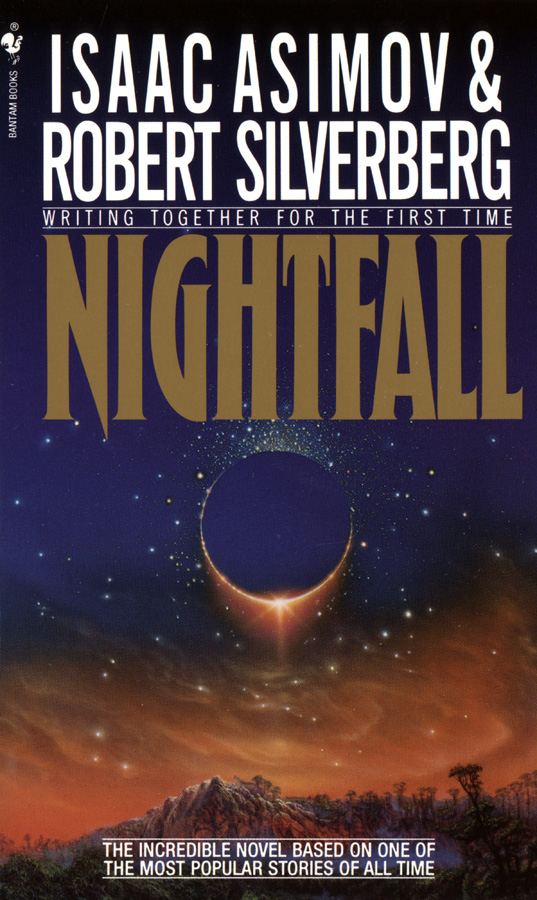
Nightfall and Foundation, in which knowledge is preserved by religious institutions, though in a less straightfoward manner.
The novel's end is bittersweet, as mankind by and large repeats its mistakes. This is especially tragic given how long the humans of Canticle had lived with their ancestors' mistakes: they were the ones living with greatly heightened levels of serious genetic disorders, and a landscape ruined in part by the ravages. They were the ones forced to claw their way back from the stone age after reaction against technology inflicted a 'cultural revolution' of sorts. Yet they persisted in straying near the edge yet again. There are reasons to be optimistic, however; at novel's end, the church at least has realized a plan to prevent this from happening again, by sending out a colony mission. In our own lives, we survived decades of brinkmanship and incidents that could have turned deadly.. We'll never truly learn from our mistakes, but when the consequences are as forboding as immediate and wholesale destruction, there at least we may hesitate enough to save our lives.
Related:
Nightfall and Foundation, in which knowledge is preserved by religious institutions, though in a less straightfoward manner.
Labels:
Catholicism,
Cold War Fiction,
monastics,
science fiction
Subscribe to:
Comments (Atom)