Showing posts with label Jack London. Show all posts

Wednesday, June 29, 2016

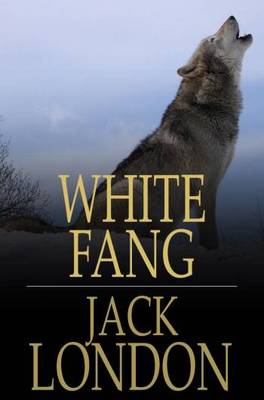
White Fang

White Fang
© 1906 Jack London
pp. 1- 101, Tales of the North.


"An' right here I want to remark,' Bill went on, 'that that animal's familiarity with camp-fires is suspicious an' immoral.'
'It knows for certain more'n a self-respectin' wolf ought to know,' Henry agreed

White Fang revisits  the theme of the Wild versus civilization from The Call of the Wild and reverses it.  Whereas in Call a soft California dog was thrown into the Alaskan wilderness and forced to call upon his instincts to survive, finding joy running with wolves after his master is killed,  in White Fang a dog/wolf hybrid is lured from the wild into the camps of man.  First published in Outing Magazine,  the story begins with two men being tracked by an eerie creature, a she-wolf who understands man. It is she who will give birth to a cub, and rear him in a wilderness of even-more dangerous predators like the Canadian lynx,  and it is her own youth spent in an Indian camp that will first introduce the cub to man.  Three-quarters wolf, there is virtually nothing of the dog in him, only a respect for Man's strength and a willingness to submit to it in exchange for shelter and food.  Yet there is more to man's relationship with wolves and dogs than sheer animal dominance.

 Here again London touches on Nietzsche's superman myth, and again rejects it; just as  he did in The Sea Wolf and Martin Eden.   White Fang is shaped by fear, hunger, and rejection to be a creature mighty in strength, desperately cunning, and comfortable only in solitude. He knows one law: kill or be killed, eat or be eaten, intimidate or cower. Every memory of tenderness, either from his cub days or his early adoption by an Yukon native, is erased after he falls into the captivity of dog-fighters.  Yet he is not lost; just as Wolf Larsen was defeated by a man who combined wild strength with moral courage, so too is White Fang's savagery tamed by persistent and intelligently guided affection,  care that teaches him other laws -- care that reignite the what little of the dog exists within him.  Considering that The Call of the Wild was my first novel, and that every single thing I've read by Jack London has proven unforgettable, it's hard to believe White Fang has taken me this long to read. It combines adventure with a narrative that speculates on how a dog might, in coming of age, grow to understand the world. The writing is winsome as usual, dramatic and - occasionally, unexpectedly - with flashes of laughter. (London has given me a most excellent insult -- "If you don't mind me saying, you're seventeen kinds of damn fool, all of them different, and then some!")

Related:
The Sea-Wolf, Jack London.

Desolation Laughing


Dark spruce forest frowned on either side the frozen waterway. The trees had been stripped by a recent wind of their white covering of frost, and they seemed to lean toward each other, black and ominous, in the fading light. A vast silence reigned over the land. The land itself was a desolation, lifeless, without movement, so lone and cold that the spirit of it was not even that of sadness. 
 There was a hint  in it of laughter, but of a laughter more terrible than any sadness -- a laughter that was mirthless as the smile of the sphinx, a laughter cold as the frost and partaking of the grimness of Infallibility. It was the masterful and incommunicable wisdom of eternity laughing at the futility of life and the effort of life. It was the Wild, the savage, frozen-hearted Northland Wild.
But there was life, abroad in the land and defiant.

White Fang, Jack London.


Wednesday, November 20, 2013

Martin Eden

Martin Eden
© 1908 Jack London
381 pages


For its first two thirds, Martin Eden is a uplifting tale of art and romance about a man of humble means who hauls himself up to a better station in life in pursuit of a woman, discovering his own soul in the process. This inspiring story turns quickly to tragedy, however, when it reveals how quickly and utterly lost a soul can be when disappearing on the heights of achievement, boasting about its own success.

Martin  Eden is a working-class sailor, positively rippling with masculine virility and sharply intelligent.  When he saves the life of a soft, pampered Oakland scion named Arthur Morse, he's invited to dinner by him in gratitude. Arthur warns his family that he's bringing home a wild man, but his sister Ruth is positively undone by Martin's sheer presence. He, too, is wowed by her; while he embodies everything wild, masculine, and rough, she embodies (very prettily) everything civilized, feminine, classy, and tender. The two worship one another within their own minds, but he realizes she is as far above his grasp as the angels, unless he can learn to talk as her family talks, and about the same subjects they deem fit: art, literature, and philosophy. Armed with curiosity, will, and the ability to master any subject through independent study, Martin submits to Ruth's desire to civilize him. But Ruth unwittingly creates a monster: drunk with love, idealism, and the thought of becoming a great author, Eden abandons all but study and art. The book records his quest of self-cultivation through study, self-expression through his struggling writer's career, and ultimately, self-aggrandizement. It is the latter that turns this story of accomplishment into tragedy, for Martin's triumph is achieved only by the loss of everything  within him worthwhile.

Martin Eden bears a close resemblance to Wolf Larsen, the fearful beast-man antagonist of The Sea Wolf, who like Eden was a self-taught intellectual master, but simultaneously a physical titan.  Both hold themselves to the ideal of the Nietzschean superman, the man shackled by nothing -- no chains on their thoughts, their bodies, or their hearts.  They were to be men without limit, who conquered the world before them and recognized no law save that of the wild: kill or be killed, triumph or perish. While Wolf Larsen was countered by a soft professor who became a 'man in full', full of wild strength but tempering it with civilized morality,  Martin encounters no worthy adversary. Having rejecting all, he is without anything, and though having achieved his goal he feels no joy in it  he is left with nothing but bitter loneliness, the kind of deep-seated alienation that leads inevitably downward.  I found it profoundly depressing, and imagine this to be London's goal; Martin is a tragic figure, almost Lucifer-like in his fall , and the greatest sadness is that he never recognizes that he  has done himself a disservice in embracing the philosophy of the Self over all.  Martin Eden has beautiful prose, and inspired characters, but the cautionary tale has such a harrowing ending that it almost prompts regret in having read it, thought nothing so thought-provoking and insightful should be ignored.

Related:
The Sea Wolf, Jack London
The Pearl, John Steinbeck


Tuesday, May 17, 2011

The Sea-Wolf

The Sea-Wolf
© 1906 Jack London
Reprinted in Tales of the North, © 1979.
pp. 183-330


Humphrey van Weyden never imagined that a simple ferry ride across the San Francisco Bay would take him so far. Following a collision at sea, he is rescued by one Wolf Larsen, the dread lord and master of the sealing schooner Ghost -- a man quite unlike any other van Weyden has ever encountered. The Wolf is the embodiment of brute strength, wild cunning, and savage brutality who dominates his ship, striking fear into the hearts of all aboard her. Wolf is inescapable -- but to obtain his freedom, van Weyden must somehow find the strength to do so.

While The Sea-Wolf follows the Ghost on a sealing expedition from San Francisco to Japan on peril-fraught seas, the adventure and struggle here is between two men --  one impotent if morally courageous, and the other gloriously strong but bankrupt as a man. Each fascinates the other: they circle one another like Buck and his counterparts in The Call of the Wild. While van Weyden attempts to make a life for himself aboard the Ghost, determined to survive, the two grapple over their respective worldviews -- treating the reader to a philosophical discussion about morality, the meaning of life, and the measure of a man.

The Wolf is a fascinating character, ferociously strong in both body and in spirit. He is almost 'the unfettered', the Nietzschean superman, but he lacks something to strive for. He lives for nothing, only exists, and so he languishes for all his strength. In the end it is what fate they create for themselves as the plot tests them which proves which is the better man -- for while van Weyden can develop the strength and cunning he needs to stand on his own two feet, independent of others, the Wolf is capable of growing beyond himself -- to live as a man, and not simply exist as a beast.

The Sea-Wolf enthralled me, not just for the wild energy London's characters and plotting seem to possess, but to witness the triumph of the human spirit -- not just van Weyden's growth, but his ability to maintain the nobility of humanity while at same time harnessing the beautiful, wild strength inside.

A note about this version of the story: the publishers printed the novel in four magazline-like columns and supplemented the text with stunning artwork by W.J. Aylward. Tales of the North collects The Call of the Wild, White Fang, The Cruise of the Dazzler, The Sea-Wolf, and fifteen short stories. I received it for Christmas years ago but never realized what a tremendous boon it was until I opened the book to see if it contained The Sea-Wolf: I'd been planning on checking that out from the library.

Related:

  • 20,000 Leagues Under the Sea. The strong but bitter Captain Nemo reminded me much of the Wolf. 
  • The Iron Heel, Jack London
  • The Call of the Wild, Jack London.
  • The Fountainhead/Atlas Shrugged, Ayn Rand. While I've never read them,  the Wolf uses the objectivist arguments for selfishness against van Weyden in the course of their discussions.

Tuesday, May 11, 2010

The Iron Heel

The Iron Heel
© 1907 Jack London
354 pages


(Mysteriously, my public library's 1907 copy of this book has survived a century of use, although its tattered pages testify that the years have been harsh on it. If it ever had a colorful dustcover of some kind, that has long vanished. My copy is a straight hardback, so this is lifted from Google Images.)

Jack London was the first serious author I ever read, my first novel being his The Call of the Wild. I've been meaning to read something else by him for years, and when I heard of The Iron Heel I knew I wanted to experience it.


The first thirty-three years of the 20th century witnessed the ultimate downfall of Europe's old aristocratic order and the rise of fascism, replacing the old monarchies with a terrifying new form of totalitarianism in light of liberal democracy's apparant failure to maintain prosperity. Cultural pessimism had become the order of the day, allowing sweeping new approaches that claimed to be rooted in older principles.

Imagine if aristocracy and classically liberal democracy fell to authoritarian states, but not to fascism. Imagine if the capitalist nations, rather than having their institutions infinitely maintained as liberal democracies aspired to do or being overthrown as socialists and fascists wanted, had simply been realized in full. Imagine that decades of the "hands-off" approach to economics, coupled with the tendecies of capitalism to magnify wealth expotentially and concentrate that wealth in the hands of fewer and fewer hands through competition, has resulted in the overwhelming majority of the United States' economy being owned by five large trusts who work together for mutual benefit. These trusts own the political machines that control the government, which might -- through "trust-busting" politicians and regulation -- by otherwise hinder their increasing power. These economic potentates control the resources of the land through the businesses and government, and as they grow they destroy the increasingly marginalized middle class and turn the general populace into industrial serfs, serving long hours for pitiful wages and utterly dependent on their masters for sustenance.

Penguin Classics cover.

This is the world of Jack London's Iron Heel, framed as a historical document complete with an introduction and running commentary from a historian centuries in the future. (Margaret Atwood may have borrowed this device for her The Handmaid's Tale.) The fictional author of the text is Avis Everhard, wife of Ernest Everhard: the man who predicts the coming of the Oligarchy and leads the revolution against it. At first he speaks only for members of the Socialist Party, but when his confrontations with the economic masters force them to abandon subtly in favor of outright tyranny -- using the state militias and private armies to oppress dissent and cause opponents to 'vanish' -- he becomes the leader of a nationwide proletarian revolution against the rule of the Iron Heel. He is martyred in the cause (as our historian informs us in the introduction), and the "Everhard manuscript" is Avis' tribute to him, written so that his role in routing the Oligarchy will not be forgotten. He is her idol, her "Eagle": a hero of humanity, full of passion and might. She writes with hope on the eve of a planned Second Revolt against the Oligarchy, although the framing device makes it clear to the reader that the Second Revolt is an even greater failure, resulting in the Oligarchy's global domination until its eventual downfall.

The Iron Heel is an interesting novel. It predates other dystopian works and introduces devices and themes used in the works* that followed, as is the case with the Atwood example. Like other dystopian novels, it functions as social criticism and as a warning to its reading audience of what may come if trends continue. London, writing in the Gilded Age -- the age of robber-barons and industrial slums -- warns against the possible total tyanny on the part of vast commercial interests.  London's flawless protagonist and the tone of the book's opening give it the feel of an author tract: the first 150 pages follow Everhard's rise as a socialist spokesperson, and through him London outlines his own grievances with the world of 1907 and why he believes in the socialist answer. Everhard addresses every class of society -- urging labor to defend itself, attempting to convince the waning small businessmen that they cannot turn back the clock of progress  Still, those pages caught my attention given my own political values and beliefs. Although this book is more than a century old, it grabbed my attention and did not let go, for I see London's concerns as still valid today. What would he make of the 'military-industrial complex', of media monoliths and their role in politics?

While the book is an interesting future/alternate history work in its own right and possibly the progenitor of a genre of fiction, it also serves to advocate for a vision of a better future, London's socialist vision in which conflicts of interests that lead to violence and hatred are removed completely. It's almost the Communist Manifesto for a mass audience, using the dialouge approach between Everhard and various audiences to explain Marxist criticism and socialist politics. It comments on London's world and ours in a decidely interesting way: definitely a book to  remember, revisit, and reccommend.


*The phrase "the iron heel" brings to mind George Orwell's 1984 quotation summarizing his dystopian world: "If you want a vision of the human future, imagine a boot stamping on a human face -- forever."