Pursuing the flourishing life and human liberty through literature.
"Once you learn to read, you will be forever free." - Frederick Douglass
Showing posts with label naval. Show all posts
Wednesday, May 1, 2019
English broadside
Well...this has been the saddest Read of England, and the saddest reading month, since my college days. At least the few I read were all fairly good! Read of England isn't quite over, as I'll be working on a few more books into May.
Earlier in the month I read Arthur Herman's To Rule the Waves, a history of the British navy which paid special attention to the impact the Royal Navy had on English and sometimes global history. This went beyond the obvious, in that the British navy was created and maintained by its massive navy, and that it was the main impediment to the plans of Napoleon for subduing the nation of shopkeepers. Although the backbone of the book is a straightforward (and detailed) naval history, Hermanexplores areas where the navy had influence in politics and navy. The English Civil War, for instance, was caused partially by the crown abusing "ship money" taxes, and the Navy would play a key part of Cromwell's victory, as most seamen supported the roundheads. Much to my delight, Herman also covered the scientific achievements of the English navy, especially in the 19th century.
Shortly after this I finally finished The Unpleasantness at Baskerville Hall, which...it's hard to describe. When I first picked it up, I thought it was a Jeeves meets Sherlock Holmes parody, which I thought would be interesting. Jeeves would make an excellent detective, I was sure, and Wooster would provide comic relief. There's no denying that this is a funny novel: from the beginning, Dolley captured Wooster's voice (or rather, "Worchester", and Jeeves has become Reeves) splendidly:
"'What ho, what ho, what ho,' I said. 'I’m Roderick, your long lost relation — risen from the sidings, so to speak. Reports of my flattening greatly exaggerated, what? Takes more than the 4:10 from Buenos Aires to keep a good Baskerville-Smythe down.'"
However, when Dolley was focused more on the Sherlock side of things, that Wodehouse razzle-dazzle fades quite a bit, so it's a little....teeter-tottery. I doubt that's a word, but the meaning's there. The book is also a..."steampunk" mystery, which is not a thing I've read any of, and to be perfectly honest I don't know what it entails. Here, it mean that there were reanimated bodies, Frankenstein creations, robots, and people sewing animal parts on themselves to function better, like taxidermy meets transhumanism. Altogether it was just a little too weird for me.
I finished the month up with An Empire on the Edge, in which a British historian who has mostly focused on Puritan America before tries to explain why Parliament wound up fighting its own people and creating through apathy and neglect a new nation. Bunker argues that Parliament paid so little attention to what was going on in America -- viewing it merely as a place that provided raw materials and a market for the empire, with the humans therein existing only to serve the mercantile economy -- that it was caught sorely be surprise when the Gaspee burned and the tea was soaked in Boston harbor. Distracted by continental goings-on (Britain was alone, as the four other great powers had sorted themselves into cozy couples), and not helped by the fact that it was rather new the business of global empire, the British did not respond to the crisis so much as react and inflame it further. The Britain of a century later would be far more thoughtful about the way it handled its growing empire in India, but in the 18th century there simply wasn't a plan. There were also blunders on the American side, like the repeated appeals to a king who had no real power: it was Parliament that levied the taxes and intolerable acts upon the colonies, proof that tyranny is not just the product of sole tyrants. Definitely of interest.
Sunday, March 17, 2019
The USS Alabama
Images of America: USS Alabama
© 2013 Kent Whitaker & Battleship Memorial Park
128 pages
© 2013 Kent Whitaker & Battleship Memorial Park
128 pages
When visiting downtown Mobile, one can’t help but notice the enormous battleship parked in the bay. It’s the USS Alabama, tenth to bear the name, and its proud history is recounted in this Images of America book which is as thorough as can be hoped for. Not only does Kent Whitaker (on behalf of Battleship Memorial Park in Mobile) deliver a full history of the ship (which operated in both theaters of World War 2, earning numerous battle stars) and photographs which explore life aboard her, but the book explores the histories of other ships named Alabama (including the CSS Alabama, sunk by the Kearsage after an illustrious career sinking Yankee shipping) as well as the particular story of how the Alabama came to be rescued from the scrapheap by children, and found instead a home in the port of its namesake state.
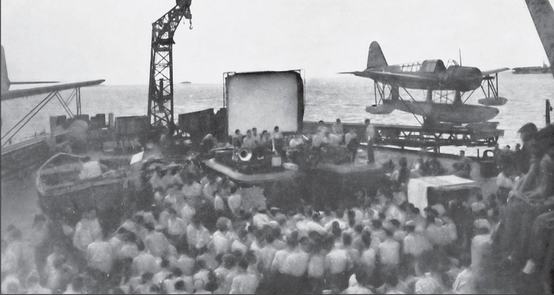
Given that this Images of America book is image-heavy, I thought I'd share a few.
The Alabama at work
Cleaning the "big guns", which...are very big indeed.
Social life aboard the ship
One of the two Kingfisher planes being launched by catapult. These were used for artillery spotting and for search and rescue operations.
The cross pennant indicated that religious services were in progress.
Saturday, March 24, 2018
The Return of Horatio Hornblower
Hornblower Addendum
Collected 2011 eNet press
79 pages
Has it been eight years since I last sailed with Horatio Hornblower? The naval adventure series by C.S. Forester, and the A&E movie series based on it were one of the highlights of 2010, and in the years since I’ve subjected many friends to those same movies so I could have the pleasure of watching them again in company. In hunting for books like Horatio Hornblower, however, I stumbled upon a collection of Hornblower tales I’d missed -- or, mostly missed. This is not a substantial collection by any means; it’s rather shorter than the shortest Hornblower work, Hornblower and the Hotspur, or Hornblower in the West Indies, and two of its five stories have been previously collected. The stories are chiefly of interest to those who know and admire Hornblower already, as they put him in fascinating or morally demanding situations. The last story here has him encounter a seeming lunatic who claims to be the emperor Napoleon, for instance, while another has him tasked with securing an Irish deserter and discovering a secret compartment in the man’s trunk filled with gold. In all instances Hornblower proves himself to be a perfectly honorable and charitable fellow. Perhaps the most interesting story in the one in which Admiral Hornblower is asked to take insane King George III to rendezvous with another ship, but they’re stumbled upon by an American frigate in the latter part of the war of 1812.
Although this collection really only recommends itself to the completists among Hornblower readers, I felt instantly at home as soon as I started reading the first story. Forester and his naval hero were good to experience again.
I'd planned this book to be a Read of England post, but it's more "fun-sized" than a regular read. I am gearing up for that, however -- we're a week away from a solid month of English glory!
Collected 2011 eNet press
79 pages
Although this collection really only recommends itself to the completists among Hornblower readers, I felt instantly at home as soon as I started reading the first story. Forester and his naval hero were good to experience again.
I'd planned this book to be a Read of England post, but it's more "fun-sized" than a regular read. I am gearing up for that, however -- we're a week away from a solid month of English glory!
Thursday, March 15, 2018
City of Fortune
City of Fortune: How Venice Ruled the Seas
© 2012 Roger Crowley
464 pages
In the north of the Adriatic grew a city built not on land, but upon the water -- whose fortune was earned in transit, by running the ships that connected Europe with the Orient. Already a powerful commercial entity at the time of the Fourth Crusade, Venice's actions there would catapult her to empire -- empire based on the broken back of eastern Rome, but empire nonetheless, and she would survive near-defeat and triumph again and again until finally she met her match in the Turks. City of Fortune is a history of the Stato da Màr, the empire of the sea that existed wherever waters run. A highly narrative history that focuses on Venice's peak and fighting decline, City of Fortune is a treat for students of European history as it tells the story of this most singular state.
This book was a particularly rare treat for me because I had no idea how it would end. I knew Venice was built from a swamp and maintained itself through trade, and that it was extensively involved in the crusades as the provider of transportation. I had no idea how powerful it was at its peak, however, and knew nothing of the circumstances of its decline. The story of Venice is one not of Europe, but of the Mediterranean: Venice, the Eastern Roman Empire, and the Turks are its primary actors. In the beginning Venice was technically a vassal of the eastern empire, commonly called the Byzantine, but as it made its living by trade the city rarely behaved like a subordinate, frequently engaging in commerce with the constantly-attacked empire's enemies in the middle east. When the Church organized another crusade to redeem Jerusalem from the rising Turks, Venice would become the key agent in derailing the crusade, ultimately sending it to conquer Constantinople instead of Jerusalem, and solidifying Turkic rule in Judea instead of repelling it. Venice's entire economy and much of its citizenry were consumed by the contract with the west to transport their men and material to Jerusalem: when the west balked at paying in full, Venice decided to use their armies to redeem its gold in other ways, by sacking some of its rival-neighbors. When some ambiguity over the Byzantine succession presented an opportunity for regime change and rewards in gold, naturally Venice took advantage and carried the crusade toward Constantinople. Things didn't go as planned, and....well, long story short the west conquered the city, fractured the eastern Roman empire, and left it easy pickings for the Turks as they continued to march west.
For a time Venice would flourish in its ill-gotten gains: from the ruins it turned its commercial holdings into a genuine empire, and the wealth of the ancients and the east would pour into Venice. When like proud Athens it found itself in bitter wars with its neighbors, even being surrounded by a Genoese fleet, it somehow rebounded. But nations reap what they sow as well as individuals, and Venice's empire of the sea was no match for the Turks' increasingly vast holdings in the middle east, marching through Asia Minor and soon pushing around Venice for possession of islands and seaways. Venice would attempt to organized a general European defense of the Med, but her own prideful pushiness made her a pariah -- and her attempts at lifting high the cross were laughed at, considering Venice's long history trading with Christendom's foes. Venice would lose her military might to the Turks in battle after battle, but ultimately it was Portugal who would see the city fall from commercial dominance. Faced with the Turkic domination of the west, the closing of access to India and China, the Portuguese would find new ways east -- and as the Age of Discovery dawned, Venice's brilliant star would dim. But that's a story for Crowley's other book, Conquerors: How Portugal Forged the First Global Empire.
Curiously, for a century or so there existed a lovely hotel in downtown Selma modeled after the Places of the Doges in Venice. The building was destroyed in the late sixties to make room for city hall. A pox on politicians!
© 2012 Roger Crowley
464 pages
In the north of the Adriatic grew a city built not on land, but upon the water -- whose fortune was earned in transit, by running the ships that connected Europe with the Orient. Already a powerful commercial entity at the time of the Fourth Crusade, Venice's actions there would catapult her to empire -- empire based on the broken back of eastern Rome, but empire nonetheless, and she would survive near-defeat and triumph again and again until finally she met her match in the Turks. City of Fortune is a history of the Stato da Màr, the empire of the sea that existed wherever waters run. A highly narrative history that focuses on Venice's peak and fighting decline, City of Fortune is a treat for students of European history as it tells the story of this most singular state.
This book was a particularly rare treat for me because I had no idea how it would end. I knew Venice was built from a swamp and maintained itself through trade, and that it was extensively involved in the crusades as the provider of transportation. I had no idea how powerful it was at its peak, however, and knew nothing of the circumstances of its decline. The story of Venice is one not of Europe, but of the Mediterranean: Venice, the Eastern Roman Empire, and the Turks are its primary actors. In the beginning Venice was technically a vassal of the eastern empire, commonly called the Byzantine, but as it made its living by trade the city rarely behaved like a subordinate, frequently engaging in commerce with the constantly-attacked empire's enemies in the middle east. When the Church organized another crusade to redeem Jerusalem from the rising Turks, Venice would become the key agent in derailing the crusade, ultimately sending it to conquer Constantinople instead of Jerusalem, and solidifying Turkic rule in Judea instead of repelling it. Venice's entire economy and much of its citizenry were consumed by the contract with the west to transport their men and material to Jerusalem: when the west balked at paying in full, Venice decided to use their armies to redeem its gold in other ways, by sacking some of its rival-neighbors. When some ambiguity over the Byzantine succession presented an opportunity for regime change and rewards in gold, naturally Venice took advantage and carried the crusade toward Constantinople. Things didn't go as planned, and....well, long story short the west conquered the city, fractured the eastern Roman empire, and left it easy pickings for the Turks as they continued to march west.
For a time Venice would flourish in its ill-gotten gains: from the ruins it turned its commercial holdings into a genuine empire, and the wealth of the ancients and the east would pour into Venice. When like proud Athens it found itself in bitter wars with its neighbors, even being surrounded by a Genoese fleet, it somehow rebounded. But nations reap what they sow as well as individuals, and Venice's empire of the sea was no match for the Turks' increasingly vast holdings in the middle east, marching through Asia Minor and soon pushing around Venice for possession of islands and seaways. Venice would attempt to organized a general European defense of the Med, but her own prideful pushiness made her a pariah -- and her attempts at lifting high the cross were laughed at, considering Venice's long history trading with Christendom's foes. Venice would lose her military might to the Turks in battle after battle, but ultimately it was Portugal who would see the city fall from commercial dominance. Faced with the Turkic domination of the west, the closing of access to India and China, the Portuguese would find new ways east -- and as the Age of Discovery dawned, Venice's brilliant star would dim. But that's a story for Crowley's other book, Conquerors: How Portugal Forged the First Global Empire.
Curiously, for a century or so there existed a lovely hotel in downtown Selma modeled after the Places of the Doges in Venice. The building was destroyed in the late sixties to make room for city hall. A pox on politicians!
Labels:
Eastern Rome/Byzantine,
Europe,
Italy,
Medieval,
Mediterranean,
naval
Tuesday, November 14, 2017
The Hemingway Patrols
The Hemingway Patrols: Ernest Hemingway and his Hunt for U-boats
© 2009 Terry Mort
272 pages
For some people, getting involved in the war effort meant collecting cans. For Ernest Hemingway, it meant patrolling the waters between the Florida Keys and Cuba and looking for U-boats. The Hemingway Patrols mixes World War 2, biography, and literary reflection to interesting effect. Although Hemingway's attempts to identify U-boats, Nazi supply stashes, and potential spies never bore any military fruit, the very idea is so audacious as to make a good story in itself. (Hemingway must have thought so, as he incorporated some of his experience in a story about men hunting for a U-boat..) Hemingway Patrols largely focuses on the character of Hemingway himself, his values and approach to life as expressed in both his actions and in his stories. His own life was a story that he intended to drive with gusto. It wasn't enough for Hemingway to write about the war as a journalist; he actively hated fascism and other authoritarian movements. (In a crisis, he is quoted, he would look to himself, his family, and his neighbors. The state could go hang itself.) The author compares Hemingway's patrol for u-boats to his long fishing expeditions, in which one man and a little tackle would try to wrest a great fish from the sea, exposing himself to the elements as he did. He lived for that moment when the marlin emerged from the sea, fighting, and even if it escaped that moment itself was worth all the waiting. Had Hemingway encountered a U-boat he would have found a great fish, indeed, and one unlikely to allow him to throw grenades inside as he planned. Fortunately for him and his later readers, the equipping of planes with sonar ended the worst days of the U-boat peril.
Although World War 2 in the Carribean and Gulf Coast is a rarely-explored area, the chief appeal here is for Hemingway fans. I've only read one of his books and a collection of short stories, but was captivated by the idea of a man in a wooden boat hunting for submarines. What a character Hemingway was!
Friday, April 21, 2017
The Armada
The Armada
© 1959 Garrett Mattingly
443 pages
In the late summer of 1588, all of Europe held its breath as an enormous Spanish fleet, consisting of a hundred and fifty vessels of varying sizes, set sail for the English channel. Their mission: to rendezvous with the elite troops of General Parma in the defeated Netherlands, and to transport them to England, there to revenge the execution of Mary, Queen of Scots, and depose Anne Boleyn’s daughter . That invasion never happened. As is famously known, the Armada met English fire and northern winds, and a third of its number was lost utterly on the shores of Britain and Ireland. It was for Elizabeth, constantly confronting intrigue from Catholics and Puritans alike, a glorious moment: here, before all of Europe, the wind and waves declared that she was the Dread Sovereign of all England. The Armada is a storied history not just of the Spanish fleet’s doomed voyage into the channel, but how Spain came to launch such an expensive and unwieldy endeavor.
Much of the weight of The Armada gives the background information for the “English Enterprise”. Europe is in the throes of the reformation, and rebellions against princes carry with them the fervor of holy wars. France, who might oppose the sudden envelopment of England into the Spanish empire, is struggling with its own civil war, and every one of the three contenders is a Henry. The Netherlands have risen against their Spanish lords, with the military and fiscal support of Elizabeth – who is presumably more interested in having enemies of Spain at her doorstep rather than Spain itself, given the two powers’ mutual hostility. There is a very good chance that Phillip could get away with styling himself the English king: he’d already enjoyed the title as Queen Mary’s husband, and Elizabeth reigns over a divided nation. Many of her subjects maintain faith with the Catholic church, secretly or openly, and several rebellions and conspiracies intending to restore a Catholic monarch to the throne have already erupted. If their former king landed and called them to rise against a woman already declared illegitimate by the Church, how easy would it be for them to bury their fears about civil war and declare for Phillip?
Fortunately for England’s men in arms, and their mothers, it never came to that. The English engaged in a running battle with the Armada as it made its way towards the Channel; there was no epic showdown, but a series of smaller skirmishes, two of which – when combined with the storms of the Channel – did serious damage to the fleet. By the time they neared the rendezvous, in fact ,the admirals in command had to view their stores of rotten food, ailing men, and badly leaking ships in the cold light of reality. The Armada was no longer capable of breaking the Dutch blockade that would allow the Spanish to take on their army and transport it to Spain. It might not even make it home, if it continued to be harassed. Part of the problem was that the Armada was so enormous and unwieldy. Its ships were gathered together from across Spain’s domain, and many were Mediterranean galleys built for ramming that were out of place in a battle that involved more artillery than swashbuckling shipboard raids. Even in the age of standardized equipment and radio communications, the Allies required months of planning and stockpiling to prepare for D-Day. Spain had a similar challenge, but its every piece of equipment might vary from casting to casting, and its barrels of food spoiled as quickly as they could be found. The Spanish sailed in the hopes of a miracle, but they found none. When news reached Phillip II, he wrote to the his bishops and could express only thanks that -- in the light of the storms -- more men were not lost.
I knew virtually nothing of the Armada except that it sailed, met a storm, and failed. Although in retrospect a brief review of the history of the period would have served me well as a reader (particularly in regards to France, whom I seem to ignore utterly between 1453 and 1789) , the author's delivery is indeed novel-like. The personalities of the period, like the swaggering Drake, add to the tale's liveliness. Although the wars of the day seem far removed from us now, the author's epilogue couldn't be more current: he cautions the reader that wars of ideologies are always the hardest to win.
© 1959 Garrett Mattingly
443 pages
In the late summer of 1588, all of Europe held its breath as an enormous Spanish fleet, consisting of a hundred and fifty vessels of varying sizes, set sail for the English channel. Their mission: to rendezvous with the elite troops of General Parma in the defeated Netherlands, and to transport them to England, there to revenge the execution of Mary, Queen of Scots, and depose Anne Boleyn’s daughter . That invasion never happened. As is famously known, the Armada met English fire and northern winds, and a third of its number was lost utterly on the shores of Britain and Ireland. It was for Elizabeth, constantly confronting intrigue from Catholics and Puritans alike, a glorious moment: here, before all of Europe, the wind and waves declared that she was the Dread Sovereign of all England. The Armada is a storied history not just of the Spanish fleet’s doomed voyage into the channel, but how Spain came to launch such an expensive and unwieldy endeavor.
Much of the weight of The Armada gives the background information for the “English Enterprise”. Europe is in the throes of the reformation, and rebellions against princes carry with them the fervor of holy wars. France, who might oppose the sudden envelopment of England into the Spanish empire, is struggling with its own civil war, and every one of the three contenders is a Henry. The Netherlands have risen against their Spanish lords, with the military and fiscal support of Elizabeth – who is presumably more interested in having enemies of Spain at her doorstep rather than Spain itself, given the two powers’ mutual hostility. There is a very good chance that Phillip could get away with styling himself the English king: he’d already enjoyed the title as Queen Mary’s husband, and Elizabeth reigns over a divided nation. Many of her subjects maintain faith with the Catholic church, secretly or openly, and several rebellions and conspiracies intending to restore a Catholic monarch to the throne have already erupted. If their former king landed and called them to rise against a woman already declared illegitimate by the Church, how easy would it be for them to bury their fears about civil war and declare for Phillip?
Fortunately for England’s men in arms, and their mothers, it never came to that. The English engaged in a running battle with the Armada as it made its way towards the Channel; there was no epic showdown, but a series of smaller skirmishes, two of which – when combined with the storms of the Channel – did serious damage to the fleet. By the time they neared the rendezvous, in fact ,the admirals in command had to view their stores of rotten food, ailing men, and badly leaking ships in the cold light of reality. The Armada was no longer capable of breaking the Dutch blockade that would allow the Spanish to take on their army and transport it to Spain. It might not even make it home, if it continued to be harassed. Part of the problem was that the Armada was so enormous and unwieldy. Its ships were gathered together from across Spain’s domain, and many were Mediterranean galleys built for ramming that were out of place in a battle that involved more artillery than swashbuckling shipboard raids. Even in the age of standardized equipment and radio communications, the Allies required months of planning and stockpiling to prepare for D-Day. Spain had a similar challenge, but its every piece of equipment might vary from casting to casting, and its barrels of food spoiled as quickly as they could be found. The Spanish sailed in the hopes of a miracle, but they found none. When news reached Phillip II, he wrote to the his bishops and could express only thanks that -- in the light of the storms -- more men were not lost.
I knew virtually nothing of the Armada except that it sailed, met a storm, and failed. Although in retrospect a brief review of the history of the period would have served me well as a reader (particularly in regards to France, whom I seem to ignore utterly between 1453 and 1789) , the author's delivery is indeed novel-like. The personalities of the period, like the swaggering Drake, add to the tale's liveliness. Although the wars of the day seem far removed from us now, the author's epilogue couldn't be more current: he cautions the reader that wars of ideologies are always the hardest to win.
Thursday, January 12, 2017
The Twilight War
The Twilight War: the Secret History of America's Thirty-Year War with Iran
656 pages
© 2013 David Crist
656 pages
© 2013 David Crist
In the presidential campaign of 2008,
John McCain made plain what kind of aggressive foreign policy he
would pursue by half-singing a chipper little ditty called “Bomb
Iran”, to the tune of the Beach Boys classic, “Barbara Ann”.
His malice was not even creative, for the song originated as a parody
in early 1980. That parody, though, was close to being reality, for
throughout the 1980s. American ships engaged in a quasi-war against Iran, ostensibly to protect the free flow of oil amid the Iraqi invasion of Iran. In
The Twilight War, Kevin
Crist documents the complete diplomatic and military history of the United
States and the Islamic Republic of Iran, from the Carter
administration to the the frustrated diplomacy of Barack Obama.
Written by the son of a CENTCOM general, it approaches being the
American equivalent of Iran and the United States,
written by an Iranian aide who appears here in interviews. The
Twilight War goes into much more
detail on military operations, however.
The essentials of the failed
Iran-American relationship are known to most everyone: in 1953, the
United States and Britain collaborated to oust Iran's
democratically-elected president, Mossadegh, and later militarily
supported the increasingly authoritarian shah until he was thrown out
in 1978. Most Americans were blissfully unaware that anyone in Iran
had reason to cry foul until student revolutionaries seized the
American embassy and held over a hundred American citizens, some of
them civilians doing aid work, for over a year. The water was thus
poisoned from both wells, leading to bumperstickers and Beach Boy
bombing threats in America, and cries of “Death to America!” in
Iran. Yet the power-caste in D.C cares little for principle; for
them, what mattered about Iran was not that it had abused Americans,
or that it had previously been manipulated by the American
government: what mattered to the fellows in the Pentagon and Langley
field was that Iran stood between the Soviet Union and the oil wealth
of the Persian Gulf region. If Iran could be enlisted as an ally
against the godless Soviets, huzzah; if not, well...no revolutionary
government stays popular, and
the invasion plans were already on the books.
Thus
the initial approach to Iran was framed within not its Islamic
status, but within the frame of the Cold War. The CIA accordingly
passed in information to their newly avowed enemy, Khomeini, to help
him exorcise the communists and other Soviet sympathizers from his
rank. At the same time, however, the CIA and other military
intelligence agencies attempted to create networks of informants and
agents on the ground Iran, who would lay the groundwork for an
invasion if that ever became necessary. What no one expected was
Saddam Hussein's invasion of Iran, which wasted over a million lives
over an eight-year period. After Iran survived Hussein's invasion
and prepared to mount its own, the west –- organized by the United
States – obliquely but purposely supported the Iraqi cause by
selling war material to Saddam and interfering with Iran's ability to
purchase in European markets. More directly, the United States took
on a military role in the Persian gulf, protecting oil tankers and
other neutral ships from the Iranian military – and ignoring
Iraqi movements, as they did when an Iraqi fighter fired a missile at
the USS Stark. As with
the USS Liberty incident,
in which Israel nearly destroyed an American ship, the blood in the
water was quickly covered over in the interests of diplomacy. Such
was the American commitment tin the Gulf that a separate global
command, CENTCOM, was created to watch the middle east, and two
mobile sea-bases were created in the Gulf itself to respond to Iran's
“guerilla war at sea”.
Later on, after the Soviet Union collapsed, there were moments that the United States and Iran might be able to build upon.The United States' growing commitment in the middle east, prompted by the Gulf War, created no small amount of resentment and fear in Iran, however. For decades, Iran had been the plaything of the British and Russian empires, then the target of both the American and Soviet spheres of influence, and now the Americans weren't even settling for fighting through proxies: their tanks were right there, in Saudi Arabia. Terrorism became an increasingly large factor in foreign relations, and the American commitment to both Saudi Arabia and Israel – Iran's most unfavorite neighbors – continues to be a barrier. More recently, through the Bush and Obama administrations, the prevailing official reason for Iran's designation as classroom pariah has been its pursuit of nuclear energy and the possibility of that pursuit also allowing Iran to manufacture nuclear arms. Frankly, I no longer trust the official reasoning of anyone coming out of D.C -- coming of political age in age of Iraq's phantom WMDs, and continuing to see the United States talk about both sides of its mouth in Syria -- but the growth of the genocide in a bottle club is a serious issue. Still, as Crist's account shows, there have been numerous instances when Iran and the United States were making headway, and then one party of the other decided not to follow through in good-faith arrangements.
Although The Twilight War's detailed account of military operations and aborted diplomatic deals can sometimes appear overwhelming in its thoroughness, Iran is not fading in importance. To the contrary: only recently, an army of Russian, Iranian, and Syrian troops were able to surround ISIS and its allies in Aleppo. When the United States toppled Hussein's regime in Iraq in the hopes of creating a democratic opponent of Iran, Iran's influence in Iraq instead swelled. They're not going away, and after sixteen years of constant war in the neighborhood, Americans aren't particular enthusiastic about more nation-building games. This book is a good resource for understanding what has happened so far. In the light of the seemingly unpredictable Trump, however, who knows what will happen? (Given Trump's business ties in Saudi Arabia and his avowed support of Israel, my guess is that he's more likely to be antagonistic towards Iran than now.)
Related:
Iran and the United States: an Insider's View, Seyed Hossein Mousavian
All the Shah's Men: An American Coup,Stephen Kinzer
Labels:
geopolitics,
history,
Middle East,
military,
naval,
Persia-Iran
Sunday, October 30, 2016
Dubh-Linn
Dubh-Linn: A Novel of Viking-Age Ireland
© 2014 James Nelson
326 pages
All Thorgrim Nightwolf wanted was to go home.But the gods and Irish women have a way of...complicating things. Thorgrim has more sense than to tangle with this benighted island and its politics, but his son Harold and his captain are another story. Both are besotted with a woman who claims to be the heir to the Irish throne; she's so vulnerable and lovely and in need of a protective hand, what with her story of having fled a murderous and now mysteriously stabbed-and-burned husband. But Brigit is playing them like a fiddle, and what's more -- she's in a contest with the equally beautiful and equally ruthless Morrigan, who hopes to rule through her brother's claim on the throne. As Thorgrim tries to save his brethren from themselves from these deadly wiles, the plot develops to a final battle involving four armies, none of which have any idea who is pulling the strings.
When I read Fin Gall, the first book in this series, I noted that the two Irish women seemed interchangeable. To a degree, that's still the case here: they're both beautiful, dangerous, and manipulative. But one is pregnant, and the other is in power. While Nelson isn't as comedic as Cornwell, his action scenes are utterly gripping, and he's even better than Cornwell at making the environment around his characters come alive. The gloom of clouds, the mists of forests, the odor of rotting hay -- it's all very effective. So far both of his books have involved his main characters stumbling through other people's schemes, but one here was an absolute beauty. What I especially like here is a main character, Thorgrim, whose main concern is protecting and guiding his son as he assumes more responsibilities and perils of manhood.
Definitely will continue in this series. And Cornwell is coming again in November with the Flame Bearer!
Related:
© 2014 James Nelson
326 pages
All Thorgrim Nightwolf wanted was to go home.But the gods and Irish women have a way of...complicating things. Thorgrim has more sense than to tangle with this benighted island and its politics, but his son Harold and his captain are another story. Both are besotted with a woman who claims to be the heir to the Irish throne; she's so vulnerable and lovely and in need of a protective hand, what with her story of having fled a murderous and now mysteriously stabbed-and-burned husband. But Brigit is playing them like a fiddle, and what's more -- she's in a contest with the equally beautiful and equally ruthless Morrigan, who hopes to rule through her brother's claim on the throne. As Thorgrim tries to save his brethren from themselves from these deadly wiles, the plot develops to a final battle involving four armies, none of which have any idea who is pulling the strings.
When I read Fin Gall, the first book in this series, I noted that the two Irish women seemed interchangeable. To a degree, that's still the case here: they're both beautiful, dangerous, and manipulative. But one is pregnant, and the other is in power. While Nelson isn't as comedic as Cornwell, his action scenes are utterly gripping, and he's even better than Cornwell at making the environment around his characters come alive. The gloom of clouds, the mists of forests, the odor of rotting hay -- it's all very effective. So far both of his books have involved his main characters stumbling through other people's schemes, but one here was an absolute beauty. What I especially like here is a main character, Thorgrim, whose main concern is protecting and guiding his son as he assumes more responsibilities and perils of manhood.
Definitely will continue in this series. And Cornwell is coming again in November with the Flame Bearer!
Related:
- Vikings, season 3. (Trailer) Ragnar's son Bjorn is rapidly becoming not just a man, but a leader of men. Also, dangerous women aplenty, especially in Kwenthrith. Holy cow. (Also, they attack Paris and it is BRUTAL.)
- The Saxon Stories series, Bernard Cornwell. Lots of Saxon-Dane fighting and bountiful humor.
- Leofric, Sword of the Angles. An story of Angle politics from when they were still migrating into Britain.
Labels:
historical fiction,
Ireland,
James Nelson,
Medieval,
naval,
The Northmen Saga
Friday, September 2, 2016
Rescue Warriors
Rescue Warriors: The U.S. Coast Guard, America's Forgotten Heroes
© 2009 David Helvarg
384 pages
When Katrina devastated the Gulf Coast in 2005, the Coast Guard was the first on the scene, with helicopters in the air saving lives long before FEMA stirred. Though one of the United States’ military branches, the Coast Guard is an unusual institution; best-known for its high profile search and rescue missions. Far and away the smallest military branch – and the most physically and academically rigorous in terms of its recruiting requirements -- the Coast Guard’s mission takes it far beyond safe and shallow coastal waters. Rescue Warriors provides both a history of and a tribute to this oft-overlooked service, mixing history of its various missions and interviews with men and women working overtime to preserve lives and keep the coasts safe.
Although the Coast Guard was officially organized in 1915, it prefers to trace its history back to the revenue cutters of George Washington’s administration, which enforced and collected customs and tariff fees. Another parent organization was that of the lighthouse and lightship service. The present Coast Guard has maintained that duel-purpose organization, simultaneously enforcing maritime law and rescuing those in danger. Its mission portfolio is vast: in Rescue Warriors, Helvarg interviews search-and-rescue teams, drug-enforcement patrols, counter-terrorism missions, environmental cleanup crews, science stations, and even more. Helvarg spent time with servicemen and officers from around the United States’ territorial waters: the Gulf Coast, New England, California, Alaska, Hawaii, and even (with Canadian ‘permission’) in the Artic northwest passage. Despite its ‘coast’ guard name, Coasties may be found throughout the world: their boarding teams are especially relied upon in the Persian Gulf, boarding local boats (with consent) to ask about pirate concerns – and fishing for information on parties hostile toward the governments of Iraq and the United States. (If the Coast Guard being a military branch simultaneously providing law enforcement seems constitutionally questionable, that isn’t surprising given that Wilson presided over their formal creation: he never met a constitutional curb he wouldn’t drive over.)
The demands placed on the Coast Guard only seem to be increasing: a global economy means more ships to monitor, and with the Artic now open for commercial traffic and industry, there will be still more ground to cover. The Coast Guard is much smaller than even the closest other service, the US Marines, but the gulf between its responsibilities and resources has demanded a great deal of efficiency. The average age of a Coast Guard ship is thirty-five years, and its officers’ training vessel, the Eagle, was built in 1936. That’s resource conservation, though when a helicopter requires 40 hours of maintenance for every hour of flight time.... The reason for the Guard’s physical and mental demands becomes obvious in reading this: they are operational every day, not simply training for the next big conflict, and they often go against nature at its hairiest – flying helicopters into punishing winds to seek out those in peril on the sea. They’re also up against human nature: in the opening chapter on rescue operations in Hurricane Katrina, the Guard’s Seahawk helicopters took ground fire from locals; another man threatened to shoot a helo crew if they didn’t rescue him, and when they dropped people off at a CG station, it was promptly looted – though the ammunition locker refused to give up its contents. At least against cartel gunmen, the Coast Guard is authorized for “Airborne Use of Force”.
Rescue Warriors makes for encouraging reading, filled with tales of rescue, of men and women stretching themselves so that others might live. Helvarg sees the Coast Guard’s historical legacy and current role as exemplary, highlighting the early employment of women in the lighthouse service, and urges that the Coast Guard be given more resources so that it might serve the United States’ expanding needs. Ultimately, this is a fun read, a mix of history, present-day history stories, and a fair bit of editorializing by the author whenever there is an environmental connection.
Related:
The Heart and the Fist, Eric Greitens. The memoirs of a humanitarian-turned-Navy SEAL, another mix of service and force.
© 2009 David Helvarg
384 pages
When Katrina devastated the Gulf Coast in 2005, the Coast Guard was the first on the scene, with helicopters in the air saving lives long before FEMA stirred. Though one of the United States’ military branches, the Coast Guard is an unusual institution; best-known for its high profile search and rescue missions. Far and away the smallest military branch – and the most physically and academically rigorous in terms of its recruiting requirements -- the Coast Guard’s mission takes it far beyond safe and shallow coastal waters. Rescue Warriors provides both a history of and a tribute to this oft-overlooked service, mixing history of its various missions and interviews with men and women working overtime to preserve lives and keep the coasts safe.
Although the Coast Guard was officially organized in 1915, it prefers to trace its history back to the revenue cutters of George Washington’s administration, which enforced and collected customs and tariff fees. Another parent organization was that of the lighthouse and lightship service. The present Coast Guard has maintained that duel-purpose organization, simultaneously enforcing maritime law and rescuing those in danger. Its mission portfolio is vast: in Rescue Warriors, Helvarg interviews search-and-rescue teams, drug-enforcement patrols, counter-terrorism missions, environmental cleanup crews, science stations, and even more. Helvarg spent time with servicemen and officers from around the United States’ territorial waters: the Gulf Coast, New England, California, Alaska, Hawaii, and even (with Canadian ‘permission’) in the Artic northwest passage. Despite its ‘coast’ guard name, Coasties may be found throughout the world: their boarding teams are especially relied upon in the Persian Gulf, boarding local boats (with consent) to ask about pirate concerns – and fishing for information on parties hostile toward the governments of Iraq and the United States. (If the Coast Guard being a military branch simultaneously providing law enforcement seems constitutionally questionable, that isn’t surprising given that Wilson presided over their formal creation: he never met a constitutional curb he wouldn’t drive over.)
The demands placed on the Coast Guard only seem to be increasing: a global economy means more ships to monitor, and with the Artic now open for commercial traffic and industry, there will be still more ground to cover. The Coast Guard is much smaller than even the closest other service, the US Marines, but the gulf between its responsibilities and resources has demanded a great deal of efficiency. The average age of a Coast Guard ship is thirty-five years, and its officers’ training vessel, the Eagle, was built in 1936. That’s resource conservation, though when a helicopter requires 40 hours of maintenance for every hour of flight time.... The reason for the Guard’s physical and mental demands becomes obvious in reading this: they are operational every day, not simply training for the next big conflict, and they often go against nature at its hairiest – flying helicopters into punishing winds to seek out those in peril on the sea. They’re also up against human nature: in the opening chapter on rescue operations in Hurricane Katrina, the Guard’s Seahawk helicopters took ground fire from locals; another man threatened to shoot a helo crew if they didn’t rescue him, and when they dropped people off at a CG station, it was promptly looted – though the ammunition locker refused to give up its contents. At least against cartel gunmen, the Coast Guard is authorized for “Airborne Use of Force”.
Rescue Warriors makes for encouraging reading, filled with tales of rescue, of men and women stretching themselves so that others might live. Helvarg sees the Coast Guard’s historical legacy and current role as exemplary, highlighting the early employment of women in the lighthouse service, and urges that the Coast Guard be given more resources so that it might serve the United States’ expanding needs. Ultimately, this is a fun read, a mix of history, present-day history stories, and a fair bit of editorializing by the author whenever there is an environmental connection.
Related:
The Heart and the Fist, Eric Greitens. The memoirs of a humanitarian-turned-Navy SEAL, another mix of service and force.
Sunday, August 21, 2016
Miracle at Midway
Miracle at Midway
© 1983 Gordon Prange, Donald Goldstein and,Katherine Dillon,
512 pages
Miracle at Midway is a thorough history of the June 4-7 effort of the Japanese to simultaneously seize the most likely U.S. approaches to the Empire and lure the US Pacific Fleet into a general engagement wherein it might be destroyed in total. Though colossally outnumbered in ships, the US Navy and Army Air Forces on Midway island had a slight advantage in planes which was used to enormous effect; in this David and Goliath battle, the Japanese carriers were the object of a surgical strike, though one of dive-bombers instead of stones. While there was definitely an element of luck on the American side -- one Japanese carrier's planes were caught pants down, trying to refuel and re-arm -- Midway was a victory of intelligence and courage more than fate. Although suffering from a paucity of maps, the authors bring extensive analysis and heavy research into the Japanese side to the table as well. Midway is one of the more important battles of the second World War, at least for Americans: just six months after the humiliating surprise of Pearl Harbor, the Pacific Fleet had utterly reversed its fortunes, destroying in a day the pride of the Japanese imperial fleet. Dai Nippon lost not only four carriers, but hundreds of planes and thousands of veteran men whose talents and experience could not be replaced. It's also an extraordinary moment in the history of naval warfare, the first battle in which the competing surface fleets never saw one another but through their air wings.
© 1983 Gordon Prange, Donald Goldstein and,Katherine Dillon,
512 pages
Miracle at Midway is a thorough history of the June 4-7 effort of the Japanese to simultaneously seize the most likely U.S. approaches to the Empire and lure the US Pacific Fleet into a general engagement wherein it might be destroyed in total. Though colossally outnumbered in ships, the US Navy and Army Air Forces on Midway island had a slight advantage in planes which was used to enormous effect; in this David and Goliath battle, the Japanese carriers were the object of a surgical strike, though one of dive-bombers instead of stones. While there was definitely an element of luck on the American side -- one Japanese carrier's planes were caught pants down, trying to refuel and re-arm -- Midway was a victory of intelligence and courage more than fate. Although suffering from a paucity of maps, the authors bring extensive analysis and heavy research into the Japanese side to the table as well. Midway is one of the more important battles of the second World War, at least for Americans: just six months after the humiliating surprise of Pearl Harbor, the Pacific Fleet had utterly reversed its fortunes, destroying in a day the pride of the Japanese imperial fleet. Dai Nippon lost not only four carriers, but hundreds of planes and thousands of veteran men whose talents and experience could not be replaced. It's also an extraordinary moment in the history of naval warfare, the first battle in which the competing surface fleets never saw one another but through their air wings.
Thursday, April 14, 2016
Master and Commander
© 1969 Patrick O'Brian
411 pages
This morning, in a quiet courtyard, I finished Master and Commander, the first book in Patrick O’Brian’s Napoleonic naval stories. These have been recommended to me ever since I finished Horatio Hornblower, though O’Brian devotes far more space to technical seafaring matters. He’s aware of this, too, having a sailor explain the workings of the good ship Sophie’s riggings to the newly-arrived surgeon. The series is reliably referred to as the Aubrey-Maturin series for centering on the friendship between Commander Jack Aubrey and his surgeon, Stephen Maturin. There are other interesting relationships, like the Mysterious Past between Maturin and the lieutenant of the Sophie, Jack Dillon. Both seem to have a connection to the failed and bloodily-repulse Irish Uprising in 1798. The book follows Aubrey’s brief stint on the Sophie, which largely involves him chasing potential prizes, almost to the ruin of his ship. One character comments that Aubrey would have been a better fit as a pirate a century prior. Despite his winning audacity, Aubrey's relationship with his immediate superiors is testy, to say the least. When O’Brian is not attempting to trip or entangle readers in the ropes and riggings of 19th century naval equipment, he has a lovely hand for description, and I would not be surprised if I sailed with the good captain again. The main attraction for the books other to the naval action is the presence of a natural philosopher, a man fascinated by the world around him.
© 1969 Patrick O'Brian
411 pages
This morning, in a quiet courtyard, I finished Master and Commander, the first book in Patrick O’Brian’s Napoleonic naval stories. These have been recommended to me ever since I finished Horatio Hornblower, though O’Brian devotes far more space to technical seafaring matters. He’s aware of this, too, having a sailor explain the workings of the good ship Sophie’s riggings to the newly-arrived surgeon. The series is reliably referred to as the Aubrey-Maturin series for centering on the friendship between Commander Jack Aubrey and his surgeon, Stephen Maturin. There are other interesting relationships, like the Mysterious Past between Maturin and the lieutenant of the Sophie, Jack Dillon. Both seem to have a connection to the failed and bloodily-repulse Irish Uprising in 1798. The book follows Aubrey’s brief stint on the Sophie, which largely involves him chasing potential prizes, almost to the ruin of his ship. One character comments that Aubrey would have been a better fit as a pirate a century prior. Despite his winning audacity, Aubrey's relationship with his immediate superiors is testy, to say the least. When O’Brian is not attempting to trip or entangle readers in the ropes and riggings of 19th century naval equipment, he has a lovely hand for description, and I would not be surprised if I sailed with the good captain again. The main attraction for the books other to the naval action is the presence of a natural philosopher, a man fascinated by the world around him.
Wednesday, November 18, 2015
Convoy
Convoy: The Greatest U-Boat Battle of the War
© 1976 Martin Middlebrook
384 pages
In his memoirs, Winston Churchill admitted that nothing worried him quite so much as the U-boat menace. Britain could stand alone against a continental menace, but not without supplies from friends and her Empire abroad. Submarine attacks on merchant shipping broke out almost as soon as war was declared, and reached their peak in 1943 as a massive wolf packs gathered and waited for convoys to appear After an introduction which gives an intimate introduction to civilian sailors, Allied navy men, and German submariners, Martin Middlebrook takes readers across the storm-tossed North Atlantic, following two convoys in a running battle with the greatest concentration of U-boats in the war. Dozens of merchant ships sank into the deep, at little cost to the assailants, and Middlebrook uses the week-long drama as a case study to examine the U-boat threat and Allied responses to it. Though in part a military history, here civilian men and women are heroes as well, fighting against their own fear and struggling together in the aftermath of attacks to survive.
By 1943, U-boats were no longer patrolling vast areas of the ocean and pursuing alone any merchantman they came across. They were strategic weapons, directed and controlled from Europe itself, and fed by intelligence reports that let them know when to expect victims and where. In response to the Allied strategy of forming convoys -- scores of merchant ships flanked by a handful of escorts -- U-boats gathered en masse as well, forming picket lines where they expected a convoy to pass and then converging on it once contact had been made. As its name implies, Convoy is foremost a naval drama, but aviation is an indispensable aspect of the story. Aircraft were the mortal enemies of submarines, providing effective screens around the coast and depth-charging vessels caught cruising on the surface. Even B-17s could only range out so far, however, leaving an "air gap" over the mid-Atlantic,a large window of opportunity for U-boats to wreak havoc unmolested. It is in that window of space, the submarine hunting ground, that Convoy sets forth in.
For several days and nights, vast and lumbering ships carrying locomotives, invasion barges, cotton, wheat, and other sundry supplies to Britain lay at the mercy of dozens of U-boats, defended by a mere handful of escorts. These escorts were not brand new destroyers run by top-rated seaman, either, but sometimes converted civilian ships equipped with depth charges, captained by retired gentlemen who in peacetime commanded only their personal yachts. One craft in the battle was so old that the English declined to borrow it through the Lend-Lease program! The middle section of Convoy follows the constant harrying of the fleet by a formidable gathering of U-boats, and is solid historical journalism; Middlebrook constructs the story based on numerous ships' logs and survivor accounts. The appeal is not strictly military, however; as so many of the players are civilians in extraordinary circumstances. Logs from both Allied and German sources are used, and the details and photographs communicate the combatants' commonality as well. Though divided by war, they are no less united in their human frailty, in their vulnerability on the open oceans and their isolation and loneliness from serving from months on end in ports and waters far from home. The book is most helpful to a student of the period, however, ending with an analysis of the battle. Despite the losses inflicted on the Allies, matters could have been worse; while the U-boat formation was engaged in confronting these two convoys, so thick was the Atlantic with traffic that other convoys were able to hustle through other now un-guarded sea lanes. Within two months' time, various pieces of Allied anti-submarine warfare would click together; the air gap would be closed with longer-ranging aircraft, and the daunting strength of the U-boat fleet broken. At the moment recorded here, however, and for the three years preceding it, their hands were at Britain's very throat, and Middlebrook delivers a sense of peril quite well.
© 1976 Martin Middlebrook
384 pages
In his memoirs, Winston Churchill admitted that nothing worried him quite so much as the U-boat menace. Britain could stand alone against a continental menace, but not without supplies from friends and her Empire abroad. Submarine attacks on merchant shipping broke out almost as soon as war was declared, and reached their peak in 1943 as a massive wolf packs gathered and waited for convoys to appear After an introduction which gives an intimate introduction to civilian sailors, Allied navy men, and German submariners, Martin Middlebrook takes readers across the storm-tossed North Atlantic, following two convoys in a running battle with the greatest concentration of U-boats in the war. Dozens of merchant ships sank into the deep, at little cost to the assailants, and Middlebrook uses the week-long drama as a case study to examine the U-boat threat and Allied responses to it. Though in part a military history, here civilian men and women are heroes as well, fighting against their own fear and struggling together in the aftermath of attacks to survive.
By 1943, U-boats were no longer patrolling vast areas of the ocean and pursuing alone any merchantman they came across. They were strategic weapons, directed and controlled from Europe itself, and fed by intelligence reports that let them know when to expect victims and where. In response to the Allied strategy of forming convoys -- scores of merchant ships flanked by a handful of escorts -- U-boats gathered en masse as well, forming picket lines where they expected a convoy to pass and then converging on it once contact had been made. As its name implies, Convoy is foremost a naval drama, but aviation is an indispensable aspect of the story. Aircraft were the mortal enemies of submarines, providing effective screens around the coast and depth-charging vessels caught cruising on the surface. Even B-17s could only range out so far, however, leaving an "air gap" over the mid-Atlantic,a large window of opportunity for U-boats to wreak havoc unmolested. It is in that window of space, the submarine hunting ground, that Convoy sets forth in.
For several days and nights, vast and lumbering ships carrying locomotives, invasion barges, cotton, wheat, and other sundry supplies to Britain lay at the mercy of dozens of U-boats, defended by a mere handful of escorts. These escorts were not brand new destroyers run by top-rated seaman, either, but sometimes converted civilian ships equipped with depth charges, captained by retired gentlemen who in peacetime commanded only their personal yachts. One craft in the battle was so old that the English declined to borrow it through the Lend-Lease program! The middle section of Convoy follows the constant harrying of the fleet by a formidable gathering of U-boats, and is solid historical journalism; Middlebrook constructs the story based on numerous ships' logs and survivor accounts. The appeal is not strictly military, however; as so many of the players are civilians in extraordinary circumstances. Logs from both Allied and German sources are used, and the details and photographs communicate the combatants' commonality as well. Though divided by war, they are no less united in their human frailty, in their vulnerability on the open oceans and their isolation and loneliness from serving from months on end in ports and waters far from home. The book is most helpful to a student of the period, however, ending with an analysis of the battle. Despite the losses inflicted on the Allies, matters could have been worse; while the U-boat formation was engaged in confronting these two convoys, so thick was the Atlantic with traffic that other convoys were able to hustle through other now un-guarded sea lanes. Within two months' time, various pieces of Allied anti-submarine warfare would click together; the air gap would be closed with longer-ranging aircraft, and the daunting strength of the U-boat fleet broken. At the moment recorded here, however, and for the three years preceding it, their hands were at Britain's very throat, and Middlebrook delivers a sense of peril quite well.
Wednesday, November 11, 2015
Battles for Scandinavia
© 1981 John Elton
203 pages
Time-Life History of WW2
In Battles for Scandinavia, John Elton takes readers into the three nations who had the distinct bad luck to lay between the warring powers of World War 2. Norway, Sweden, and Finland lay to the north of Germany, the east of Britain, and the west of Russia, guarding the sea access to both Russia and Germany's heartland. In the opening year of World War 2, Finland and Norway would fall to the Soviets and Nazis respectively, while Sweden armed itself to the teeth and dared the evil empires -- "Molon labe!" Although devoured by separate empires, the Scandinavian nations shared a common plight, and Battles combines three distinct conflicts: Russia's attempted takeover of Finland, the German seizure of Norway and Denmark, and the shoving match between Germany and Russia that entangled Finland once more. In Battles we see three nations over their heads but resisting as best they can.
I knew little of the Winter War except that Finnish soldiers defending their land from Soviet aggression exacted a heavy price from the invading army, inflicting five times as many casualties as they took. Throughout a savage winter, Soviet ineptitude at fighting in novel terrain and Finnish guerilla tactics that made the most of limited resources made Soviet ambition cost them dearly. In the end, their sheer weight of numbers did force the Finns into a settlement, but no sooner had a cease-fire been declared there than did German troops launch an invasion of Norway. They were competing with English troops who wanted to seize key ports to prevent their being used to aid the Nazi war effort, but fortunately the Norwegians overlooked that little detail and welcomed any assistance against their new peril. The English fared well on the high seas, but an attempt to fracture the German offensive at Trondheim ended only in retreat. Norway would remain Germany's for most of the war, providing space for airfields and submarine pens to launch attacks against Britain. Immediately after the conquest of Norway, of course, Germany invaded France and then spent a deadly summer threatening Britain with its own invasion until the weather changed and Germany shifted its focus to invading Russia, instead. When the devils' alliance ended with Panzers racing through the rodina, the Germans found an interesting ally -- Finland, who had not been conquered, merely temporarily pacified. The Germano-Finnish invasion put the Allies in a difficult place: the Finns were counterattacking, not building empire, but Stalin demanded somebody do something to help. Britain did declare war on Finland, but mercifully never crossed swords with it. The book is full of little anecdotes, and a favorite is an Finnish soldier who sighs at the English declaration: "We shall have to shave now, we are fighting 'gentlemen'!" Finland's alliance with the Nazis would ultimately backfire, however; kept alive by English blood and American resources, the Soviets would recover and drive back the Germans. Threatened with Soviet wrath, Finland made a separate peace and found itself ravaged instead by its one-time ally, who slammed the door and burned everything on the way out, with an indignant "Thanks for nothing, 'comrades-in-arms!". Poor Finland -- so far from God, so close to nations with dreams of world conquest.
Battles for Scandinavia also covers Sweden and Denmark, though more briefly. Denmark was taken by Germany so quickly that its dazed population woke up to find Germany already in control of the country; only later did resistance break out. Along among the north countries, Sweden remained free: refusing to entangle itself in alliances, its people and its leaders determined to make themselves as "indigestible" as possible. Sweden became an armed camp, a nation prepared to fight for its life. Much of the combat around Scandinavia happened literally around it, in the sealanes that allowed the Allies to transport war material to Russia. The nearness of combat to the pole made such sea transit doubly dangerous: the Artic seas are harsh and unforgiving, and Allied ships sailed through months wintry gloom under a blackout, waiting for an enemy to shoot from the dark.The Germans were late to realize the importance of the convoys to Russia, but once they do an extensive chapter on naval warfare follows. As with other Time-Life books, photographs here are ample, and include paintings depicting life in the snowy wastes. Maps are very good, and the writing well communicates the suffering of men fighting in intense conditions.
© 1981 John Elton
203 pages
Time-Life History of WW2
In Battles for Scandinavia, John Elton takes readers into the three nations who had the distinct bad luck to lay between the warring powers of World War 2. Norway, Sweden, and Finland lay to the north of Germany, the east of Britain, and the west of Russia, guarding the sea access to both Russia and Germany's heartland. In the opening year of World War 2, Finland and Norway would fall to the Soviets and Nazis respectively, while Sweden armed itself to the teeth and dared the evil empires -- "Molon labe!" Although devoured by separate empires, the Scandinavian nations shared a common plight, and Battles combines three distinct conflicts: Russia's attempted takeover of Finland, the German seizure of Norway and Denmark, and the shoving match between Germany and Russia that entangled Finland once more. In Battles we see three nations over their heads but resisting as best they can.
I knew little of the Winter War except that Finnish soldiers defending their land from Soviet aggression exacted a heavy price from the invading army, inflicting five times as many casualties as they took. Throughout a savage winter, Soviet ineptitude at fighting in novel terrain and Finnish guerilla tactics that made the most of limited resources made Soviet ambition cost them dearly. In the end, their sheer weight of numbers did force the Finns into a settlement, but no sooner had a cease-fire been declared there than did German troops launch an invasion of Norway. They were competing with English troops who wanted to seize key ports to prevent their being used to aid the Nazi war effort, but fortunately the Norwegians overlooked that little detail and welcomed any assistance against their new peril. The English fared well on the high seas, but an attempt to fracture the German offensive at Trondheim ended only in retreat. Norway would remain Germany's for most of the war, providing space for airfields and submarine pens to launch attacks against Britain. Immediately after the conquest of Norway, of course, Germany invaded France and then spent a deadly summer threatening Britain with its own invasion until the weather changed and Germany shifted its focus to invading Russia, instead. When the devils' alliance ended with Panzers racing through the rodina, the Germans found an interesting ally -- Finland, who had not been conquered, merely temporarily pacified. The Germano-Finnish invasion put the Allies in a difficult place: the Finns were counterattacking, not building empire, but Stalin demanded somebody do something to help. Britain did declare war on Finland, but mercifully never crossed swords with it. The book is full of little anecdotes, and a favorite is an Finnish soldier who sighs at the English declaration: "We shall have to shave now, we are fighting 'gentlemen'!" Finland's alliance with the Nazis would ultimately backfire, however; kept alive by English blood and American resources, the Soviets would recover and drive back the Germans. Threatened with Soviet wrath, Finland made a separate peace and found itself ravaged instead by its one-time ally, who slammed the door and burned everything on the way out, with an indignant "Thanks for nothing, 'comrades-in-arms!". Poor Finland -- so far from God, so close to nations with dreams of world conquest.
Battles for Scandinavia also covers Sweden and Denmark, though more briefly. Denmark was taken by Germany so quickly that its dazed population woke up to find Germany already in control of the country; only later did resistance break out. Along among the north countries, Sweden remained free: refusing to entangle itself in alliances, its people and its leaders determined to make themselves as "indigestible" as possible. Sweden became an armed camp, a nation prepared to fight for its life. Much of the combat around Scandinavia happened literally around it, in the sealanes that allowed the Allies to transport war material to Russia. The nearness of combat to the pole made such sea transit doubly dangerous: the Artic seas are harsh and unforgiving, and Allied ships sailed through months wintry gloom under a blackout, waiting for an enemy to shoot from the dark.The Germans were late to realize the importance of the convoys to Russia, but once they do an extensive chapter on naval warfare follows. As with other Time-Life books, photographs here are ample, and include paintings depicting life in the snowy wastes. Maps are very good, and the writing well communicates the suffering of men fighting in intense conditions.
Labels:
Britain,
Germany,
history,
military,
naval,
Russia,
Scandinavia,
Time-Life History,
WW2
Thursday, November 5, 2015
The Battle of the Atlantic
The Battle of Britain
© 1977 Barrie Pitt, series editor William Goolrick
208 pages
Time-Life History of WW2
Long before panzers roared through Paris and Stukas littered the fields of France with burned-out machines, the Phony War existed only in name. The months of silence on land in Europe that prevailed between the Allied declaration of war and Hitler's spring seizure of everything in grabbing distance were loud indeed on the sea -- filled with crashing waves as U-boats and raiders plowed through the waves hunting for supply ships to sink. So sooner had the war begun than ships inbound to England were being sent to the bottom, and with them precious lives and supplies. The threat of strangulation by U-boat had imperiled Britain before, during the Great War, but naive trust that future conflicts would abstain from a now verboten weapon meant Britain's neck was again on the line. Battle of the Atlantic, part of the Time-Life history of World War 2, combines full-page spreads and photo essays to deliver a sense of the action and peril at sea, where civilians were military targets and the stakes were never higher for the Allies.
Unlike the Battles of France and Britain, the Battle of the Atlantic stretches out over not weeks or months, but years. Despite catastrophic losses -- over half the boats and lives committed by German to the U-boat fleet would be claimed by the sea -- Germany continued producing and sending out submarines against Allied shipping until the very end of the war. The worst ravages would be over by 1943, but for Britain and her allies, the struggle was uphill. Lessons of the Great War's anti-submarine campaigns had to be relearned, and new strategies created as the U-boats came this time not alone, but in radio-coordinated packs. The convoy system was Britain's best hope, comprising multiple cargo ships guarded by whatever escorts could be found. Escorts were not necessarily warships, even aged ones; a fishing trawler equipped with racks for depth charges might qualify for duty. The U-boat menace could have been even more dire had Hitler committed naval resources to a full undersea fleet, instead of insisting on a 'balanced' fleet that involved big and shiny surface ships like the Bismarck, which made for great press but poor strategic weapons. The Allies also produced new weapons to take down the U-boats, developing shipboard radar that could locate vessels on the surface of the sea, where -- despite their name -- Unterseebooten spent most of their time. They also learned to use the U-boats' frequent radio communication (vital in coordinating the wolf packs) to triangulate on their position, and began to incorporate airplane patrols to boot. By the time the German command realized how advanced British radar had become and began to develop countermeasures, Germany was waist-deep in Russia and fighting an Allied invasion of Rome. The combination of bitter experience, new tactics, new weapons, and increasingly green and scattered German mariners, broke the wolf packs' control of the sea.
The Battle of the Atlantic is valuable as a brief overview of the naval war between the Allies and Axis, providing raw data as well as first-hand accounts by both British and German mariners (sometimes from the same battles) to put the reader on the deck of their subjects. There is also a collection of art produced by sailors who wanted to recreate the scenes burned into their memory, like the despair of huddling lifeboats, watching as their home sinks into the deep. I appreciated the attention given surface ships at the beginning, and the surprising chapter on Caribbean altercations. The data presented is also surprising -- while I knew U-boats patrolled the eastern seaboard of the United States, the amount of tonnage sunk places the seaboard as one of the most perilous places to sail, along with the 'western approaches' that paralleled German U-boat bases in France.
© 1977 Barrie Pitt, series editor William Goolrick
208 pages
Time-Life History of WW2
Long before panzers roared through Paris and Stukas littered the fields of France with burned-out machines, the Phony War existed only in name. The months of silence on land in Europe that prevailed between the Allied declaration of war and Hitler's spring seizure of everything in grabbing distance were loud indeed on the sea -- filled with crashing waves as U-boats and raiders plowed through the waves hunting for supply ships to sink. So sooner had the war begun than ships inbound to England were being sent to the bottom, and with them precious lives and supplies. The threat of strangulation by U-boat had imperiled Britain before, during the Great War, but naive trust that future conflicts would abstain from a now verboten weapon meant Britain's neck was again on the line. Battle of the Atlantic, part of the Time-Life history of World War 2, combines full-page spreads and photo essays to deliver a sense of the action and peril at sea, where civilians were military targets and the stakes were never higher for the Allies.
Unlike the Battles of France and Britain, the Battle of the Atlantic stretches out over not weeks or months, but years. Despite catastrophic losses -- over half the boats and lives committed by German to the U-boat fleet would be claimed by the sea -- Germany continued producing and sending out submarines against Allied shipping until the very end of the war. The worst ravages would be over by 1943, but for Britain and her allies, the struggle was uphill. Lessons of the Great War's anti-submarine campaigns had to be relearned, and new strategies created as the U-boats came this time not alone, but in radio-coordinated packs. The convoy system was Britain's best hope, comprising multiple cargo ships guarded by whatever escorts could be found. Escorts were not necessarily warships, even aged ones; a fishing trawler equipped with racks for depth charges might qualify for duty. The U-boat menace could have been even more dire had Hitler committed naval resources to a full undersea fleet, instead of insisting on a 'balanced' fleet that involved big and shiny surface ships like the Bismarck, which made for great press but poor strategic weapons. The Allies also produced new weapons to take down the U-boats, developing shipboard radar that could locate vessels on the surface of the sea, where -- despite their name -- Unterseebooten spent most of their time. They also learned to use the U-boats' frequent radio communication (vital in coordinating the wolf packs) to triangulate on their position, and began to incorporate airplane patrols to boot. By the time the German command realized how advanced British radar had become and began to develop countermeasures, Germany was waist-deep in Russia and fighting an Allied invasion of Rome. The combination of bitter experience, new tactics, new weapons, and increasingly green and scattered German mariners, broke the wolf packs' control of the sea.
The Battle of the Atlantic is valuable as a brief overview of the naval war between the Allies and Axis, providing raw data as well as first-hand accounts by both British and German mariners (sometimes from the same battles) to put the reader on the deck of their subjects. There is also a collection of art produced by sailors who wanted to recreate the scenes burned into their memory, like the despair of huddling lifeboats, watching as their home sinks into the deep. I appreciated the attention given surface ships at the beginning, and the surprising chapter on Caribbean altercations. The data presented is also surprising -- while I knew U-boats patrolled the eastern seaboard of the United States, the amount of tonnage sunk places the seaboard as one of the most perilous places to sail, along with the 'western approaches' that paralleled German U-boat bases in France.
Friday, October 23, 2015
The Miracle of Dunkirk
© 1982 Walter Lord
323 pages
In September 1939, British troops arrived in Europe to defend France against a rapidly expansionistic Nazi regime. Germany's leader of six years, Adolf Hitler, had already annexed Austria and Czechslovakia, and following his invasion of Poland, the western powers had no choice but to declare war. For eight months following, however, Hitler's tanks were quiet, the only action being at sea. In May 1940, however, they sprang into action and with such ferocity that the entire Allied campaign seemed doomed. Roaring through the Ardennes Forest, thought impassable by tanks, the German blitzkrieg quickly claimed northern France and surrounded entirely the British forces. As a stream of routed and retreated Franco-English forces converged on what few port towns were yet untaken, their defeat seemed imminent. But loss was not to be: the tanks would stop, the English would regroup, and in a brief snatch of grace they would organize a plan to evacuate the army from France so that it might live to fight another day. Under the very nose of the Wehrmacht, amid the bombs of the Luftwaffe, the British admiralty and its merchant marine stole a march and saved not only the British expeditionary force, but over a hundred thousand French soldiers as well. The Miracle of Dunkirk tells a story of salvation in a dark hour.
Walter Lord is best known for A Night to Remember a narrative history of the Titanic disaster based on extensive interviews with survivors. The same style is employed here, an easy kind of story-telling strengthened by the constant presence of the participants' accounts. Like Washington's retreat from New York, Dunkirk is a strange duck, a victorious defeat. What most impresses a reader in Miracle is the fact that the admiralty was able to effect a rescue amid so much confusion. The invasion of France struck through Allied lines so abruptly that unit cohesion was virtually a lost cause. The cry was, "Every man for himself -- make for Dunkirk!". At first, Allied command waffled on what to do: attempt a breakout and rejoin the French army in the south, or quit the continent altogether? Fortunately for free Europe, they chose discretion. Equally impressive is how quickly a rescue fleet was cobbled together, made of not just whatever ships of the Royal Navy could be spared, but of whatever could be found that floated. Tugs, barges, ferries, fishing boats, pleasure yachts -- the whole of the English marine seemed present.
Despite the chaos the admiralty had to manage, some circumstances favored the evacuation. Smoke from burning oil tanks shielded parts of the beach and harbor from Luftwaffe attacks, at least part of the time, and the German pause had given the BEF time to establish a few strongholds. When the German advance continued, it was without much of its strength, with far fewer tanks: most were being re-concentrated and repaired for the drive south. In the nine days it took for the Wehrmacht to take Dunkirk, the British marine managed to evacuated over 300, 000 British troops and 100, 000 French troops. Miracle is replete with fascinating stories, like the presence of Charles Lightoller: the only officer on the Titanic to survive its sinking, he commanded his ship to France and back, rescuing another generation from the perils of the sea and war. Lord's heavy use of first-hand experience and storied style commend Miracle to readers with an interest in learning how the British and free French lived to fight another day at the port of Dunkirk.
© 1982 Walter Lord
323 pages
In September 1939, British troops arrived in Europe to defend France against a rapidly expansionistic Nazi regime. Germany's leader of six years, Adolf Hitler, had already annexed Austria and Czechslovakia, and following his invasion of Poland, the western powers had no choice but to declare war. For eight months following, however, Hitler's tanks were quiet, the only action being at sea. In May 1940, however, they sprang into action and with such ferocity that the entire Allied campaign seemed doomed. Roaring through the Ardennes Forest, thought impassable by tanks, the German blitzkrieg quickly claimed northern France and surrounded entirely the British forces. As a stream of routed and retreated Franco-English forces converged on what few port towns were yet untaken, their defeat seemed imminent. But loss was not to be: the tanks would stop, the English would regroup, and in a brief snatch of grace they would organize a plan to evacuate the army from France so that it might live to fight another day. Under the very nose of the Wehrmacht, amid the bombs of the Luftwaffe, the British admiralty and its merchant marine stole a march and saved not only the British expeditionary force, but over a hundred thousand French soldiers as well. The Miracle of Dunkirk tells a story of salvation in a dark hour.
Walter Lord is best known for A Night to Remember a narrative history of the Titanic disaster based on extensive interviews with survivors. The same style is employed here, an easy kind of story-telling strengthened by the constant presence of the participants' accounts. Like Washington's retreat from New York, Dunkirk is a strange duck, a victorious defeat. What most impresses a reader in Miracle is the fact that the admiralty was able to effect a rescue amid so much confusion. The invasion of France struck through Allied lines so abruptly that unit cohesion was virtually a lost cause. The cry was, "Every man for himself -- make for Dunkirk!". At first, Allied command waffled on what to do: attempt a breakout and rejoin the French army in the south, or quit the continent altogether? Fortunately for free Europe, they chose discretion. Equally impressive is how quickly a rescue fleet was cobbled together, made of not just whatever ships of the Royal Navy could be spared, but of whatever could be found that floated. Tugs, barges, ferries, fishing boats, pleasure yachts -- the whole of the English marine seemed present.
Despite the chaos the admiralty had to manage, some circumstances favored the evacuation. Smoke from burning oil tanks shielded parts of the beach and harbor from Luftwaffe attacks, at least part of the time, and the German pause had given the BEF time to establish a few strongholds. When the German advance continued, it was without much of its strength, with far fewer tanks: most were being re-concentrated and repaired for the drive south. In the nine days it took for the Wehrmacht to take Dunkirk, the British marine managed to evacuated over 300, 000 British troops and 100, 000 French troops. Miracle is replete with fascinating stories, like the presence of Charles Lightoller: the only officer on the Titanic to survive its sinking, he commanded his ship to France and back, rescuing another generation from the perils of the sea and war. Lord's heavy use of first-hand experience and storied style commend Miracle to readers with an interest in learning how the British and free French lived to fight another day at the port of Dunkirk.
Wednesday, April 8, 2015
Armada
Armada
© 2012 John Stack
400 pages
It is the 16th century, and a crisis looms for England. Spain, who thanks to the plunder of the New World and its Hapsburg connections, is Europe's heavyweight and the declared enemy of England, threatens war. Spanish armies stand just across the Channel, occupying Holland, and a massive fleet has sailed from Iberia to help cover and transport that invading army to a land which has not known a conqueror's boots in five hundred years. The force from without may have assistance from within, as persecuted Catholics look to Madrid for salvation. In the center of this drama is Robert Varian, a secret Catholic whose father was said to have died in exile following defeat in a rebellion decades ago. Robert's father Nathaniel is quite alive, however, and from Spain he has helped organize the forthcoming invasion. If Robert could be convinced to aide his father and provide intelligence on the gathering English fleet, he could very well pave the way to Spanish victory and the restoration of the Faith in England. But matters are far from simple. A recusant Robert may be, but he is an Englishman who loves his Queen -- but does he love her more than his father? As the hours draw the two massive forces closer to conflict, desperate attempts in England to root out a potential spy dot the landscape with death, and two missions converge in the same running battle as the English fleet and a fickle wind fight fiercely against the armed might and brazen ambition of the Dons.
Robert Varian dominates the lead here in a way John Stack's other hero, Atticus, never did. Although there is an ensemble of other viewpoint characters, one of whom is his principle Spanish rival, this is Robert's story. Happily, then, he's a likable fellow; conflicted, but devoted to his faith, his country, and the memory of his father. He thrives as a warrior in an age of changing seamanship; sailors might pack primitive muskets and fire cannons instead of cutlasses and arrows, but cannons have begun their conquest of the naval scene. While the Spanish still rely heavily on boarding and hacking away, the English have begun to experiment with using cannon alone to wear down the enemy. It is a tactic that will serve them in good stead during the battle itself, and give the Spanish captain Morales no end of grief. He wants desperately to take down Varian, a man who took his ship but spared his life in a raid, but how can he if the English do not consent to letting their graceful gunships be bludgeoned down by massive galleons? So Varian wrestles with both his conscience and the Spanish, working out the question of how he can be true to his faith, his father, and his country. His love for both England and the church contrasts with the fanaticism of those on either side working against him, both Puritans in England and holy warriors in Spain.
The story of the Armada's protracted fight against the English fleet, unfolding over the course of several days, is told largely through the repeated brawls between Varian and his Spanish counterpart's ships, climaxing with a frantic duel aboard a burning ship. It's a strange story, both because of the in-flux state of naval war, transitioning from ancient to modern methods, and because of the way it ends. The Spanish Armada is not destroyed, and neither is the English fleet; they fight and go home. Stack's historical note comments that it was fortunate for England that the Spanish regarded themselves as spent, for the English fleet was driven to exhaustion as well, and this attitude reflects itself in the story, in that the Spanish lead is driven to despair over his loss even as the English captains are worrying about what the morrow will bring. Varian, at least, gets most of his ends tidied up, though parts of the ending seem to be begging for a sequel. It's a slight blemish, however, and if Stacks does more work in this period, so much the better off are we readers!
© 2012 John Stack
400 pages
It is the 16th century, and a crisis looms for England. Spain, who thanks to the plunder of the New World and its Hapsburg connections, is Europe's heavyweight and the declared enemy of England, threatens war. Spanish armies stand just across the Channel, occupying Holland, and a massive fleet has sailed from Iberia to help cover and transport that invading army to a land which has not known a conqueror's boots in five hundred years. The force from without may have assistance from within, as persecuted Catholics look to Madrid for salvation. In the center of this drama is Robert Varian, a secret Catholic whose father was said to have died in exile following defeat in a rebellion decades ago. Robert's father Nathaniel is quite alive, however, and from Spain he has helped organize the forthcoming invasion. If Robert could be convinced to aide his father and provide intelligence on the gathering English fleet, he could very well pave the way to Spanish victory and the restoration of the Faith in England. But matters are far from simple. A recusant Robert may be, but he is an Englishman who loves his Queen -- but does he love her more than his father? As the hours draw the two massive forces closer to conflict, desperate attempts in England to root out a potential spy dot the landscape with death, and two missions converge in the same running battle as the English fleet and a fickle wind fight fiercely against the armed might and brazen ambition of the Dons.
Robert Varian dominates the lead here in a way John Stack's other hero, Atticus, never did. Although there is an ensemble of other viewpoint characters, one of whom is his principle Spanish rival, this is Robert's story. Happily, then, he's a likable fellow; conflicted, but devoted to his faith, his country, and the memory of his father. He thrives as a warrior in an age of changing seamanship; sailors might pack primitive muskets and fire cannons instead of cutlasses and arrows, but cannons have begun their conquest of the naval scene. While the Spanish still rely heavily on boarding and hacking away, the English have begun to experiment with using cannon alone to wear down the enemy. It is a tactic that will serve them in good stead during the battle itself, and give the Spanish captain Morales no end of grief. He wants desperately to take down Varian, a man who took his ship but spared his life in a raid, but how can he if the English do not consent to letting their graceful gunships be bludgeoned down by massive galleons? So Varian wrestles with both his conscience and the Spanish, working out the question of how he can be true to his faith, his father, and his country. His love for both England and the church contrasts with the fanaticism of those on either side working against him, both Puritans in England and holy warriors in Spain.
The story of the Armada's protracted fight against the English fleet, unfolding over the course of several days, is told largely through the repeated brawls between Varian and his Spanish counterpart's ships, climaxing with a frantic duel aboard a burning ship. It's a strange story, both because of the in-flux state of naval war, transitioning from ancient to modern methods, and because of the way it ends. The Spanish Armada is not destroyed, and neither is the English fleet; they fight and go home. Stack's historical note comments that it was fortunate for England that the Spanish regarded themselves as spent, for the English fleet was driven to exhaustion as well, and this attitude reflects itself in the story, in that the Spanish lead is driven to despair over his loss even as the English captains are worrying about what the morrow will bring. Varian, at least, gets most of his ends tidied up, though parts of the ending seem to be begging for a sequel. It's a slight blemish, however, and if Stacks does more work in this period, so much the better off are we readers!
Monday, November 24, 2014
Gallipoli
Gallipoli
© 1956 Alan Moorehead
416 pages
As the Great War ensnared powers beyond Middle Europe, it became in truth a world war, providing the spark to reignite old tensions in places like the middle east. In late 1914, the nations of the Black Sea became party to the conflict, and Turk railed against Russian and Bulgar as in conflicts of yore. After months of bloody stagnation in Europe, certain persons in Britain had an idea for altering the dynamics of the war; invade Turkey, the sick man of Europe, and encourage the Balkan Powers to rise against it. Not only would that force Turkey to release its pressure on Russia – allowing the tsar to concentrate fully on Germany and Austria – but it would put a handful of allied powers right behind in Austria’s backyard if the Balkans joined in. The Central Powers would be well and truly surrounded. The invasion would be so easy – use modern ships to blast a way through the narrow channel leading to Constantinople, using landings to help secure the forts if need be, and stand by and smile as the Turks fled before the might of modern military prowess. By awful luck, problems in command, and the feistiness of the Turks, however, Gallipoli became a year-long tragedy, a distraction from the west that never realized its promise.
Alan Moorehead’s Gallipoli covers the campaign from its planning through its execution to the end, when the greatest victory of the episode was realized in a bloodless retreat. Addressing both the naval campaign and the months of trench warfare, and considering both the Turkish and Allied sizes, Gallipoli impresses with its thoroughness and easy reading despite the grim nature of the work. He covers the larger maneuvers in full, but during the months of gruesome gridlock breaks way to address the political ramifications of Gallipoli’s floundering, both on the Turkish and Allied sides. The book contains some of the best maps I've seen in a text of this kind, including three-dimensional renderings of the hills that deliver the difficulty of fighting in this terrain much more than a simple topographical map could have. Gallipoli seems nothing if the difficulties of WW1 warfare concentrated into the narrow stretch of the Hellespont. In some areas of the ANZAC front, the opposing trenches were scarcely ten yards apart from one another, or within a grenade's -- or a tin of jam's - throw. In such confined quarters, the two sides could not help but realize one another's essential humanity, and this is often a tale of well-meaning men making awful mistakes against one another. Moorehead's Gallipoli is what Churchill's campaign was not: most effective.
© 1956 Alan Moorehead
416 pages
As the Great War ensnared powers beyond Middle Europe, it became in truth a world war, providing the spark to reignite old tensions in places like the middle east. In late 1914, the nations of the Black Sea became party to the conflict, and Turk railed against Russian and Bulgar as in conflicts of yore. After months of bloody stagnation in Europe, certain persons in Britain had an idea for altering the dynamics of the war; invade Turkey, the sick man of Europe, and encourage the Balkan Powers to rise against it. Not only would that force Turkey to release its pressure on Russia – allowing the tsar to concentrate fully on Germany and Austria – but it would put a handful of allied powers right behind in Austria’s backyard if the Balkans joined in. The Central Powers would be well and truly surrounded. The invasion would be so easy – use modern ships to blast a way through the narrow channel leading to Constantinople, using landings to help secure the forts if need be, and stand by and smile as the Turks fled before the might of modern military prowess. By awful luck, problems in command, and the feistiness of the Turks, however, Gallipoli became a year-long tragedy, a distraction from the west that never realized its promise.
Alan Moorehead’s Gallipoli covers the campaign from its planning through its execution to the end, when the greatest victory of the episode was realized in a bloodless retreat. Addressing both the naval campaign and the months of trench warfare, and considering both the Turkish and Allied sizes, Gallipoli impresses with its thoroughness and easy reading despite the grim nature of the work. He covers the larger maneuvers in full, but during the months of gruesome gridlock breaks way to address the political ramifications of Gallipoli’s floundering, both on the Turkish and Allied sides. The book contains some of the best maps I've seen in a text of this kind, including three-dimensional renderings of the hills that deliver the difficulty of fighting in this terrain much more than a simple topographical map could have. Gallipoli seems nothing if the difficulties of WW1 warfare concentrated into the narrow stretch of the Hellespont. In some areas of the ANZAC front, the opposing trenches were scarcely ten yards apart from one another, or within a grenade's -- or a tin of jam's - throw. In such confined quarters, the two sides could not help but realize one another's essential humanity, and this is often a tale of well-meaning men making awful mistakes against one another. Moorehead's Gallipoli is what Churchill's campaign was not: most effective.
Labels:
Britain,
history,
Middle East,
military,
naval,
Near East,
The Great War,
Turkey
Saturday, November 8, 2014
Master of Rome
Master of Rome
384 pages
© 2011 John Stack
Winning a naval war against the Carthaginians is such a pain in the ol' gluteus maximus. Invade Africa, threaten their very capital, and what do they do? They break an entire Roman legion with a handful of elephants. Seriously, who uses elephants? Why can't they just use horses like decent people do? And if losing a legion to some rampaging beasts from hell wasn't bad enough, a consul of Rome commanding has vanished (either imprisoned or trampled by elephants, maybe both -- who knows?) and the fleet sent to rescue him has just had itself ripped and blown and sucked to kingdom come by some freak storm. Okay, maybe it wasn't such a freak storm -- a Greek captain warned them about sailing across the Med in this season -- but what do Greeks know? Besides, Rome has a Destiny, one not to be cowed by storm gods and elephants! (What do you mean, hubris? That's a Greek word, go away.)
Master of Rome opens with Rome's pride enduring several setbacks, partially out of rotten luck (seriously, elephants?) and partially out of its own stupidity. These are not happy times for Rome, what with the consuls missing, the fleet smashed, one army eradicated in Africa and another stranded in Sicily. The Carthaginians may be fighting some enemy of theirs in the Africa interior, but they are doing a pretty good job at holding the Romans at bay -- and by the throat. And there's no easy fix. From day one, the Romans have been at a disadvantage fighting the Carthaginians on the sea, seeing as the sons of Phoenicia are second only to Greeks in seamanship. But earlier the Romans, at Greek captain's prompting, installed devices on their ships that let Rome bring its advantage on land (the hard-to-break line of legions) to the sea. Those devices seriously diminish Roman ship's ability to withstand storms at sea, though, and if you have commanders who laugh in the face of thunderclaps, maaaaaybe you don't want to unbalance your ships. That was the thought of the Roman navy, who refused to sail after seeing the great weakness in action. That means instead of forcing the sea to adopt to them, they must...adopt themselves to the sea. It's very un-Roman. Fighting man to man, like barbarians? That's not how enemies of Rome were broken!
Atticus Perennis is the aforementioned Greek captain whose advice is usually on the nose but always resented by Roman politicians who, by right of being born on the Italian peninsula rather than the Greek, are manifestly superior. A cretin named Scipio is particularly resentful, obsessed with maximizing his own power, and spends the entire book turning Roman misfortunes into a path to power for himself, one he can use to finally rid himself of that rotten Greek who keeps winning battles. So Atticus, stalwart captain and our faithful main character, must contend against a talented Carthaginian general (Hamilcar Barca), a loathsome Roman political lead, and the entire character of Rome itself, with its contempt and mistrust of all things Greek. (Part of that is snobbery, but on the other hand Greek mercenaries do keep setting things on fire and thwarting Roman sieges.) On top of that his best friend has bailed on him because said buddy's family is dead against him dating their daughter, best friend's sister. And Atticus wants to give up, because Rome isn't worth all this. Sure, it's not very hero-like, but he doesn't know he's a hero. He's just a man with a ship, a ship of friends and compatriots who have weathered every storm with him. In the end fate serves up a few twists and turns that allow him to make peace with his inner demons, and allow Rome to inflict its own kind of peace on the Carthaginians.
Master of Rome ends the Punic War naval trilogy, and on a happy note. It had to end that way, of course: Rome won the Punic Wars, all three of them. But victory has never been quite certain in this series, nor served in the usual way;in here, in Master, what I thought to be the final battle turned out to be yet another wreck for Rome, Stack is able to fit a lot of plot into a few pages, executing dramatic reverses in close quarters. It makes for exciting reading, especially considering the characters. The Carthaginian general is Atticus' foe, but not quite a villain; he's a proud son of Carthage who views Rome, rather properly, as his enemy. Rome makes for a good enemy, too, being a malevolent and wracked by petty politics even now, centuries before Caesar and the empire. Beyond the military action, on land and sea, this series has delivered some personal crises as well, as Atticus struggles to resolve why he keeps fighting for a republic that hates him, while at the same time he and his best friend have that Greek-hound-dating-my-sister issue to work out. It's been most enjoyable, so much different from what one might expect from Roman books, and I look to read John Stack's other work, namely Armada.
384 pages
© 2011 John Stack
Winning a naval war against the Carthaginians is such a pain in the ol' gluteus maximus. Invade Africa, threaten their very capital, and what do they do? They break an entire Roman legion with a handful of elephants. Seriously, who uses elephants? Why can't they just use horses like decent people do? And if losing a legion to some rampaging beasts from hell wasn't bad enough, a consul of Rome commanding has vanished (either imprisoned or trampled by elephants, maybe both -- who knows?) and the fleet sent to rescue him has just had itself ripped and blown and sucked to kingdom come by some freak storm. Okay, maybe it wasn't such a freak storm -- a Greek captain warned them about sailing across the Med in this season -- but what do Greeks know? Besides, Rome has a Destiny, one not to be cowed by storm gods and elephants! (What do you mean, hubris? That's a Greek word, go away.)
Master of Rome opens with Rome's pride enduring several setbacks, partially out of rotten luck (seriously, elephants?) and partially out of its own stupidity. These are not happy times for Rome, what with the consuls missing, the fleet smashed, one army eradicated in Africa and another stranded in Sicily. The Carthaginians may be fighting some enemy of theirs in the Africa interior, but they are doing a pretty good job at holding the Romans at bay -- and by the throat. And there's no easy fix. From day one, the Romans have been at a disadvantage fighting the Carthaginians on the sea, seeing as the sons of Phoenicia are second only to Greeks in seamanship. But earlier the Romans, at Greek captain's prompting, installed devices on their ships that let Rome bring its advantage on land (the hard-to-break line of legions) to the sea. Those devices seriously diminish Roman ship's ability to withstand storms at sea, though, and if you have commanders who laugh in the face of thunderclaps, maaaaaybe you don't want to unbalance your ships. That was the thought of the Roman navy, who refused to sail after seeing the great weakness in action. That means instead of forcing the sea to adopt to them, they must...adopt themselves to the sea. It's very un-Roman. Fighting man to man, like barbarians? That's not how enemies of Rome were broken!
Atticus Perennis is the aforementioned Greek captain whose advice is usually on the nose but always resented by Roman politicians who, by right of being born on the Italian peninsula rather than the Greek, are manifestly superior. A cretin named Scipio is particularly resentful, obsessed with maximizing his own power, and spends the entire book turning Roman misfortunes into a path to power for himself, one he can use to finally rid himself of that rotten Greek who keeps winning battles. So Atticus, stalwart captain and our faithful main character, must contend against a talented Carthaginian general (Hamilcar Barca), a loathsome Roman political lead, and the entire character of Rome itself, with its contempt and mistrust of all things Greek. (Part of that is snobbery, but on the other hand Greek mercenaries do keep setting things on fire and thwarting Roman sieges.) On top of that his best friend has bailed on him because said buddy's family is dead against him dating their daughter, best friend's sister. And Atticus wants to give up, because Rome isn't worth all this. Sure, it's not very hero-like, but he doesn't know he's a hero. He's just a man with a ship, a ship of friends and compatriots who have weathered every storm with him. In the end fate serves up a few twists and turns that allow him to make peace with his inner demons, and allow Rome to inflict its own kind of peace on the Carthaginians.
Master of Rome ends the Punic War naval trilogy, and on a happy note. It had to end that way, of course: Rome won the Punic Wars, all three of them. But victory has never been quite certain in this series, nor served in the usual way;in here, in Master, what I thought to be the final battle turned out to be yet another wreck for Rome, Stack is able to fit a lot of plot into a few pages, executing dramatic reverses in close quarters. It makes for exciting reading, especially considering the characters. The Carthaginian general is Atticus' foe, but not quite a villain; he's a proud son of Carthage who views Rome, rather properly, as his enemy. Rome makes for a good enemy, too, being a malevolent and wracked by petty politics even now, centuries before Caesar and the empire. Beyond the military action, on land and sea, this series has delivered some personal crises as well, as Atticus struggles to resolve why he keeps fighting for a republic that hates him, while at the same time he and his best friend have that Greek-hound-dating-my-sister issue to work out. It's been most enjoyable, so much different from what one might expect from Roman books, and I look to read John Stack's other work, namely Armada.
Labels:
historical fiction,
John Stack,
military,
naval,
Rome
Friday, August 22, 2014
The Age of Steam
A Brief History of the Age of Steam
© 2007 Thomas Crump
288 pages
© 2007 Thomas Crump
288 pages
For most of human history, transportation over land has been prohibitively expensive, limited to highly lucrative goods like silk. Trade grew from the rivers, as did civilization. But in the 18th and 19th century, the advent of industrial technologies, often utilizing steam, radically transformed society. Not only did wood- and coal-fired engines free factories from the need to locate beside rivers that powered watermills, but the advent of steam transportation knit cities across the landscape together, creating boundless opportunities for economic expansion. A Brief History of the Age of Steam focuses mostly on steam transportation, first on boats and then on the rails. Not surprisingly for an author who also penned A Brief History of Science, it places a lot of emphasis on technical details, like the mechanical workings of the steam engine. As a rail history, it doesn't compare well to Christian Wolmar's work, since he incorporates both social and technical aspects, but it's a rare history of river steamboats and the rise of oceanic steamers. A strong point is the close relationship between railroads and imperialism, which he develops. Even though the writing focuses more on mechanical operations than the human element, the history reads well. I'm still on the lookout for a naval history of steam transport, however.
F
Labels:
history,
naval,
rivers,
shipping,
technology,
Technology and Society,
trains,
transportation
Thursday, August 7, 2014
The Men Who Lost America
The Men Who Lost America: British Leadership, the American Revolution, and the Fate of an Empire
© Andrew Jackson O'Shaughnessy
480 pages
The Men Who Lost America is a rare history of the American Revolution, one which follows not the revolutionaries, but their opponents: the British leadership of the late 18th century. Although largely till a military history, it offers a greater survey of the war than most, covering the European battles for power in the Caribbean and South America.
I requested this volume primarily to learn about British politics at the time of the revolution, since for all the rage fixed on George III, Great Britain was already more ruled by Parliament than executive command. The sovereign, like the prime minister, emerge from the volume not as villains, but as politicians doing their job. While George disapproved of many of the measures being applied against the colonies, once they had revolted he favored a strong response. Parliament, too, was of mixed opinion; many felt a strong response was warranted, others demurred, and a slight minority even favored American independence. Complicating matters for the politicians and the generals was the fact that investing too strongly in one theater meant leaving others ill-defended. Why wage war in America if it put the more profitable island colonies in the Caribbean at risk? The American Revolution, once it brought in France and then her ally Spain, forced Britain to cover a lot of ground with relatively few troops, and the war in America was altogether different from European struggles. Even as men like Clinton and Cornwallis were being tasked with 'winning the hearts and minds' of the colonists, they were also expected to support the defense of the Caribbean. While American histories of the war depict a pitiful few colonists pitched against the Imperial Might of the British Empire, that empire was sorely overtaxed. The result reminds one of modern American adventurism.
The Men Who Lost America was definitely worth the wait for me, despite not delving into British politics as much as I had expected. In focusing on the lives and trials of Cornwallis, Clinton, the Howes, Burgoyne, and others, they become much more interesting characters. Cornwallis, for instance, opposed the various taxes levied against the colonies, as well as the war, but once he was asked to pitch in, he took it as his duty to do his best. Military campaigns considered questionable in hindsight make more sense when we realize that the British generals were also testing the waters of the American people, invading loyalist-held areas to see how many proper subjects would actually come to the defense of the Crown. In short this is a very commendable history of the American Revolution, one which demonstrates how understandable the cause of both sides could be, and offers plenty of room to respect the British leadership -- who, for all their troubles and their ultimate inability to woo back the colonists or conquer them -- kept the Empire afloat in other domains.
© Andrew Jackson O'Shaughnessy
480 pages
The Men Who Lost America is a rare history of the American Revolution, one which follows not the revolutionaries, but their opponents: the British leadership of the late 18th century. Although largely till a military history, it offers a greater survey of the war than most, covering the European battles for power in the Caribbean and South America.
I requested this volume primarily to learn about British politics at the time of the revolution, since for all the rage fixed on George III, Great Britain was already more ruled by Parliament than executive command. The sovereign, like the prime minister, emerge from the volume not as villains, but as politicians doing their job. While George disapproved of many of the measures being applied against the colonies, once they had revolted he favored a strong response. Parliament, too, was of mixed opinion; many felt a strong response was warranted, others demurred, and a slight minority even favored American independence. Complicating matters for the politicians and the generals was the fact that investing too strongly in one theater meant leaving others ill-defended. Why wage war in America if it put the more profitable island colonies in the Caribbean at risk? The American Revolution, once it brought in France and then her ally Spain, forced Britain to cover a lot of ground with relatively few troops, and the war in America was altogether different from European struggles. Even as men like Clinton and Cornwallis were being tasked with 'winning the hearts and minds' of the colonists, they were also expected to support the defense of the Caribbean. While American histories of the war depict a pitiful few colonists pitched against the Imperial Might of the British Empire, that empire was sorely overtaxed. The result reminds one of modern American adventurism.
The Men Who Lost America was definitely worth the wait for me, despite not delving into British politics as much as I had expected. In focusing on the lives and trials of Cornwallis, Clinton, the Howes, Burgoyne, and others, they become much more interesting characters. Cornwallis, for instance, opposed the various taxes levied against the colonies, as well as the war, but once he was asked to pitch in, he took it as his duty to do his best. Military campaigns considered questionable in hindsight make more sense when we realize that the British generals were also testing the waters of the American people, invading loyalist-held areas to see how many proper subjects would actually come to the defense of the Crown. In short this is a very commendable history of the American Revolution, one which demonstrates how understandable the cause of both sides could be, and offers plenty of room to respect the British leadership -- who, for all their troubles and their ultimate inability to woo back the colonists or conquer them -- kept the Empire afloat in other domains.
Labels:
American Revolution,
Britain,
history,
military,
naval
Subscribe to:
Comments (Atom)