Showing posts with label ecology. Show all posts

Thursday, August 3, 2017

Cities of Gold

Cities of Gold: A Journey Across the American Southwest in Pursuit of Coronado
© 1992 Douglas Preston (Walter Nelson, Photographs)
480 pages


Sometimes, history has got to be pursued from the back of a horse.  Douglas Preston wasn't sure what took him to New Mexico -- he had a nice life in Manhattan before he abruptly decided to move to Santa Fe, to see the adobes washed in red sunlight --  but it took him further still, to the border of Arizona and Mexico.  There, along with a friend and a hired horse wrangler, he purposed to re-create the journey of Francisco  Vázquez de Coronado, the first Spainard to explore the Southwest.   They would discover the Four Corners as the Spanish did, on horseback -- carrying their own supplies,  following the water. Their mission -- to search what it might have been like to enter into these enormous spaces for the first time, and travel through them to the seven cities of Cibola.  Preston and company were warned against the pursuit; there was a very real chance such a journey would kill them. The desert is kind to no one, and Preston proposed to navigate through sheer wilderness, during the summer, amid a drought.  But fate is kind to fools, drunks, and Americans, and Preston's royal-flush team prospered through their wits, the kindness of strangers, and a mix of luck and grit.   The product is for me the best piece of travel writing I've yet read.

Along for the ride with Preston were a cantankerous neighbor of his, Walter, and a hired woodcutter who professed to be a horse wrangler.  Eusebius's only virtue for the reader proves to be his comic rage that reveals itself with every mesquite tree, barbed-wire fence, and thrown horse-shoe; the man is as experienced with horses as you or I. (His virtues for the party are practically nil, although his incompetence forced Walter and Doug to become jacks of all trades, which probably saved their lives after the fake-wrangler quit.)  The country they proposed to cross was desperately hostile. The voyage opened in a thick swath of mesquite trees, for instance, which turned a proposed one-day journey into four days of hacking, cussing, and chasing horses.   They crossed mountains so far off  the beaten track that the closest thing to a path was a cut made by the riders of the Pony Express.  Their journey takes them through the detritus of ruined civilizations and communities, the residents and their hopes long-dead -- both mysterious Anasazi remains, and the less mysterious array of abandoned silver boomtowns.   They encountered an array of interesting people: rattle-snaker trappers,  ranchers and cowboys, echoes of the dying Old West.  They also spent considerable time visiting with native Americans as they pass through  Zuni and Acoma reservations, learning some of their stories.  While the travelers were sometimes greeted with a shotgun, Doug and Walter certainly didn't look like tourists after the first few hundred miles of hard riding, and after explaining their mission, virtually everyone offered them hospitality with open arms and admiring eyes -- even from old ranchers who lived over a hundred miles from everybody else and did everything around their homesteads themselves.  (The only exception was a man who assured them that nobody named Coronado  came this way because the road hadn't been built until last year, and anyway that would have been trespassing.)

Cities of Gold expertly mixes adventure, history, photographs, and encounters with interesting people. As Doug and Walter pass through the landscape, so we learn the story of Coronado's exploration of the Southwest, and the story of the West in general: the trials of the Hopi, Apache, Zuni, and other people through the last two centuries, the triumphs and tribulations of traders, trappers, and gold-strikers;  the rise and fall of the cowboy. But there's more to the memoir than history, for both the Zuni and the cowboys have something to say about stewardship, of the husbandry of the land. They argue that the land has been much abused by outsiders who came in with great confidence and little knowledge, from the first ranches to the present Forestry Sevice.  Numerous citizens condemn the heavy-handedness of the Forestry Service's no-burn rule: the attempt to keep so much of the country in stasis is smothering it to death. The antelope herds that once flourished by eating young-growth forests, for instance, have dwindled as the old-growth cedars continue to expand, unchecked by fire.  As this journey was taken in 1989, I don't know if matters have improved. (What has not improved is Albuquerque traffic, which these two took horses through!)

While my prolonged fascination with the Southwest greased the skids here,  Cities of Gold  is most impressive.  The entire premise is awe-inspiring: this is a journey of a thousand miles on horseback, through thickets and quicksand, over mountains, across barren stretches of salt lakes and desert, through valleys and up mesas.  The people, as mentioned, are fascinating into themselves, both the living and the dead. I did not recognize the name Coronado before I began reading this book, and I learned enormous amounts about him, the native cultures, and the history of the West in general as I followed Doug and Walter through these magnificent, storied landscapes.


Monday, August 10, 2015

Cod

Cod: A Biography of a Fish that Changed the World
© 1997 Mark Kurlansky
294 pages


In Salt: A World History, Mark Kurlansky detailed the surprisingly impactful career of a table condiment on human history. The importance of salted fish, both as food and as an industry, popped up again and again, not surprising given that five years earlier Kurlansky had penned an entire book on cod. For coastal peoples, fishing is more than a leisure sport done at the river; it is the sustenance of life itself, the foundation of regional economies.  North Atlantic cod have been especially important in this regard, keeping food on the table in England, Spain, Iceland, and New England.  Town seals featured the codfish prominently; in Boston, an artifical one hung from the rafters of city hall.  In the mid-20th century, several European powers engaged in "cod wars" in which their commerical and quasi-military coast guards grappled with one another, ramming their ships and cutting trawl lines.  They were fighting not just to ensure that their respective nations got a good piece of the cod pie, but that the pie would be there in the future. This history of cod has an ecological point, for man's rapacious appetitite and creative gift for fashioning technology to maximize yields has frequently driven populations into peril.    Cod demonstates the problem of the commons, in which resources held in public are abused and exhausted; not until nations began aggressively quartering off sections of the ocean and fighting off the competition were populations of the fish possible to measure and protect.  Despite moratoriums and restrictive quotas, the codfish have not rebounded as quickly as expected;  their future seems to lie in 'farms' (like catfish ponds), a somewhat depressing spectre.

Related:
Russ Roberts of EconTalk interviewed the CEO of a seafood restaurant enterprise this past Monday, discussing the problems of the fish industry today.  He followed it today with a podcast on the oyster business. (Roberts has also interviewed people about the potato chip and bottled milk businesses.)

Thursday, May 15, 2014

Human Scale

Human Scale
© 1980 Kirkpatrick Sale
500 pages      


      Human Scale is an ambitious assault on big business, big government -- the very concept of Bigness. Opening with biology, Kirkpatrick Sale first establishes his basic operating principle:  for everything, there is a limit to its size beyond which it cannot grow without being compromised. In its opening third, Human Scale addresses the problems inherent in large, complex systems, then follows that with sections on how society, economy, and politics might function more effectively if scaled down.  On the hefty side itself, Human Scale impresses with its thoroughness; a kindred spirit to E.F. Schumacher's small is beautiful,  the book has largely stood the test of time in putting forth a case for decentralized politics, appropriate technology,  organic locally grown agriculture, and cities and buildings built to the human scale.  Sale creates a synthesis from topics as varying as demographics and aesthetics.. It is at times dated, at least in its optimistic projections for solar energy efficiency.  On the whole, however, it offers insight into government dysfunction and widespread social problems, along with ways people can work to effect change themselves. It is almost an anarchist how-to, a review of ways people can reclaim their lives against the power of centralization, and its enduring relevance is proven in the multitude of authors still advancing its ideas, a number that includes Bill McKibben and Wendell Berry.

Friday, March 7, 2014

dirt

dirt: the erosion of civilizations
© 2007 Peter R. Montgomery
295 pages


            Civilizations rise or crumble on the soundness of their dirt, says David Montgomery. The life of a people is tied to the life of its soil, in its ability to manage it well. In dirt: the erosion of civilizations he delivers a history of societal collapses. Humanity is not a species known for moderation, and the pages of history are checkered with fallen empires whose demand for food has strangled the golden goose. After opening with a few chapters on science (beginning with Charles Darwin’s discovery that worms are responsible for reducing organic matter to humus) that explain why soil works the way it does,  subsequent chapters trace human agriculture and soil management from Egypt to modern times.  It is largely a history of failure, as great empires and minor chiefdoms alike exhaust their ground – from Rome to Easter Island.  We have not fared better in our age of scientific and technological mastery, either, as the Dust Bowl proved and as the rapidly diminishing returns of the Green Revolution bear out. Ultimately, Montgomery writes, the story of soil demonstrates that there are limits to growth and ambition; we must learn to adapt our agricultural approaches to the land that is ours, not force one convenient style of farming on every place we discover.   dirt is fascinating if a bit esoteric.


Tuesday, February 18, 2014

The Gift of Good Land

The Gift of Good Land
© 1981 Wendell Berry
281 pages


Wendell Berry is a philosopher, poet, and more, but before all else he is a farmer. He is a faithful son of Kentucky devoted to the land, to the stewardship of the Earth, to the obedience to the first commandment given in his religious tradition: to dress and keep the garden. Berry has produced other collections of essays that focused primarily on agriculture, but this is the first I've read, and while I haven't set foot on a proper farm since elementary school, Berry's crafted hand makes a man ache to experience the gift of land he writes on here.  Although these essays primarily address farming, life is the subject; when Berry writes on the virtues of mowing with scythes, the essay is on man's relation with his tools. Does he use them to his intended ends or is he compelled to use them toward theirs?  A piece on the role of horses addresses the need for appropriate solutions, for sensible and sustainable approaches to the cultivation of food. A few essays simply reflect on the thoughts a farm naturally brings to mind, like those of motherhood when Berry is helping deliver a calf; he is profoundly grateful, not annoyed, to have been able to play a part in bringing the new life into the world.  Berry is an author who radiates wisdom; he notes, in considering the discovery of the New World, that we, like our ancestors come "with visions, but not with sight. We did not see or understand where we were or what was there, but we destroyed what was there for the sake of what we desired."  The partial purpose of these essays is to generate an understanding, not of what we know, but of how little we know.  As Berry muses on the patterns of nature, and attempts to teach readers how to discern and plan within those patterns -- to solve agricultural problems through agricultural means, for instance -- his study reveals how painfully arrogant we have been in the 20th century, to simply decide life was a machine that could be engineered to produce whatever outputs we wanted. Life remains stubbornly organic, temperamental even,  and responding to it requires the watchful eye, gentle hand, and sharp mind of a careful husband of the flock, a steward of the land; a farmer.

Related:
Folks, This Ain't Normal, Joel Salatin


Monday, January 13, 2014

small is beautiful

small is beautiful: economics as if people mattered
© 1973 E.F. Schumacher
288 pages


Get big or get out, said the Secretary of Agriculture to American farmers in the 1970s. But as the consequences of widespread industrialism and general upheaval began to show their faces, ,the environmental movement was born and another voice, E.F. Schumacher's, rang out against the agribiz giants: not so fast.In small is beautiful, he argues against industrial and agricultural giantism that is not only unsustainable energy-wise, but malignant to the health of developing economies. Taking partial inspiration from “Buddhist economics”, a perspective which considers the impact modes of production have on the persons involved,  Schumacher argues for small-scale production and the implementation of ‘appropriate technology’; that is,  forms of technology that can be implemented into existing societies and increase production gradually, allowing developing nations to adjust without causing the kind of disruption that results in gigantic slums and spasmodic bounts of famine and war. This also applies at the individual level, for appropriate technology can allow laborers to still be personally involved in their work,  not alienated from it as happens with assembly-belt mass production.  Although penned in the 1970s, this is a work which has only increased in relevance:  environmental solutions constantly defer to the need for localism, from community-supported agriculture to roof-mounted neighborhood solar panels feeding into the local grid. Our lifestyle hasn’t become any more sustainable; our rate of progress down the dead-end road of  total consumption has only increased in the last decades.  Small is beautiful is definitely a work to consider if you have any interest at all in environmentalism, ecology, sustainability, or the economy’s impact on society.

Related:
  • Virtually anything by Wendell Berry, whose 'Great Economy'  shares the same humane vision, as does the philosophy of distributism.
  • eaarth, Bill McKibben

Saturday, September 28, 2013

Home Economics

Home Economics
© 1987 Wendell Berry
192 pages

The term economics originally referred to household management, and to Wendell Berry, that's what it should remain still. Home Economics collects essays on the meaning and relation of economy to human life. In it, he deplores the cancerous growth of massive, unwieldy structures like agribusiness, globalization, and the state which destroy culture, communities, and the land, reducing the human experience to economic inputs. He ruminates thoughtfully on the value of more traditional ways of life, and advocates for an approach which is much more finely-grained For Berry, the humane society is one built to a small scale, built on local economies wherein people, not institutions, are the primary actors, and where the relationships between people and the land are respectfully maintained.

Berry is a fascinating author. At first glance, he's manifestly romantic and old fashioned, advocating for the same kind of agrarian  Republic of citizen-farmers that Thomas Jefferson yearned for. Though he's grounded in the past, quoting freely from classical poets and the Bible life, he's not mired by it: he does not despise cities as Jefferson and other agrarians did, and writes that if we wish to preserve the wilderness and farms, we must preserve our cities, too.  Though he doesn't outline his reasoning, it may be similar to that of David Owen's, who sees energy-efficient cities as the best hope for combating climate change. It's certainly a better  hope than car-dependent suburbia, which Berry despises (however much a gentle and aging scholar-farmer can despise something).   Berry urges readers to consider a return to localism not just because it's better for the environment (his veneration for which is religiously inspired), and not just because the new institutions are oppressive and destructive but because Nature has a way of correcting the unsustainable. That which cannot sustain itself will not: eventually it will fail. We will not persist living as we do now forever: our choice is in how and when we change.  In the hereafter, Berry writes, we may ask forgiveness for the crimes Nature has judged us for, but God has never shown any inclination to overturn her just sentences.

At times a warning, the vision of Home Economics is not dire.  In elaborating on the weaknesses of industrialized and globalized modernity,  he affirms that the ongoing desecration of human life and the planet will not long endure -- and in articulating what was lost, he makes clear to modern readers what it is they miss without being able to describe; the bonds of family and community life, attachment to place, and the sense of a life of meaning and purpose. His holistic vision offers to restore those powers laid waste in getting and spending.

Related:
Folks, This Ain't Normal, Joel Salatin. Salatin advocates some of the same ideas, at least in terms of farm ecology. He's more cheerfully manic and provocative, though.
Desert Solitaire, Edward Abbey (on the virtues of the wilderness)

Sunday, August 18, 2013

What Are People For? (Comments & Selections)

What Are People For?
© 1990, 2010 (2nd Edition) Wendell Berry
210 pages


Did the Lord say that machines oughta take the place of livin'? ("John Henry", Johnny Cash)

Wendell Berry is a softly outspoken critic of the triumph of inhumanity. What are People For? collects essays both literary and critical, with topics ranging from poetry to economy, but settling most around the meaningful life and obstacles to it. Before locavorism and community-supported agriculture, Berry preached the diverse benefits of local, organic agriculture: before James Howard Kunstler, he talked about the value of Place, and mourned the destruction of it by the expansion of sprawl. But Berry is no progressive prodigy: he is, in fact, a traditionalist, who sees great value in a nation of small agriculturists and great danger in one of big agribusiness corporations and consumers. Berry sits in judgment of a modernity that destroys families, communities, people's connection to the land, and their ability to derive pleasure and independence from it. He has little regard for economic arguments for Free Markets that allow tumorously huge food-factories to drive out the little farmer: he moved by a man of flesh and blood, more concerned with his "fellow humans, neighbors, children of God, and citizens of the Republic" than economic principles and statistics that prove people are better off even as their places are destroyed by progress.  You can't stop progress, Berry might say with a sigh, but you can wish mightily for it to choke on its own exhaust.

One need not agree with Berry in entirety to appreciate his work, and I have found this collection of his essays, the first I've read (aside from "Health is Membership" in The Plain Reader), to be full of a great many humbling, gracious, and troubling thoughts. Below are a few excerpts.

-----------------------------------------------------------------------------------------------

"Waste"
The truth is that we Americans, all of us, have become a kind of human trash, living our lives in the midst of a ubiquitous damned mess of which we are at once the victims and the perpetrators, but we must count ourselves among the guilty nonetheless. In my household we produce much of our own food and try to do without as many frivolous 'necessities' as possible -- and yet, like everyone else, we must shop, and when we shop we must bring home a load of plastic, aluminum, and glass containers designed to be thrown away, and 'appliances' designed to wear out quickly and be thrown away.

I confess that I am angry at the manufacturers who make these things. There are days when I would be delighted if certain corporate executives could somehow be obliged to eat their products. I know of no good reason why these containers and all other forms of manufactured 'waste' -- solid, liquid, toxic, or whatever -- should not be outlawed. There is no sense and no sanity when objecting to the desecration of the flag while tolerating and justifying and encouraging as a daily business the desecration of the country for which it stands."

"Economy and Pleasure"
In the right sort of economy, our pleasure would not merely be an addition or by-product or reward; it would be both an empowerment of our work and its indispensable measure. Pleasure, Ananda Coomaraswamy said, perfects work. In order to have leisure and pleasure, we have mechanized and automated and computerized our work. But what does this do but divide us ever more from one another and the world?

"The Pleasures of Eating"
"Like industrial sex, industrial eating has become a degraded, poor, and paltry thing. Our kitchens and other eating places more and more resemble filling stations, as our homes more and more resemble motels. 'Life is not very interesting,' we seem to have decided. 'Let its satisfactions be minimal, perfunctory, and fast'. We hurry through our meals to go to work and hurry through our work to 'recreate' ourselves in the evenings and on weekends and vacations. And then we hurry, with the greatest possible speed and noise and violence, through our recreation -- for what? To eat the billionth hamburger at some fast-food joint hellbent on increasing the 'quality' of our life? And all this is carried out in a remarkable obliviousness to the causes and effects, the possibilities and the purposes, of the life of the body in this world."

"Word and Flesh"
"Our understandable wish to preserve the planet must somehow be reduced to the scale of our competence -- that is, to the wish to preserve all its humble households and neighborhoods. [...]
We must achieve the character and acquire the skills to live much poorer than we do. We must waste less. We must do more for ourselves and each other. It is either that or continue merely to think and talk about changes that we are inviting catastrophe to make."

"Why I Am Not Going to Buy a Computer"
I should give my standard for technological innovation in my own work. They are as follows:
1. The new tool should be cheaper than the one it replaces.
2. It should be at least as small in scale as the one it replaces.
It should do work that is clearly and demonstrably better than the one it replaces.
4. It should use less energy than the one it replaces.
5. If possible, it should use some form of solar energy, such as that of the body.
6. It should be repairable by a person of ordinary intelligence, provided that he or she has the necessary tools.
7. It should be purchasable and repairable as near to home as possible.
8. It should come from a small, privately owned shop or store that will take it back for maintenance and repair.
9. It should not replace or disrupt anything good that already exists, and this includes family and community relationships.
Do engines get rewarded for their steam? ("John Henry", Johnny Cash)


Sunday, July 7, 2013

Edens Lost and Found

Edens Lost and Found: How Ordinary Citizens are Restoring Our Great American Cities
©  2006 Harry Wiland, Dale Bell,  Joseph D'Agnes
285 pages


I can hear Atlanta crying loud as she looks for hope and change / but we can’t count on a government to create a life we want to see.. (“Our Cities”, The Wild)

The 20th century was not kind to American cities, and the challenges of the 21st, resource scarcity and climate change among them, seem hardly more favorable, especially as the national government continues to flounder. But across the country, citizens are taking challenges for opportunities, and effecting positive change in their own cities.  In Edens Lost and Found, the authors share stories from all stripes of people in Chicago, Los Angeles, Philadelphia, and Seattle who are doing their part to make their cities more ecologically-savvy, resilient, and overall better places to live.

Adapted from a PBS series, the book is divided into four larger chapters, each containing a half-dozen or so sections of stories about individuals or groups making a difference. The chapter starts off with a history of its host city, one which briefly details the city’s unique challenges and strengths: Los Angeles, for instance, is or was in the strange spot of simultaneously stressing about flooding and having to import water for its citizens’ needs. The citizen-actions range from the small-scale (a man stubbornly removing trash from an abandoned lot so that his daughters could have a clean place to play) to the somewhat larger, as when citizen actions catch the government’s attention and it decides to fund their efforts, as it did when  Chicagoans attempted to safeguard the prairies from further development.  Not every action is done by an individual person: one section in Seattle, for instance, covers the decision of one sporting-goods store to become environmentally friendly and more compelling at the same time by catching rainwater and channeling it to safety in the form of a waterfall. Their actions address a variety of needs, all adding value but in different areas. There are artists here, who transform empty walls into murals,  as well as those who convert an abandoned building into a hydroponics garden that doubles as an urban farmer’s market.  The editor-authors also add sidebars for those who want to recreate  the actions celebrated her: one such column offers advice on creating a nature trail.

Although the individual stories didn't mesh together well beyond sharing the same setting, the authors' attempt to create cohesion with an introduction to each city, and the marginal use of shared themes (managing watersheds, for instance),  serves the book well. It succeeds less on narrative and more on substance: these accounts of citizens engaging in direct action and rebuilding their cities are most inspiring,  giving reason for hope.


Friday, November 16, 2012

This Week at the Library (16 November)


The postman was kind to me this week, delivering a batch of reading I'm very much looking forward to. Some of the books I received include works I’ve been intending to read all year long: Neil deGrasse Tyson’s Space Chronicles and Charles C. Mann’s 1493: Discovering the World Columbus Created. Adding to that is The Humans Who Went Extinct, which I’ve had on my 'book wishlist' since its inception, and the most recent book in the Star Trek Voyager Relaunch, The Eternal Tide. And who is that on the cover?
Janeway's back and you're gonna be in trouble
Hey-la, hey-la, Janeway's back...


Oh, what fun times we’ll have. Also, to go along with The Humans Who Went Extinct, I’m going to be exploring Robert Sawyer’s Neanderthal Parallax series, which establishes an alternate universe where Neanderthals, not Homo sapiens, are supreme on Earth. I have the first book, Hominids, checked out from the library.  My reading tends to flow in moods, and right now the prevailing wind is one of natural history.


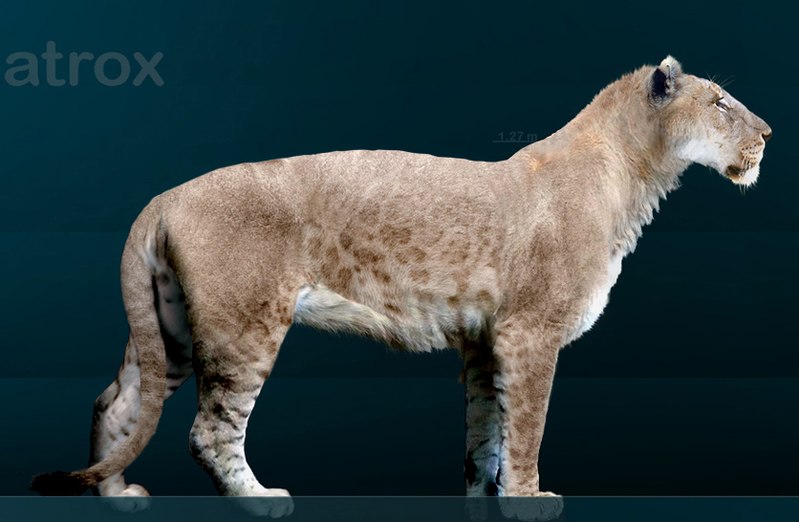
Speaking of which, I finally finished Twilight of the Mammoths, which I began....months ago. I'd wanted to learn more about the megafauna that dominated the Americas before humans arrived. I'm utterly fascinated by the idea of primitive North America as a land of lions and cheetahs, a wilderness teeming more with large life than even Africa. As it turns out, a primary source for learning about ancient mammalian behaviour is...dung. Dung is mentioned more  in Twilight of the Mammoths than it is in Flushed: how the Plumber Saved Civilization. That I mark impressive, but it's versatile stuff, dung. The oh-so-serious dung dissection didn't interact well with my desire to be awed, so my interest trailed off until being reignited by Baxter and Pratchett's The Long Earth, which involves as part of its setting an Earth in which humans never spread to the Americas, and so the native ecology is intact. Twilight exists to argue that human predation ("overkill") was the primary cause of megafauna extinctions in the Americas, as opposed to climate change.  In the decades since Martin released this book, I believe overkill has become the standard explanation, but even so this is a worthwhile book for the curious mind. It puts overkill on solid ground for those new to it, provides a catalog of large animals that were driven into extinction,  and ends with a smaller argument advocating for the restoration of the prehuman ecology, one using still-living animals to replace the many gaps the spread of human civilization created. He suggests, for example, using camels to counter the spread of mesquite in the southwest.  


Wednesday, August 29, 2012

The Wild Life of Our Bodies

The Wild Life of Our Bodies: Predators, Parasides, and Partners that Shape Who We Are Today
© 2011 Rob Dunn
290 pages


You can take the man out of the jungle, but not the jungle out of the man. Such is the lesson of Rob Dunn's brilliantly-written The Wild Life of Our Bodies, which demonstrates to readers the ways in which interactions with other species have shaped human evolution, and the folly of our attempt to sever our ties with the natural world.

I initially thought this book was on the body as an ecosystem, host to millions of other lifeforms; some preying on us, others living in a mutualistic relationship with us, helping us to digest food in return for a roof over their little unicellular heads. That's only the start of Dunn's piece, and even there he turns expectations on our heads. Sure, we need bacteria to help digest our food -- but as it turns out, we need, or at least could use, parasites active in our system to give certain immune responses something to do. Absent of real threats, our immune system will happily turn on us, causing various diseases and disorders. We forget how utterly alien the civilized world is to bodies which evolved in the world, becoming geared to compete and strive and fight, to cope with famine and stress.

No man is an island, nor is any species.  The interactions between species -- as foes, as friends -- drive evolution, giving pronghorns and cheetahs faster legs to outrun the other, and avocado fruits larger volume to attract animals with larger appetites. Humans, in spite of our tendency to view ourselves as separate from the 'animal world', are no different in being shaped by others. Not only have our appearances changed because of relations with other species, but part of our emotional life and even our aesthetic senses have ties to ecology. Take taste, for instance: it's no coincident that fruit bearing seed ready to germinate tastes delightful, while unripe fruits -- those with seeds still readying themselves -- taste bitter. The bitterness is the plant's way of keeping hungry foragers from forcing the seeds into the world before their time. Other species have shaped not only human bodies, but human civilization -- take the lactose-tolerance that prevails in pastoral societies, and the way grasses and cattle have prospered by becoming the staple of many civilizations.

 This is popular science at its best: insightful, with lessons that apply across the whole of human existence, and enterprisingly written to boot. The implications for medicine are especially worth considering, and the book as a whole reminds of the law of unintended consequences.

Related:


Tuesday, July 31, 2012

The Ghosts of Evolution

The Ghosts of Evolution: Nonsense Fruit, Missing Partners, and Other Ecological Anachronisms
© 2000 Connie Barlow
291 pages

Grocery stores are excellent places to encounter ghosts. They lurk in the fruit section, feasting on anachronisms.


The biological world is a wondrous web of connections between various animals and plants, and such connections are the source of evolution’s “endless forms most beautiful”. Not only does the contest between predators and prey – a biological ‘arms race’ – drive evolution, creating faster feet, sharper brains, and more discrete camouflage, but the mutually-supportive relationships between species shape them toward one another’s uses, , like leather molding itself into a glove over an offered hand. But what happens to the glove when the hand is ripped away – when one part of a cooperative pair vanishes into the mists of history and leaves its partner alone? Said partner becomes a living anachronism, and such anachronisms and their ghostly partners are the subject of this fascinating bit of science journalism that may be most readers’ introduction to the field of paleoecology.

Like an ethereal spectre waiting at a window for her beloved, every spring trees throughout the western hemisphere produce fruit for animals which no longer exist to consume them. The two American continents once looked very much like Africa,  being home to massive beasts. While some are familiar to us, like the mammoth, others are fantastic (sloths that make grizzlies look like pups?) and still others just seem misplaced, like American species of lions and tigers (andbearsohmy).  Barlow and her associates take a forensic approach to uncovering relationships between extinct and extant species. Although some bits of evidence seem obvious -- fruits and seeds which are too large for the mouth of any living species, but would have been easily gobbled up by the elephant-like gomphotheres --  her work relies on a wide variety of evidence.  Mouth sizes aren't everything: a given animal's intestines must also be taken into consideration. Some fruit require the digestive assistance of bacteria; some seeds need to be softened by stomach acid, or battered by gizzard stones before they can germinate.  So varied are the pieces of the puzzle that Barlow establishes a diagnostic profile for ascertaining if a given species is anachronistic, one that also determines the degree of anachronism.  While some species have found new markets for their produce (so to speak) in the form of horses and cattle brought over from Europe, others see their entire offering of fruit go to waste every year, and have survived the death of the megafauna only because they're exceptionally long-lived species who sometimes get lucky.In addition fruit, Barlow also illustrates how many plants are attempting to defend themselves against the muzzles and digestive systems of animals who haven't been around for centuries


Ghosts of Evolution is one of the most fascinating science books I've read in a long while. Like Sherlock Holmes taking Watson along to investigate a mystery in Victorian London, so Barlow takes the reader through the Pleistocene jungles with a grand mystery of her own. The text isn't as formal as most -- more a journalistic account of Barlow's investigation, and replete with dialogue between herself and a colleague as they puzzle matters through - but it's teeming with interest. Not only does she illustrate the rich biological heritage of the Americas while piecing together the puzzle, but what she does find offers lessons for modern-day conservation efforts. If we can figure out what kind of dynamics kept the landscape healthy in the past, perhaps we can make efforts to restore it. Her epilogue contains information about ecological approaches that have been inspired by work in this field: for instance, the idea that camels should be introduced to the North American desert plains to feast on certain pervasive species of scrub that have been allowed to become overly dominant thanks to a lack of natural predators....a lack created when said predators suddenly disappeared shortly after the arrival of humans in the Americas.