German Resistance to Hitler
© 1988 Peter Hoffman
188 pages
Peter Hoffman’s research into the German resistance culminated in a 900-page History of the German Resistance 1933-1945, but this work – simply titled German Resistance to Hitler -- is a much smaller overview. In it, Hoffman briefly reviews the major sources of resistance (the Wehrmacht, the Church, and citizen-protesters in the form of students and communists) and addresses why their work never saw fruit. In short: protesters like the social-democrats and communists were disorganized, more interested in fighting among themselves; the Church’s resistance amounted to condemnatory speeches and safeguarding lives; and those in the Army seemed to be cursed with bad luck in their operations.
Hoffman writes that virtually all of these factions shared two great weaknesses: first, they had to resolve within themselves the moral dilemma that came from resisting or undermining their own people, in a state of war surrounded by hostile powers. This was especially difficult for members of the military, whose mission was the defense of the country, who were bound by not only oaths but loyalty to their fellow soldiers. Two, Allied support for the German resistance was nonexistent, and once the war reached a point of no return in the Nazi invasion of Denmark and Norway, the terms of unconditional surrender were discouraging to patriotic if dissident Germans who had no wish to see Germany dismembered further at a peace conference. It was only after the disaster of Stalingrad – which some in the army viewed as criminal negligence -- that desperation overrode caution.
Those who have no knowledge of the resistance whatsoever will find Hoffman an attractive author, as he combines a basic overview of the Nazi seizure of power and the war along with resistance to the same. I am definitely interested in reading Hoffman’s more expansive History of the resistance, as even in these few pages he offers some new insights. I thought Valkyrie mostly failed because someone kicked the explosive briefcase further under the table, muffling some of its force, but Hoffman recounts how von Stauffenburg was summoned into the board room before he and a cohort were finished priming the explosives. Only half of the charges were ready, and between that, the misposition under the table, and the architecture of the room itself (not as confined as Stauffenburg had planned for) a strike that would have killed everyone in the room was reduced to one which only gave Hitler ringing ears and a few scratches.
Related:
They Thought They Were Free: The Germans, 1933-1945
An Honorable Defeat: A History of German Resistance to Hitler
Church of Spies: The Pope’s Secret War Against Hitler
Pursuing the flourishing life and human liberty through literature.
"Once you learn to read, you will be forever free." - Frederick Douglass
Showing posts with label dissent. Show all posts
Saturday, October 14, 2017
Friday, February 6, 2015
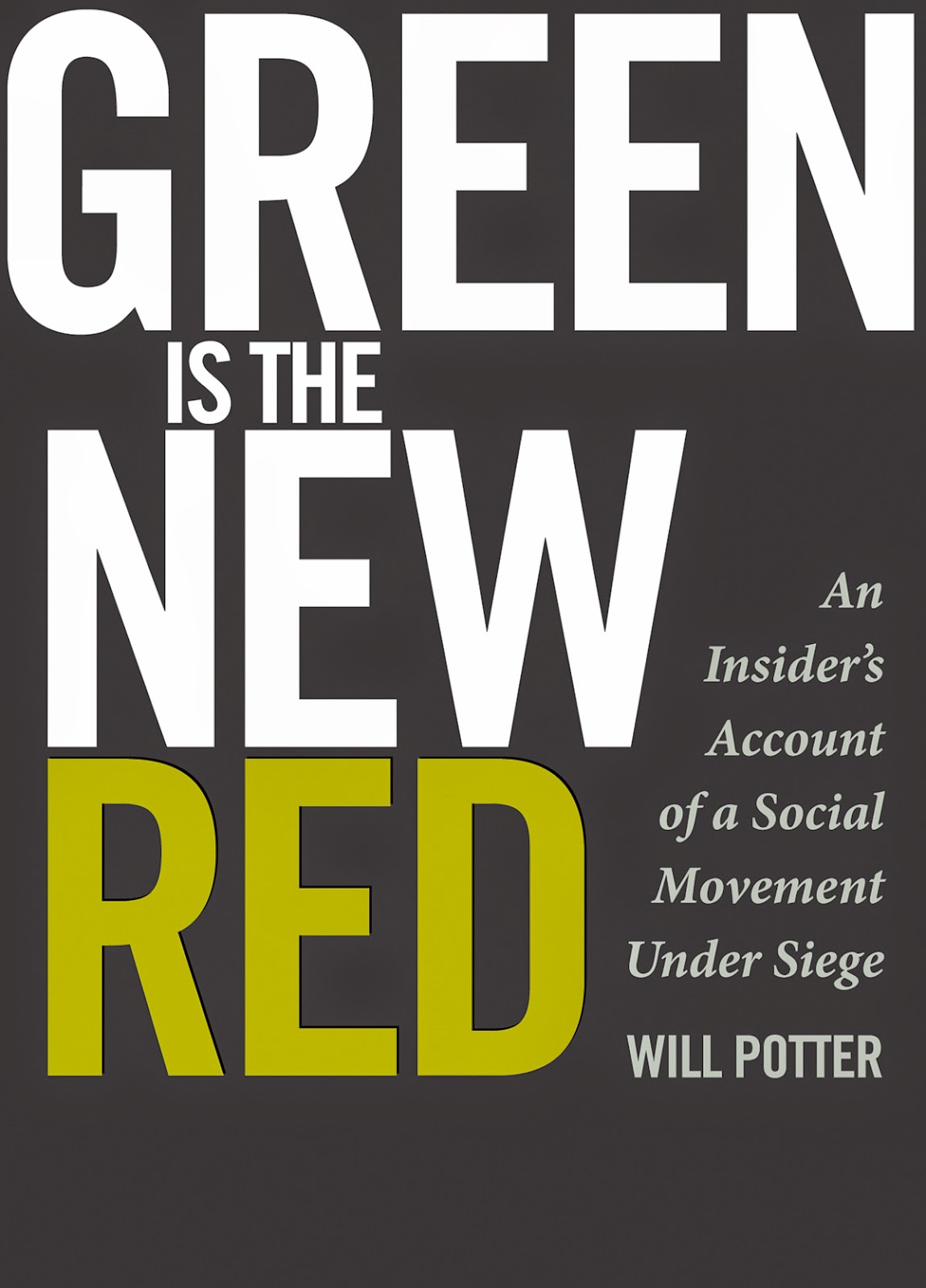
Green is the New Red
Green is the New Red: An Insider's Account of a Social Movement Under Siege
© 2011 Will Potter
256 pages
Is passing out flyers the moral equivalent of flying a plane into a skyscraper and killing thousands of people? Well, in some legal circles, yes. Will Potter found out how eager Uncle Sam is to take down 'disruptive elements' when he passed out flyers as part of an animal rights campaign after years of writing about the activism of others and feeling guilty for not changing the world himself. Federal agents showed up at his door and forcefully suggested he tell them everything he knew about the organization, or else he might find himself on a terrorist watch list. Shaken by their visit, and disgusted at his fear, Potter decided to dig into how and why the government had become so interested in consumer activism. Green is the New Red, the story of a group of young people called the SHAC-7 arrested and jailed for political crimes, is the result.
Although its title may indicate that environmentalism itself is under siege by the government,the focus here is animal rights activism. The SHAC 7 were associated with a movement called Stop Huntington Animal Cruelty, a campaign aimed against an animal-testing lab in the US and the UK. While SHAC itself was not a formal organization that carried out actions, it collected and published information that could be used in campaigns -- information like the names and addresses of the lab's employees, executives, and shareholders. Organizations like the Animal Liberation Front used that information to carry out actual attacks, which ranged from the benign (leaftlet campaigns) to the dangerous (arson). This collated information was also of service to demented individuals who broke into one woman's home, stole her dirty underwear, and used it to threaten rape. An aspirational activist, Potter does not shy away from the fact that some of the information-sharing was irresponsible. His concern here is not necessarily to exonerate the group, but to but to reveal and criticize the ferocious Federal response against them. The seven, and other animal rights activists, are being treated as not only violent criminals, but capital-T Terrorists on the level of Al-Quaeda. The SHAC-coordinated attacks on HLS were a triumph, reducing the company's stock so swiftly that lenders abandoned it as a credit risk, but no one was hurt. Property was damaged during the numerous lab-torchings, but no blood was shed. Potter compares the severe handling of the seven to groups that actually threaten and visit violence on others, like militia groups, the odd anarchist, and a few misguided pro-lifers. Whereas ordinary criminal laws applied to these acts of aggression, those associated with SHAC were interned in the same maximum-security sites as jihadists, and their names uttered in the same breath. Potter believes that the state's ferocity is provoked by its economic ties to the corporations whose bottom line is being disrupted.
That the State exists to protect and advance the interests of property is undisputed. Indeed, most attracted to a book of this kind about political activism will probably hold it as the truth. More to the point is the problem Potter identifies of the government's modern ability to freely label activists as enemies of the state. The problem lies in the many and nebulous definitions of terrorism, and the fact that once someone is declared a terrorist that normal rights, procedures, and the like go out the window. Although ALF did seek to use the threat of violence to force HLS to alter or stop the most abusive of its practices, its intent was not to incite terror in a population, and especially not through hurting innocents. The PATRIOT Act's definition of terrorism is so vague that most acts of civil disobedience, including those practiced by Martin Luther King, qualify. Modern presidents have an actrocious track record where civil liberties are concerned, and any threat to them must be checked. While Potter is somewhat hopeful that government persecution will create a larger problem than it solves -- he points out that the trial only caused an upsurge in activist attacks on HLS -- a more recent round of arrests has effectively ended the SHAC campaign. The specter of federal agents arresting anyone who makes a fuss is arguably more daunting than the thought of a company losing equipment to arson: civil liberties are much harder to restore than buildings.
Related:
The Ethical Assassin, David Liss. Said fellow is an animal rights warrior.
© 2011 Will Potter
256 pages
Is passing out flyers the moral equivalent of flying a plane into a skyscraper and killing thousands of people? Well, in some legal circles, yes. Will Potter found out how eager Uncle Sam is to take down 'disruptive elements' when he passed out flyers as part of an animal rights campaign after years of writing about the activism of others and feeling guilty for not changing the world himself. Federal agents showed up at his door and forcefully suggested he tell them everything he knew about the organization, or else he might find himself on a terrorist watch list. Shaken by their visit, and disgusted at his fear, Potter decided to dig into how and why the government had become so interested in consumer activism. Green is the New Red, the story of a group of young people called the SHAC-7 arrested and jailed for political crimes, is the result.
Although its title may indicate that environmentalism itself is under siege by the government,the focus here is animal rights activism. The SHAC 7 were associated with a movement called Stop Huntington Animal Cruelty, a campaign aimed against an animal-testing lab in the US and the UK. While SHAC itself was not a formal organization that carried out actions, it collected and published information that could be used in campaigns -- information like the names and addresses of the lab's employees, executives, and shareholders. Organizations like the Animal Liberation Front used that information to carry out actual attacks, which ranged from the benign (leaftlet campaigns) to the dangerous (arson). This collated information was also of service to demented individuals who broke into one woman's home, stole her dirty underwear, and used it to threaten rape. An aspirational activist, Potter does not shy away from the fact that some of the information-sharing was irresponsible. His concern here is not necessarily to exonerate the group, but to but to reveal and criticize the ferocious Federal response against them. The seven, and other animal rights activists, are being treated as not only violent criminals, but capital-T Terrorists on the level of Al-Quaeda. The SHAC-coordinated attacks on HLS were a triumph, reducing the company's stock so swiftly that lenders abandoned it as a credit risk, but no one was hurt. Property was damaged during the numerous lab-torchings, but no blood was shed. Potter compares the severe handling of the seven to groups that actually threaten and visit violence on others, like militia groups, the odd anarchist, and a few misguided pro-lifers. Whereas ordinary criminal laws applied to these acts of aggression, those associated with SHAC were interned in the same maximum-security sites as jihadists, and their names uttered in the same breath. Potter believes that the state's ferocity is provoked by its economic ties to the corporations whose bottom line is being disrupted.
That the State exists to protect and advance the interests of property is undisputed. Indeed, most attracted to a book of this kind about political activism will probably hold it as the truth. More to the point is the problem Potter identifies of the government's modern ability to freely label activists as enemies of the state. The problem lies in the many and nebulous definitions of terrorism, and the fact that once someone is declared a terrorist that normal rights, procedures, and the like go out the window. Although ALF did seek to use the threat of violence to force HLS to alter or stop the most abusive of its practices, its intent was not to incite terror in a population, and especially not through hurting innocents. The PATRIOT Act's definition of terrorism is so vague that most acts of civil disobedience, including those practiced by Martin Luther King, qualify. Modern presidents have an actrocious track record where civil liberties are concerned, and any threat to them must be checked. While Potter is somewhat hopeful that government persecution will create a larger problem than it solves -- he points out that the trial only caused an upsurge in activist attacks on HLS -- a more recent round of arrests has effectively ended the SHAC campaign. The specter of federal agents arresting anyone who makes a fuss is arguably more daunting than the thought of a company losing equipment to arson: civil liberties are much harder to restore than buildings.
Related:
The Ethical Assassin, David Liss. Said fellow is an animal rights warrior.
Monday, September 22, 2014
An Honourable Defeat
No civilized nation on Earth is as
haunted as its history as Germany. For twelve years, one of the worst
governments conceivable reigned over the heart of Europe, and the people in the land of poets and thinkers seemed content to let it be so, even to do his bidding. But some acted on that disquieting sense that something was amiss with the NSDAP; some took action. An Honourable Defeat examines the record of those Germans who did more than quietly dissent, those who took action. In the end their efforts did little to drive the monsters from power, but they were the nation's conscience, and reflecting on what they thought and attempted to do can only work to the good.
An Honourable Defeat sees resistance against Hitler and company being driven by a few main groups: youth movements, the Catholic Church, disenfranchised political rivals on the left, and -- lastly, conservative forces within the army. Of these, leadership from the army was the most effective, although at war's end all it could show for itself were a few stalled assassination attempts and one destroyed conference room. In general, resistance took two forms, passive and active. Youth groups often engaged in passive resistance, organizing literary circles and groups to dance to music forbidden by the regime. Dissenting officers within the military threw the odd wrench in the wheel, fighting against their own sense of duty and obedience to do so. Some were placed in truly awful positions; one "SS spy" had to oversee a death camp while collecting and forwarding information. In terms of active sense, no mention is made of any organized attempts to sabotage war material production, but Gill does cover youth leaflet campaigns, pulpit condemnation, and (of course) military officers' attempts to effect a coup.
In many ways this is a tragic history; in addition to the people destroyed by Hitler and his memory, and the tortuous stress endured by many members of the resistance who lived double lives, there remains the fact that not much was accomplished. In some cases, plots were ruined by bad luck, or misinformation; one early attempt to blow up Hitler's plane in flight failed because of the cold at high altitude. The military officers were slow to take decisive action, struggling with where their duty lay; this was especially quarrelsome once the war began in earnest. It was one thing to kill Hitler for merely threatening conquest, but once Germany was embroiled in a fight to the death against Russia, who would dare leave the nation leaderless? The civilians who took action were limited by their lack of experience; one promising leader's career was cut short early on when he was seen out in public wearing a "ROT FRONT" button. First rule of resistance: don't advertise being an enemy of the state.
An Honourable Defeat is by no means complete (efforts by civilians to shelter Jewish neighbors are overlooked, for instance), it demonstrates how early and how varied German resistance to tyranny was. While it never brought forth the kind of world-shaking fruit anyone would prefer, the fact of that little seed of righteous defiance existing within us offers hope against the threat of future malfactors.
In many ways this is a tragic history; in addition to the people destroyed by Hitler and his memory, and the tortuous stress endured by many members of the resistance who lived double lives, there remains the fact that not much was accomplished. In some cases, plots were ruined by bad luck, or misinformation; one early attempt to blow up Hitler's plane in flight failed because of the cold at high altitude. The military officers were slow to take decisive action, struggling with where their duty lay; this was especially quarrelsome once the war began in earnest. It was one thing to kill Hitler for merely threatening conquest, but once Germany was embroiled in a fight to the death against Russia, who would dare leave the nation leaderless? The civilians who took action were limited by their lack of experience; one promising leader's career was cut short early on when he was seen out in public wearing a "ROT FRONT" button. First rule of resistance: don't advertise being an enemy of the state.
An Honourable Defeat is by no means complete (efforts by civilians to shelter Jewish neighbors are overlooked, for instance), it demonstrates how early and how varied German resistance to tyranny was. While it never brought forth the kind of world-shaking fruit anyone would prefer, the fact of that little seed of righteous defiance existing within us offers hope against the threat of future malfactors.
Saturday, June 7, 2014
Anthem
Anthem
© 1938 Ayn Rand
128 pages
In a dark future, the triumph of collectivism has created a global society deteriorating to near-medieval conditions. Man is utterly broken by the state, dominated by institutions from birth onward. Raised in cohorts in government offices, not by families, children come of age at fifteen and are assigned their lot in life by the governing authorities. They toil as drones for the next thirty years before being consigned the House for the Useless, where if they are lucky they will find some meager pleasure in the social programs before being execution as a burden to society. The state and society are all, so triumphant that even the pronoun "I" has been extinguished. The human spirit, however, is irrepressible.
Equality 2521 is a sinner in the hands of a suffocating state, a young man who yearns to study the ways of the world and perhaps even to become a scholar, but who is consigned to be a street-sweeper. After stumbling into an abandoned subway tunnel, Equality finds himself for the first time alone, and there in the dark with just his thoughts for company, a psychological journey begins. The tunnel, which he and a couple of sympathetic friends keep hidden from everyone else, becomes their sanctuary, a place for Equality to read books and experiment with the things he finds in the rubbish, a place where he eventually discovers that there are things not written in the Global We's philosophy. There is Electricity, and if he can realize its power he can make the world a better place. Breathlessly he takes his findings to the convention of Scholars, who promptly imprison him for many manifold presumptions (among them, threatening to put candle-makers out of work). Happily for him they are incompetent at incarceration, since so few people have ever rebelled against them, and soon he's escaped to make his fortunes elsewhere.
Anthem is a short work, a novella of no more than 90 pages; I read it chiefly because it was available for free on Amazon, and the delicious irony of something of Rand's being offered for free was too good to pass put. Altogether it's the tale of an individual's self-realization, his struggle for consciousness. Eventually he does, and as in 1984 his rebellion is urged onward by forbidden love for Liberty 5-3000, and given safe harbor by the wild; the rugged forests outside the bleak We-ruled cities are teeming with life and energy. But among the wild are grown-over homes, and inside them books which reveal how much was lost. Ultimately Equality and Liberty shed their old identities and emerge as Individuals, and here the book descends into preaching. All of the lost passion of twenty years comes bubbling up into Equality's realization that the individual is sovereign, the individual makes the world, and so carried away by it is he that when Liberty professes, "I love you," he replies with a half-page speech about the importance of names and the individual.
I have never Rand before, and will own a bias against her, one I've had since listening to a radio interview with her years ago. Even so, I enjoyed this work for the most part; any tale of man versus the state, of the natural vs. the contrived, is sure to win me over despite the overweening pronunciations of the last few pages Considering that the union of the happy couple results in a pregnancy, there is hope that the book's heroes will learn what the childless Rand never did, that people are born into society as surely as fish are born into the ocean. It is a society of the family, however, a natural one, where we are reared by the bone of our bone and the flesh of our flesh, not an artificial and imposed "Global We". Even so, this is a fascinating little book, well worth the time spent reading it; regardless of my animosity toward Rand's praise of selfishness, hers was a quick and artful pen. The similarities between this and 1984 make it a beacon of hope after Orwell's singularly depressing work about the triumph of the state.
Related:
© 1938 Ayn Rand
128 pages
In a dark future, the triumph of collectivism has created a global society deteriorating to near-medieval conditions. Man is utterly broken by the state, dominated by institutions from birth onward. Raised in cohorts in government offices, not by families, children come of age at fifteen and are assigned their lot in life by the governing authorities. They toil as drones for the next thirty years before being consigned the House for the Useless, where if they are lucky they will find some meager pleasure in the social programs before being execution as a burden to society. The state and society are all, so triumphant that even the pronoun "I" has been extinguished. The human spirit, however, is irrepressible.
Equality 2521 is a sinner in the hands of a suffocating state, a young man who yearns to study the ways of the world and perhaps even to become a scholar, but who is consigned to be a street-sweeper. After stumbling into an abandoned subway tunnel, Equality finds himself for the first time alone, and there in the dark with just his thoughts for company, a psychological journey begins. The tunnel, which he and a couple of sympathetic friends keep hidden from everyone else, becomes their sanctuary, a place for Equality to read books and experiment with the things he finds in the rubbish, a place where he eventually discovers that there are things not written in the Global We's philosophy. There is Electricity, and if he can realize its power he can make the world a better place. Breathlessly he takes his findings to the convention of Scholars, who promptly imprison him for many manifold presumptions (among them, threatening to put candle-makers out of work). Happily for him they are incompetent at incarceration, since so few people have ever rebelled against them, and soon he's escaped to make his fortunes elsewhere.
Anthem is a short work, a novella of no more than 90 pages; I read it chiefly because it was available for free on Amazon, and the delicious irony of something of Rand's being offered for free was too good to pass put. Altogether it's the tale of an individual's self-realization, his struggle for consciousness. Eventually he does, and as in 1984 his rebellion is urged onward by forbidden love for Liberty 5-3000, and given safe harbor by the wild; the rugged forests outside the bleak We-ruled cities are teeming with life and energy. But among the wild are grown-over homes, and inside them books which reveal how much was lost. Ultimately Equality and Liberty shed their old identities and emerge as Individuals, and here the book descends into preaching. All of the lost passion of twenty years comes bubbling up into Equality's realization that the individual is sovereign, the individual makes the world, and so carried away by it is he that when Liberty professes, "I love you," he replies with a half-page speech about the importance of names and the individual.
I have never Rand before, and will own a bias against her, one I've had since listening to a radio interview with her years ago. Even so, I enjoyed this work for the most part; any tale of man versus the state, of the natural vs. the contrived, is sure to win me over despite the overweening pronunciations of the last few pages Considering that the union of the happy couple results in a pregnancy, there is hope that the book's heroes will learn what the childless Rand never did, that people are born into society as surely as fish are born into the ocean. It is a society of the family, however, a natural one, where we are reared by the bone of our bone and the flesh of our flesh, not an artificial and imposed "Global We". Even so, this is a fascinating little book, well worth the time spent reading it; regardless of my animosity toward Rand's praise of selfishness, hers was a quick and artful pen. The similarities between this and 1984 make it a beacon of hope after Orwell's singularly depressing work about the triumph of the state.
Related:
- 1984, George Orwell
- Brave New World, Aldous Huxley
Wednesday, April 30, 2014
Conscience
Conscience: Two Pacifists, Two Soldiers, One Family
© 2012 Louisa Thomas
336 pages
How does a pious young Presbyterian minister become a six-time candidate for the Socialist party? Such is the story of Conscience, the story of Norman Thomas and his younger brother Evan, who would go to seminary as conventional Presbyterians and emerge radicals whose faith found truer expression in political idealism than Christian worship. The promised tension between brothers is wholly overstated, as Conscience concerns Norman and Evan's struggle to find a way to live as authentic Christians in a world of violence and poverty. Unable to accept religious claims on their face, and deeply unhappy with the response of Christians in general to the problems of the world around them -- platitudes and minor alms for the poor, enthusiastic support for the horror of the Great War -- both grew further from Christianity and more politically radical as the years wore on. Although both eventually become ardent pacifists, to the discomfort of their family and institutions which bore them, in each political activism takes different forms. Young Evan's zeal took hold early, his high, strident ideals are so resolute he can make no concessions anywhere, and develops something of a martyrdom complex as a conscientious objector. Norman's own radicalism was slower to ripen; as pastor of a church with a growing family, he sought to effect change through the political system rather than his brother's active protests.
The piquancy of Conscience is how the brothers came to their respective positions, considering their very conventional background; their family was stolidly middle class and the boys were elevated into the elite Princeton University and its social clubs through their own scholarship. This was an era of tremendous social and political upheaval, a time in which comfortable politics-as-usual was giving way to demands for action by the populists and progressives. Louisa Thomas well delivers a sense of the changing spirit of the times, its energy impacting the lives of all who are involved. She draws largely on letters within the family, a feat made easy by merit of her being Norman Thomas's great-granddaughter. She is thus tender to her subjects, though it would be hard not to be considering their commitment to justice and peace; Norman is especially sympathetic, not being quite so much the puritan, and torn between old loyalties (to his mentor, Woodrow Wilson, who ran on an anti-war campaign and then locked up people like Evan for protesting when he joined in) and new expressions of old values. Conscience is thus a fascinating look into the souls of two young men during one of the west's darkest moments.
© 2012 Louisa Thomas
336 pages
How does a pious young Presbyterian minister become a six-time candidate for the Socialist party? Such is the story of Conscience, the story of Norman Thomas and his younger brother Evan, who would go to seminary as conventional Presbyterians and emerge radicals whose faith found truer expression in political idealism than Christian worship. The promised tension between brothers is wholly overstated, as Conscience concerns Norman and Evan's struggle to find a way to live as authentic Christians in a world of violence and poverty. Unable to accept religious claims on their face, and deeply unhappy with the response of Christians in general to the problems of the world around them -- platitudes and minor alms for the poor, enthusiastic support for the horror of the Great War -- both grew further from Christianity and more politically radical as the years wore on. Although both eventually become ardent pacifists, to the discomfort of their family and institutions which bore them, in each political activism takes different forms. Young Evan's zeal took hold early, his high, strident ideals are so resolute he can make no concessions anywhere, and develops something of a martyrdom complex as a conscientious objector. Norman's own radicalism was slower to ripen; as pastor of a church with a growing family, he sought to effect change through the political system rather than his brother's active protests.
The piquancy of Conscience is how the brothers came to their respective positions, considering their very conventional background; their family was stolidly middle class and the boys were elevated into the elite Princeton University and its social clubs through their own scholarship. This was an era of tremendous social and political upheaval, a time in which comfortable politics-as-usual was giving way to demands for action by the populists and progressives. Louisa Thomas well delivers a sense of the changing spirit of the times, its energy impacting the lives of all who are involved. She draws largely on letters within the family, a feat made easy by merit of her being Norman Thomas's great-granddaughter. She is thus tender to her subjects, though it would be hard not to be considering their commitment to justice and peace; Norman is especially sympathetic, not being quite so much the puritan, and torn between old loyalties (to his mentor, Woodrow Wilson, who ran on an anti-war campaign and then locked up people like Evan for protesting when he joined in) and new expressions of old values. Conscience is thus a fascinating look into the souls of two young men during one of the west's darkest moments.
Labels:
anti-war,
Christianity,
dissent,
religion,
The Great War
Monday, March 17, 2014
The Redneck Manifesto
The Redneck Manifesto: How Hicks, Hillbillies, and White Trash Became Amerca's Scapegoats
© 1998 Jim Goad
272 pages
Rednecks of the world, unite! You have nothing to lose but your bills. Jim Goad's The Redneck Manifesto is a raucous mixture of southern pride and Marx-esque social criticism which examines the plight of working whites. Although few would take seriously the concept of white plight, in Goad's eyes 'privilege whites' constitute a minority of American whites; most are working-class slobs like himself who have been treated as miserably throughout American history as any minority, even slaves. His aim is to expose anti-prole bigotry, by shock therapy if need be, and demonstrate that America's big problems are rooted in class, not ethnic tension.
His history might echo A People's History if Howard Zinn had focused on working whites and were give nto telling the reader to "f*** off". It is a history rooted in class conflict: since time immemorial, a wealthy few have kept most of the power in their hands, and America is no different. Though our national legend involves Pilgrims seeking liberty, in the fact of the matter is that most whites who immigrated came against their wills; they were the poor pushed off the fields, scraped off the streets, and shanghaied across the Atlantic to toil as indentured servants. Volunteering or conscripting in the Revolution, they died to help create a Constitution which had no place for them, and the centuries of progress that followed brought only more of the same. The Civil War destroyed the economy of the south, but did little to displace the power-elite; industrialism proved even more lethal than the killing fields of Europe's Great War, at least for Americans, as thousands died every year from factory and mining accidents. The rest of the century was no better; homes were blown apart as companies tried to crack open the Appalachian mountains like a walnut, with no mind given to the people who lived there, and free trade agreements saw the disappearance of jobs which remained. To add insult to injury, institutions that persecuted blacks, like slavery and Jim Crow laws, were somehow blamed on the impoverished working class, despite it being just as disenfranchised by local elites. (Documents like the 1901 Alabama Constitution remain equal-opportunity oppressors of the working poor.) While the 20th century saw various populations gain media shielding and political protection, the white working class remained a common horse to beat on, a pleasure shared by both formerly-marginalized minorities and the elite.
Against all this, Goad doesn't call for sensitivity; no self-respecting working man would whine. What he does want is for everyone to leave rednecks the hell alone. Making fun of his kin on TV is one thing; everybody likes their scapegoats. What he has his sights on is excessive tax burdens; let the government be paid for by people who receive the services, or the propertied -- and the United States' foreign policy, which typically involves sending the sons and daughters of the poor to fight to fulfill the elite's ambitions. War is the harvester of the home, and nothing else. In addition to calling for an end to death and taxes, Goad celebrates the culture of the white working family, with chapters given over to "Playing Hard" and even to "Praying Hard", despite Goad's firm belief that religion and politics are both full of it.
The Redneck Manifesto may have a serious intent, but it's hard to take the delivery as such. Goad is deliberately and enthusiastically vulgar, employing racial slurs throughout to goad the reader, hopefully forcing them to see 'redneck' and 'hillbilly' as pejoratives on the level as kike, Chink, and yea, even the dreaded "N-word". That's artistic license, but his seemingly schizophrenic style -- alternating between informal if serious analysis and seemingly insane ranting, throwing in nicknames for personalities and employing colloquial spelling randomly -- can easily throw a reader off. It's surely deliberate; Goad's whole purpose in writing the book is defy conventional attitudes.
The Redneck Manifesto is a fascinating if problematic book; it's not a perspective I'm used to hearing. Class is a taboo topic now, relegated only to Marxists -- and few working men would give Marx's conflict theory of society a moment's consideration after a half-century of being assured by the TV that in America we're all one big happy middle-class family. Good luck, too, finding the self-described Marxist who would go anywhere near ethnic consciousness if they are white. As a product of the white working class with a sympathy for Marxist social critique, I had a ball reading this -- even while wading through the eccentric treatment of the English tongue. It's funny, cringingly inappropriate, and yet thoughtful at the same time; a tirade with a point. There's tremendous value in looking at an often ignored segment of the impoverished population, but considering the abuse Goad hurls out, readers other than southerners looking for a sympathetic voice -- of which Goad's is surely one -- might put it down early.
© 1998 Jim Goad
272 pages
Rednecks of the world, unite! You have nothing to lose but your bills. Jim Goad's The Redneck Manifesto is a raucous mixture of southern pride and Marx-esque social criticism which examines the plight of working whites. Although few would take seriously the concept of white plight, in Goad's eyes 'privilege whites' constitute a minority of American whites; most are working-class slobs like himself who have been treated as miserably throughout American history as any minority, even slaves. His aim is to expose anti-prole bigotry, by shock therapy if need be, and demonstrate that America's big problems are rooted in class, not ethnic tension.
His history might echo A People's History if Howard Zinn had focused on working whites and were give nto telling the reader to "f*** off". It is a history rooted in class conflict: since time immemorial, a wealthy few have kept most of the power in their hands, and America is no different. Though our national legend involves Pilgrims seeking liberty, in the fact of the matter is that most whites who immigrated came against their wills; they were the poor pushed off the fields, scraped off the streets, and shanghaied across the Atlantic to toil as indentured servants. Volunteering or conscripting in the Revolution, they died to help create a Constitution which had no place for them, and the centuries of progress that followed brought only more of the same. The Civil War destroyed the economy of the south, but did little to displace the power-elite; industrialism proved even more lethal than the killing fields of Europe's Great War, at least for Americans, as thousands died every year from factory and mining accidents. The rest of the century was no better; homes were blown apart as companies tried to crack open the Appalachian mountains like a walnut, with no mind given to the people who lived there, and free trade agreements saw the disappearance of jobs which remained. To add insult to injury, institutions that persecuted blacks, like slavery and Jim Crow laws, were somehow blamed on the impoverished working class, despite it being just as disenfranchised by local elites. (Documents like the 1901 Alabama Constitution remain equal-opportunity oppressors of the working poor.) While the 20th century saw various populations gain media shielding and political protection, the white working class remained a common horse to beat on, a pleasure shared by both formerly-marginalized minorities and the elite.
Against all this, Goad doesn't call for sensitivity; no self-respecting working man would whine. What he does want is for everyone to leave rednecks the hell alone. Making fun of his kin on TV is one thing; everybody likes their scapegoats. What he has his sights on is excessive tax burdens; let the government be paid for by people who receive the services, or the propertied -- and the United States' foreign policy, which typically involves sending the sons and daughters of the poor to fight to fulfill the elite's ambitions. War is the harvester of the home, and nothing else. In addition to calling for an end to death and taxes, Goad celebrates the culture of the white working family, with chapters given over to "Playing Hard" and even to "Praying Hard", despite Goad's firm belief that religion and politics are both full of it.
The Redneck Manifesto may have a serious intent, but it's hard to take the delivery as such. Goad is deliberately and enthusiastically vulgar, employing racial slurs throughout to goad the reader, hopefully forcing them to see 'redneck' and 'hillbilly' as pejoratives on the level as kike, Chink, and yea, even the dreaded "N-word". That's artistic license, but his seemingly schizophrenic style -- alternating between informal if serious analysis and seemingly insane ranting, throwing in nicknames for personalities and employing colloquial spelling randomly -- can easily throw a reader off. It's surely deliberate; Goad's whole purpose in writing the book is defy conventional attitudes.
The Redneck Manifesto is a fascinating if problematic book; it's not a perspective I'm used to hearing. Class is a taboo topic now, relegated only to Marxists -- and few working men would give Marx's conflict theory of society a moment's consideration after a half-century of being assured by the TV that in America we're all one big happy middle-class family. Good luck, too, finding the self-described Marxist who would go anywhere near ethnic consciousness if they are white. As a product of the white working class with a sympathy for Marxist social critique, I had a ball reading this -- even while wading through the eccentric treatment of the English tongue. It's funny, cringingly inappropriate, and yet thoughtful at the same time; a tirade with a point. There's tremendous value in looking at an often ignored segment of the impoverished population, but considering the abuse Goad hurls out, readers other than southerners looking for a sympathetic voice -- of which Goad's is surely one -- might put it down early.
Labels:
American South,
dissent,
history,
labor,
poverty,
social criticism,
Society and Culture
Subscribe to:
Comments (Atom)