Updated for the last time last night, here's 2017 in books! As usual, titles in bold were favorites.
-- January --
1. Stiff Upper Lip, Jeeves; P.G. Wodehouse (Comedy)
2. Ask a Science Teacher, Larry Scheckel (Science)
3. The Twilight War: the Secret History of America's Thirty Year War with Iran, David Crist (History)
4. Laughing without an Accent, Firoozeh Dumas (Comedy)
5. In the City of Bikes: the Story of the Amsterdam Cyclist, Pete Jordan (History/Cities)
6. Mean Streets: Confessions of a Nighttime Cab Driver, Peter McSherry (Memoir)
7. Land of the Tiger: A Natural History of the Indian Subcontinent, Valmik Thapar (Nature - Discovery of Asia)
8. The Big Necessity: the Unmentionable World of Human Waste and Why it Matters, Rose George
9. The Twilight of the Presidency, George E. Reedy (Politics)
10. Laughter is Better than Communism, Andrew Heaton (Humor)
11. On Bikes: 50 Ways the New Bike Culture Can Change Your Life, ed. Amy Walker (Civic)
12. The Digital Divide, ed. Mark Bauerstein (Tech and Society)
13. The Canon: A Whirligig Tour of Science's Beautiful Basics, Natalie Angier (Science)
14. The Forever War, Joe Haldeman (Science Fiction)
15. India in the World Community (History - Discovery of Asia), P. Pradakumya Caran
16. Mesh: Why the Future of Business is Sharing, Lisa Gansky (Tech &; Society, Business)
17. The Silk Road: Two Thousand Years in the Heart of Asia, Frances Woods (History - Discovery of Asia)
-- February --
18. The Future of the Mind, Michio Kaku (Science)
19. The City on the Edge of Forever: the Original Teleplay, Harlan Ellison (Science Fiction/Rant)
20. From the Ashes: Rebuilding American Culture, Anthony Esolen
21. Genghis Khan and the Making of the Modern World, Jack Weatherford (History - Discovery of Asia)
22. Before Plan 9: Plans 1-8 From Outer Space, various authors (Science Fiction/Humor)
23. This Brave New World: India, China, and the United States, Anja Manuel (Geopolitics - Discovery of Asia)
24. Affluenza: The All-Consuming Epidemic; John de Graaf, David Wann, and Thomas H. Naylor
25. Garbology: Our Dirty Love Affair with Trash, Edward Humes
26. Fear no Evil, Natan Sharansky (Memoir)
27. The Gargoyle Code, Dwight Longenecker (Religion)
28. Drone, Mike Maden (Thriller)
29. Up from Slavery, Booker T. Washington (American Literature/Classic)
30. Verbal Judo, George Thompson (Communication)
31. The Wheels of Chance: A Bicycling Idyll, H.G. Wells
32. I Know Why the Caged Bird Sings, Maya Angelou (Southern Literature/Classic)
33. Selma: A Bicentennial History, Alston Fitts III
Bonus review: Selma 1965: The Photographs of Spider Martin
-- March --
34. A History of Saint Augustine, Florida; William Dewhurst (History)
35. In Spite of the Gods: the Rise of Modern India, Edward Luce (History)
36. Real Music, Anthony Esolen (Music-Culture)
37. Future Perfect: the Case for Progress in a Networked Age, Steven Johnson (Business/Econ)
38. Florida under Five Flags, Rembert Patrick (History)
39. China Road: A Journey into the Heart of a Rising Power, Rob Gifford (History/Travel - Discovery of Asia)
40. Robert E Lee, Roy Blount Jr (Biography)
41. China: An Introduction, Lucien Pye (History - Discovery of Asia)
42. The Big Sleep, Raymond Chandler (Mystery/Thriller)
43. The Benedict Option, Rob Dreher (Religion-Culture)
Reread: Surprised by Joy, C.S. Lewis
44. The Unvanquished, William Faulkner (Southern Literature)
45. The Other War of 1812: The Patriot War and the American Invasion of East Florida, John Cusick
46. La Florida: Five Hundred Years of Hispanic Presence, ed. Viviana Diaz Balsera and Rachel May
47. The Seven Storey Mountain, Thomas Merton
48. A Study in Scarlet, Arthur Conan Doyle (Mystery)
-- April, and to Read of England --
Bonus review: Tolkien's Sanctifying Myth, Brad Birzer. (Re-read from last year.)
49. Perelandra, C.S. Lewis (Science/Fantasy Fiction)
50. The Eagle and the Wolves, Simon Scarrow (Historical Fiction)
51. London at War, Phillip Ziegler (History)
52. The Merry Adventures of Robin Hood, Howard Pyle (English Lit)
53. Hood, Stephen Lawhead
54. Sister Queens: The Noble, Tragic Lives of Catherine of Aragon and Juana of Castille, Juliet Fox
55. In the Beginning: the Story of the KJV, Alister McGrath (History)
56. On the Shoulders of Hobbits: The Road to Virtue with Tolkien and Lewis, Louis Markos (Philosophy)
57. The Armada, Garrett Mattingly (History)
58. Sense and Sensibility, Jane Austen (Classic)
59. 1066: A New History, Peter Rex (History)
60. Spain in the Southwest, John Kessell (History)
61. From Narnia to a Space Odyssey, ed. Ryder Miller (English Lit)
62. The Canterbury Tales, Gregory Chaucer / translated Petter Tuttle (Classic)
-- May --
63. Reclaiming the Catholic Social Doctrine, Anthony Esolen
64. Captain to Captain, Greg Cox (Star Trek(
65. I Contain Multitudes, Ed Yong (Science)
66. The Elephant and the Dragon, Robyn Meredith (Business - Discovery of Asia)
67. Astrophysics for People in a Hurry, Neil deGrasse Tyson (Science)
68. El Narco: Inside Mexico's Criminal Insurgency, Ioan Grillo
69. Confront and Conceal: Obama's Secret Wars and Surprising Use of American Power, David Sanger
70. The Adventure of English, Melvyn Bragg
71. Hank Williams: The Biography, Colin Escott
72. Neither East Nor West: One Woman's Travels in Iran, Christiane Bird
73. Countdown to Zero Day: Stuxnet and the Launch of the World's First Digital Weapon, Kim Zetter
74. The Dark Net: Inside the Digital Underworld, Jamie Barlett
75. Over and Over the Road: A Truck Driver's Stories, V. Shephard
-- June --
76. Mind's Eye, Douglas E. Richards (Technothriller)
77. Mars, Ben Bova (Science Fiction)
78. Kingpin: How One Hacker Took Over the Cybercrime Underground, Kevin Poulsen
79. Zero Day, Mark Russonovich (Technothriller)
80. CYBERPUNK: Outlaws and Hackers on the Computer Frontier, Katie Hafner
81. I Know Who You Are and I Know What You Did: Social Networks and the Death of Privacy, Lori Andrews (Technology and Society)
82. The Martian Chronicles, Ray Bradbury (Science Fiction)
83. Baghdad without a Map, Tony Horowitz (Travel)
84. Fahrenheit 451, Ray Bradbury (Science Fiction)
85. Hackers: Heroes of the Computer Revolution, Stephen Levy (History)
86. Revolutionary Summer, Joseph Ellis (History)
87. Masters of Doom, David Kushner (History)
88. The Fountainhead, Ayn Rand
89. ST Myriad Universes: Infinity's Prism. Christopher L. Bennett, William Leisner, and James Swallow (Star Trek)
90. The Patient Will See You Now, Eric Topol (Health and Medicine)
91. The Lost Continent: Travels in Small Town America, Bill Bryson (Travel)
92. The Great Explosion, Eric Frank Russell
93. Forgotten Founder, Drunken Prophet: The Life of Luther Martin, Bill Kauffman
94. A Place in Time, Wendell Berry
95. Black Sun, Edward Abbey
96. Who Controls the Internet? Jack Goldsmith
-- July --
97. East of Eden, John Steinbeck
98. Passionate Sage: The Character and Life of John Adams, Joseph Ellis
99. Japan: A Cultural History, Henri Stierlin
100. A New History of India, Stanley Wolbert (History - Discovery of Asia)
101. Unsettling America: Culture and Agriculture, Wendell Berry
102. Cell, Robin Cook (Technothriller)
103. The Job: True Tales from the Life of a New York City Cop, Steve Osborn
104. Consent of the Networked, Rebecca MacKinnon
105. How To Destroy the Imagination of Your Child, Anthony Esolen
106. Midnight's Furies: Te Deadly Legacy of India's Partition, Nisid Hajari (History - Discovery of Asia)
107. Redshirts: A Novel With Three Codas, John Scalzi
108. No Place to Hide, Glenn Greenwald
109. The Art of Intrusion, Kevin Mitnick
110. The Mexican Frontier. 1821 - 1846: The American Southwest Under Mexico, David Weber
111. Boomsday, Christopher Buckley
112. Rousseau and Revolution, Will Durant
--August--
113. Cities of Gold: A Journey Across the American Southwest in Pursuit of Coronado, Douglas Preston
114. Life Under Compulsion: Ten Ways to Destroy Humanity Of Your Child, Anthony Esolen
115. The Irish Soldiers of Mexico, Michael Hogan
116. The Tragedy of Liberation: A History of the Chinese Revolution, Frank Dikotter (History - Discovery of Asia)
117. The Gulag Achipelago, Vol. I. Aleksandr Solzhenitsyn
118. The Age of Napoleon, Will Durant
119. The Art of Deception, Kevin Mitnick
120. State of Fear, Michael Crichton (Science Fiction)
121. Romans Without Laurels, Indro Montanelli
122. Dragon Teeth, Michael Crichton (Historical Fiction)
123. Tyrannosaur Canyon, Douglas Preston
124. The Wonder That Was India, Arthur Llewellyn Basham
-- September --
125. The Politically Incorrect Guide to English and American Literature, Elizabeth Kantor
126. A Devil's Chaplain, Richard Dawkins
127. The Republic of Imagination: America in Three Books, Azar Nafisi
128. The Circle, Dave Eggers
129. Eye of the Storm: Inside City Hall During Katrina, Sally Forman
130. Isaac's Storm: A Man, A Time, and the Deadliest Hurricane in History, Erik Larson
131. The Black Ice, Michael Connelly
132. Infrastructure: A Field Guide to the Industrial Landscape, Brian Hayes
133. My Life with the Saints, James Martin SJ
134. China Wakes: The Struggle for the Soul of a Rising Power, Nicholas D. Kristof and Sheryl WuDunn
135. The Fellowship: The Literary Lives of the Inklings, Philip and Carol Zaleski
136. Wild Swans: Three Daughters of China, Chang Jung
137. Dracula, Bram Stoker (Classics Club)
-- October --
138. A Thousand Miles from Nowhere, Graham Coster
139. Ancestral Shadows, Russell Kirk
140. The Gulag Archipelago Vol 2, Aleksandr Solzhenitsyn
141. A Mighty Fortress: A History of the Germans, Steven Ozment
142. German Resistance to Hitler, Peter Hoffman
143. Energy Myths and Realities, Vaclav Smil
144. Korea Reborn: A Grateful Nation, Korea's Ministry of Patriots
145. R.U.R., Karel Capek
146. The Transhumanist Wager, Zoltan Istvan
147. Lockout, John Nance
148. The Dragon Seekers, Christopher McGowan
149. The Disappearing Spoon, Sam Kean
150. Grunt: The Curious Science of Men at War, Mary Roach
-- November --
151. Tex, S.E. Hinton
152. Conquest of the Skies: A History of Commercial Aviation in America, Carl Solberg
153. Manhood in the Making: Cultural Concepts of Masculinity, David Gilmore
154. Of Other Worlds, C.S. Lewis (Essays)
155. The Naked Future, Patrick Tucker (Digital World)
156. The Hemingway Patrols, Terry Mort (Biography)
157. I, the Constable, Paula M. Block (Star Trek)
158. Embracing Defeat: Japan in the Wake of WW2, John Dower (History)
159. The Never-Ending Sacrifice, Una McCormack (Star Trek)
160. Welcome to the Orthodox Church, Frederica Mathews-Green (Religion)
161. New Mexico: A History, Joseph Sanchez et. al
162. These Rugged Days: Alabama in the Civil War, John Sledge
163. The Heart of the Dragon, Alasdair Clayre (Discovery of Asia)
164. Dragon Rising: An Inside Look at China Today, Jasper Becker (Discovery of Asia)
--December --
165. Empires of Light: Edison, Tesla, Westinghouse, and the Race to Electrify the World, Jill Jonnes
166. The Emperor Far Away: Travels at the Edge of China, David Eimer
167. Country Driving: A Journey through China from Farm to Factory, Peter Hessler
168. Down and Out in Paris and London, George Orwell (Classics Club)
169. Factory Girls: From Village to City in a Changing China, Leslie Chang
170. Star Trek: Revelation and Dust, David R. George
171. Star Trek: Crimson Shadow, Una McCormack
172. Camino Island, John Grisham
173. Fixing Your Computer: An Absolute Beginner's Guide, Paul McFedries
174. The Discovery of India, Jawaharlal Nehru
175. Cro-Magnon: How the Ice Age Gave Birth to the First Modern Humans, Brian Fagan
Sunday, December 31, 2017

Unfinished Business, 2017 Edition
Every year a few books will slip through the cracks, and become read but un-reviewed. Sometimes books are so good I keep pondering them until the thought of writing about them has slipped my mind; other times, the books are too short or simply don't inspire comment. As a way of finishing the year with no loose ends, and as a reminder to return to a few of these, here are the books that I've read, but didn't review, for 2017.
First, the books I'm likely to revisit:

The Fellowship: The Literary Lives of the Inklings, Philip and Carol Zaleski
This is a joint biography of Tolkien, Lewis, Barfield, and Williams. I was mostly reading it for the Tolkien and Lewis, so I need to go through it again and pay more attention to the sections on Barfield and Williams.

Reclaiming the Catholic Social Doctrine, Anthony Esolen
Life Under Compulsion: Ten Ways to Destroy Humanity Of Your Child, Anthony Esolen
While I have an interest in the Catholic social doctrine borne of E.F. Schumacher's small is beautiful, I'm also a fan of Anthony Esolen as a literary and cultural critic, admiring his deep immersion in the western heritage, as well as Anglo-American folk culture.

Of Other Worlds, C.S. Lewis
This was a slight collection of essays and stories about science fiction and fantasy which overlapped with the recently-read From Narnia to a Space Odyssey, so it wasn't a priority for reviewing. I could see revisiting this one during a Read of England series.
And now, the also-reads:

Verbal Judo, George Thompson. George Thompson was an English teacher & martial artists enthusiast turned cop turned...tactical communications specialist. He made a career for himself by training police officers and other contact professionals in the art of 'verbal judo' to do their work more professionally, peaceably, and effectively. The lectures I watched repeatedly earlier in the year were fantastic illustrations of nonviolent communication that struck me as very useful for any job that involves working with the public, This book was only based on Thompson's work, however, and compared to his lecturing style I was not impressed. The earlier editions, published when Thompson was still living, may be closer to his own approach. If you are curious, I found the notes for a lecture based on verbal judo online. I also link to the first in the four-part lecture above; I've listened to them several times this year. He makes points like listening to what people are trying to say, rather than the words they're using -- instead of getting irritated about someone's aggressive language, focus on resolving what is causing their frustration. Another lesson is that role and voice have to match: delivery of information is often more important than the information itself, so if helpful advice is rendered in a condescending or brusque manner, it probably won't be received. There are other lectures from Thompson on youtube, including those aimed specifically towards police officers, like detailing the way he approaches a car he's pulled over.
The Seven Storey Mountain, Thomas Merton.
This spiritual autobiography often has the effect of making people realize a call to the priesthood, or to some religious order. It did...very little for me. That surprised me, because I like western monasticism and intentional communities. The source of my dis-interest, I think, is that Merton was drawn to a more withdrawn and contemplative order, while the monks who interest me most are those who are engaged in some sort of service -- teaching, nursing, running inns, resisting tax officials with the help of outlaws in green tights, that sort of thing.
A Study in Scarlet, Arthur Conan Doyle
It's a short Sherlock piece. I enjoyed it, and..well, that's it.
Over and Over the Road: A Truck Driver's Stories, V. Shephard
A memoir of trucking stories, which I liked well enough. I'd read several around the same time, though.
The Politically Incorrect Guide to American and English Literature, Elizabeth Cantor
In the mood for a literary survey, I picked this up and found it amusing, if acerbic. The series as a whole is intentionally confrontational, of course, but the authors can also be thoughtful. I did begin a review for this one:
Cantor suggests that instead of using literature as a mirror that reflects our own vanity, we simply allow the text to say what it says. Read Beowulf and hail the conquering hero, understanding that humanity needs courage and strength to fight against its enemies -- and itself. Read the Canterbury Tales and witness that the medieval mind was not gray and miserable, but colorful, mischievous, and passionate even in its piety. Visit with Jane Austen and consider that the problems of her novels are caused not by men behaving patriarchal, but by men shirking their duties.

The Naked Future, Patrick Tucker.
"Everything we do is turned into data, which can be used to drastically improve services like healthcare. Of course, it's also a little unnerving and if we're really concerned we should write Congress."
That's the book in a nutshell. Good title, but the delivery was...tepid.
Saturday, December 30, 2017
Science Report Card
Earlier in the year, in an effort to better organize my science reading, I drew up a list of categories to guide me along. I kept a Word file on my computer and fill it out as the months progressed, almost like a scavenger hunt. The system worked in prompting me to look for books outside my usual areas, and I will use it again in 2018.

Cosmology and Astrophysics
Astrophysics for People in a Hurry, Neil deGrasse Tyson
Local Astronomy
Space Probes: From Sputnik to New Horizons, Phillipe Seguela. A largely-graphic history of various probe missions.
Geology
The Dragon Seekers: How an Extraordinary Circle of Fossillists Discovered the Dinosaurs, Christopher McGowan
Weather and Climate
Isaac’s Storm: A Man, a Time, and the Deadliest Hurricane in History Erik Larsen.
Chemistry and Physics
The Disappearing Spoon, Sam Kean
Flora and Fauna
Land of the Tiger: A Natural History of the Indian Subcontinent, Valmik Thapar
Biology
I Contain Multitudes, Ed Yong
Anthropology
Cro Magnons: How the Ice Age Gave Birth to the First Modern Humans, Brian Fagan (well, almost. Halfway through it. )
Neurology and Psychology
The Future of the Mind, Michio Kaku
Science and Society
Energy Myths and Realities: Bringing Science to the Energy Policy Debate, Vaclav Smil
Thinking Scientifically
Ask a Science Teacher, Larry Scheckel
The Canon: A Whirligig Tour of Science's Beautiful Basics, Natalie Angier

Cosmology and Astrophysics
Astrophysics for People in a Hurry, Neil deGrasse Tyson
Local Astronomy
Space Probes: From Sputnik to New Horizons, Phillipe Seguela. A largely-graphic history of various probe missions.
Geology
The Dragon Seekers: How an Extraordinary Circle of Fossillists Discovered the Dinosaurs, Christopher McGowan
Weather and Climate
Isaac’s Storm: A Man, a Time, and the Deadliest Hurricane in History Erik Larsen.
Chemistry and Physics
The Disappearing Spoon, Sam Kean
Flora and Fauna
Land of the Tiger: A Natural History of the Indian Subcontinent, Valmik Thapar
Biology
I Contain Multitudes, Ed Yong
Anthropology
Cro Magnons: How the Ice Age Gave Birth to the First Modern Humans, Brian Fagan (well, almost. Halfway through it. )
Neurology and Psychology
The Future of the Mind, Michio Kaku
Science and Society
Energy Myths and Realities: Bringing Science to the Energy Policy Debate, Vaclav Smil
Thinking Scientifically
Ask a Science Teacher, Larry Scheckel
The Canon: A Whirligig Tour of Science's Beautiful Basics, Natalie Angier
A journey's end
A few minutes ago, I finished Jawaharlal Nehru's The Discovery of India, and completed my Discovery of Asia series, or challenge, for 2017. My goal was to read two books per month on Asian history or culture, primarily Indian and Chinese, and despite being three months behind in the late fall, I made it! I'll post comments for Nehru's work in the coming week, and still owe myself a proper summary for This Brave New World. I'm not finished learning about Asia, however; this was just a breaking of the ground, an establishment of a foundation I can build on later. I already have some future reads in mind. For now, however, it's time to relax with coffee and a piece by Ravi Shankar, "The Discovery of India".
Geography
Land of the Tiger: A Natural History of the Indian Subcontinent, Valmik Thapar
General History
India in the Global Community, P. Paramundi Karan
The Silk Road: Two Thousand Years in the Heart of Asia, Frances Wood
Genghis Khan and the Making of the Modern World, Jack Weatherford
Japan: A Cultural History, Henri Stierlin
India: A New History, StanleyWolbert
Midnight's Furies: The Deadly Legacy of India's Partition, Nisid Hajari
The Tragedy of Liberation: The Chinese Revolution, Frank Dikotter
The Wonder That Was India, Arthur Llewellyn Basham
Embracing Defeat: Japan in the Wake of WW2, John Dower
Heart of the Dragon, PBS
The Emperor Far Away: Travels at the Edge of China, David Eimer
A History of China, Wolfram Eberhard
The Discovery of India, Jawaharlal Nehru
Asia in the age of Globalism
This Brave New World: India, China, and the United States, Anja Manuel (Review Pending)
In Spite of the Gods: The Rise of India, Edward Luce
China Road, Rob Gifford
China: An Introduction, Lucien Pye
The Elephant and the Dragon: What India and China's Rise Means, Robyn Meredith
China Wakes: The Struggle for the Soul of a Rising Power, Nicholas D. Kristof and Sheryl WuDunn
Korea Reborn, Ministry of Patriots
Dragon Rising: An Inside Look at China Today, Jasper Becker
Country Driving: A Journey through China from Farm to Factory, Peter Hessler
Factory Girls: From Village to City in a Changing China, Leslie Chang

Geography
Land of the Tiger: A Natural History of the Indian Subcontinent, Valmik Thapar
General History
India in the Global Community, P. Paramundi Karan
The Silk Road: Two Thousand Years in the Heart of Asia, Frances Wood
Genghis Khan and the Making of the Modern World, Jack Weatherford
Japan: A Cultural History, Henri Stierlin
India: A New History, StanleyWolbert
Midnight's Furies: The Deadly Legacy of India's Partition, Nisid Hajari
The Tragedy of Liberation: The Chinese Revolution, Frank Dikotter
The Wonder That Was India, Arthur Llewellyn Basham
Embracing Defeat: Japan in the Wake of WW2, John Dower
Heart of the Dragon, PBS
The Emperor Far Away: Travels at the Edge of China, David Eimer
A History of China, Wolfram Eberhard
The Discovery of India, Jawaharlal Nehru
Asia in the age of Globalism
This Brave New World: India, China, and the United States, Anja Manuel (Review Pending)
In Spite of the Gods: The Rise of India, Edward Luce
China Road, Rob Gifford
China: An Introduction, Lucien Pye
The Elephant and the Dragon: What India and China's Rise Means, Robyn Meredith
China Wakes: The Struggle for the Soul of a Rising Power, Nicholas D. Kristof and Sheryl WuDunn
Korea Reborn, Ministry of Patriots
Dragon Rising: An Inside Look at China Today, Jasper Becker
Country Driving: A Journey through China from Farm to Factory, Peter Hessler
Factory Girls: From Village to City in a Changing China, Leslie Chang

Wednesday, December 27, 2017
Fixing Your Computer
Fixing Your Computer: Absolute Beginner's Guide
© 2013 Paul McFedries
336 pages

This title is exactly as it describes itself, a beginner's guide to computer maintenance. McFedries begins with the computer as a whole, and takes readers through physical and digital cleanup -- going from compressed air canisters for keyboard gunk, to creating backup discs for your system. Then he takes readers inside the computer case itself, explaining the use of each component and offering information as to the specs for different parts one might see in the store. He offers lists of reputable parts suppliers, and then delivers step by step instructions for taking out and replacing parts -- including the processor itself. The sections are written to be read independent of one another, so someone just taking a look at one page won't miss any background advice, like how to avoid static electricity buildup.
This is a very useful book for reference, and despite the release of Windows 10, remains current. I checked it out because I'm contemplating cannibalizing one of my first computers, using its DVD drive to replace a sputtering one in another of my machines. I read the whole thing, though, as I've only lately even learned to identify all of the stuff inside the computer.
If you are interested in computer hardware, one my favorite YouTube channels' is LazyGameReviews, which despite its name is not just about gaming, nor is it remotely lazy. The host does a lot of work, and primarily features older and odder technology. I found him via his series on 'oddware', while looking for some computer design from the 1980s.
© 2013 Paul McFedries
336 pages

This title is exactly as it describes itself, a beginner's guide to computer maintenance. McFedries begins with the computer as a whole, and takes readers through physical and digital cleanup -- going from compressed air canisters for keyboard gunk, to creating backup discs for your system. Then he takes readers inside the computer case itself, explaining the use of each component and offering information as to the specs for different parts one might see in the store. He offers lists of reputable parts suppliers, and then delivers step by step instructions for taking out and replacing parts -- including the processor itself. The sections are written to be read independent of one another, so someone just taking a look at one page won't miss any background advice, like how to avoid static electricity buildup.
This is a very useful book for reference, and despite the release of Windows 10, remains current. I checked it out because I'm contemplating cannibalizing one of my first computers, using its DVD drive to replace a sputtering one in another of my machines. I read the whole thing, though, as I've only lately even learned to identify all of the stuff inside the computer.
If you are interested in computer hardware, one my favorite YouTube channels' is LazyGameReviews, which despite its name is not just about gaming, nor is it remotely lazy. The host does a lot of work, and primarily features older and odder technology. I found him via his series on 'oddware', while looking for some computer design from the 1980s.
Monday, December 25, 2017
Top Ten Books I'm Looking Forward To in 2018
This week le Broke and le Bookish are doing books they're looking forward to in 2018, either as new releases or just-getting-around-to-reading-it titles.
1. Frank Sinatra: The Chairman, James Kaplan

This has been on my to-read list since ...er, September 2016. I love ol' blue eyes, having been a collector of his music and movies since 2004. It's time to read the sequel to The Voice!
2. 1906:A Novel, James Dalessandro

I've read several factual histories of the San Franscisco earthquake and fire of 1906, and this one has been on my to-read list for a while.
3. The Grid: The Fraying Wires Between Americans and Our Energy Future, Gretche Bakke

You know I love reading about power lines.
4. Door to Door: The Magnificent, Maddening, Mysterious World of Transportation, Edward Humes

Roads are also cool.
5. Munich, Robert Harris

"Robert Harris". Sold!
6. Fools and Mortals, Bernard Cornwell.

"Bernard Cornwell"...SOLD! Wait, is this about Shakespeare? Who do I see about er, getting it a little early? Know whatimean, nudge nudge, wink wink, say no more?
7. 9 Presidents Who Screwed Up America, Brion McClanahan


1. Frank Sinatra: The Chairman, James Kaplan

This has been on my to-read list since ...er, September 2016. I love ol' blue eyes, having been a collector of his music and movies since 2004. It's time to read the sequel to The Voice!
2. 1906:A Novel, James Dalessandro

I've read several factual histories of the San Franscisco earthquake and fire of 1906, and this one has been on my to-read list for a while.
3. The Grid: The Fraying Wires Between Americans and Our Energy Future, Gretche Bakke

You know I love reading about power lines.
4. Door to Door: The Magnificent, Maddening, Mysterious World of Transportation, Edward Humes
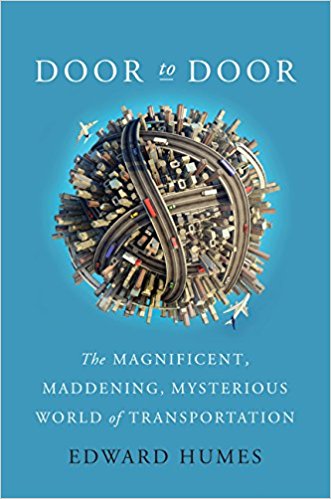
Roads are also cool.
5. Munich, Robert Harris

"Robert Harris". Sold!
6. Fools and Mortals, Bernard Cornwell.

"Bernard Cornwell"...SOLD! Wait, is this about Shakespeare? Who do I see about er, getting it a little early? Know whatimean, nudge nudge, wink wink, say no more?
7. 9 Presidents Who Screwed Up America, Brion McClanahan

Ahhahhahhah, finally! Someone who doesn't worship Teddy Roosevelt. Probably written in the same vein as Recarving Rushmore. Honestly, I like this most for the title..I don't know that I really want to read about politics at the moment. We'll see.
8. Amsterdam: A History of the World's Most Liberal City

Amsterdam! It has bikes, and canals, and very pretty houses. Apparently it also has a reputation for legalized weed and prostitutes. But who has time for that when you can bike by canals and look at the pretty houses?

*wolf whistle*
9. A Hobbit, a Wardrobe, and A Great War, Joseph Loconte

This one has been on the list for a while, and I recently snagged a copy on sale.
10. This is Your Brain on Parasites, Kathleen McAuliffe

This checks all the boxes, doesn't it? Science, brains, mind control...can't miss it!
Camino Island
Camino Island
© 2017 John Grisham
290 pages

Mercer Mann thought she'd reached the bottom of her career. After publishing early, and young, she's floundered ever since, and keeps herself eating -- and keeps the creditors for her $60,000 in student loans at bay -- by teaching English lit to disinterested freshmen. But now...she's lost even that. She's officially an unemployed and soon to be homeless writer. Happily, however, a discrete insurance firm who is trying to track down some priceless and recently stolen manuscripts from Princeton University has a job for her. They want her to return to her childhood home of Camino Island, Florida, and -- under cover of taking the summer off to write a book -- get to know one Bruce Cable, owner of Bay Books, owner of many seersucker suits, don of the local literary set, and suspected architect of a twenty-five million dollar heist. Her mission: get as close to him as possible, find out if he's their man, and obtain any information that would help recover the books.
Camino Island is a confused novel, despite having one of Grisham's more interesting setups. It opens with a heist and closes with the police and lawyers, but the seventy percent in the middle reminds me a little of The Last Juror, in that the meat of the story lays in the goings-on of a community of eccentrics, in this case all writers, publishers, or (in Bruce's case) those associated with the bookstore. Bay Books is the community center, housing not only the bookstore but a popular cafe, and despite its size it attracts all manner of authors, from Stephen King to Scott Turow. Mercer's spy mission involve fewer tuxedos and gadgets and more trying to hold her daiquiries during long dinners in which writers gather to encourage or mock one another as they struggle to get their stories out. As Mercer gains more acceptance with the locals, she begins learning about the rare book trade -- and that, combined with the fact that so many of the characters are book-lovers, makes Camino Island of immediate interest to those of us who genuinely love books and literature. The appeal of the novel is mostly in the setting, however, as none of the characters have a full "story": they're merely characters with small stories that intersect at times, but don 't really cohere into some grand narrative. Mercer, the closest thing we have to a main character, disappears in the last few chapters of the book, and I almost didn't mind. Frankly, the only character who is remotely interesting in Bruce, who turns a struggling bookstore into a community center and does most of the legwork that keeps it alive by working there six days a week -- despite being wealthy with shady friends.
Although Camino Island's organization leaves much to be desired, I enjoyed the literary theme enormously. I received it as a Christmas gift this morning and just finished it off, so it was a good story...just a weirdly organized one.
© 2017 John Grisham
290 pages
Mercer Mann thought she'd reached the bottom of her career. After publishing early, and young, she's floundered ever since, and keeps herself eating -- and keeps the creditors for her $60,000 in student loans at bay -- by teaching English lit to disinterested freshmen. But now...she's lost even that. She's officially an unemployed and soon to be homeless writer. Happily, however, a discrete insurance firm who is trying to track down some priceless and recently stolen manuscripts from Princeton University has a job for her. They want her to return to her childhood home of Camino Island, Florida, and -- under cover of taking the summer off to write a book -- get to know one Bruce Cable, owner of Bay Books, owner of many seersucker suits, don of the local literary set, and suspected architect of a twenty-five million dollar heist. Her mission: get as close to him as possible, find out if he's their man, and obtain any information that would help recover the books.
Camino Island is a confused novel, despite having one of Grisham's more interesting setups. It opens with a heist and closes with the police and lawyers, but the seventy percent in the middle reminds me a little of The Last Juror, in that the meat of the story lays in the goings-on of a community of eccentrics, in this case all writers, publishers, or (in Bruce's case) those associated with the bookstore. Bay Books is the community center, housing not only the bookstore but a popular cafe, and despite its size it attracts all manner of authors, from Stephen King to Scott Turow. Mercer's spy mission involve fewer tuxedos and gadgets and more trying to hold her daiquiries during long dinners in which writers gather to encourage or mock one another as they struggle to get their stories out. As Mercer gains more acceptance with the locals, she begins learning about the rare book trade -- and that, combined with the fact that so many of the characters are book-lovers, makes Camino Island of immediate interest to those of us who genuinely love books and literature. The appeal of the novel is mostly in the setting, however, as none of the characters have a full "story": they're merely characters with small stories that intersect at times, but don 't really cohere into some grand narrative. Mercer, the closest thing we have to a main character, disappears in the last few chapters of the book, and I almost didn't mind. Frankly, the only character who is remotely interesting in Bruce, who turns a struggling bookstore into a community center and does most of the legwork that keeps it alive by working there six days a week -- despite being wealthy with shady friends.
Although Camino Island's organization leaves much to be desired, I enjoyed the literary theme enormously. I received it as a Christmas gift this morning and just finished it off, so it was a good story...just a weirdly organized one.
Subscribe to:
Comments (Atom)