Showing posts with label Charles Darwin. Show all posts

Thursday, April 28, 2016

The Voyage of the Beagle

The Voyage of the Beagle
© 1839 Charles Darwin
448 pages*


As a young man, Charles Darwin lacked sharp direction. His father wanted him to become a doctor, but he hated the sight of blood.  His passion was natural philosophy, the observation and study of the natural world,  and he briefly considered becoming a country parson so that he would have the time to pursue that passion. A chance opportunity to join the crew of the HMS Beagle, assigned to survey the extreme southern end of South America,  gave him more occasion to practice natural observation than he might have ever expected. It was on that journey that he collected the data that would produce his first book,  a monograph on coral reef formation, and stir his imagination about life's abundant variety.

Voyage consists of a log by Darwin, divided into sections of interest, and follows him and the Beagle  from England to South America, then across the Pacific back to England again. Darwin's real purpose on the ship was to keep the captain company,  a man who would have otherwise had to have made conversation with common sailors.   Virtually all of his commentary is given over to descriptions of Darwin's time spent on land, aside from brief mentions of dolphins frolicking.   Young Darwin explores the surrounding area every time the ship puts into port, but he is often dropped off for several days on end, trekking into the interior. Voyage is a work of scientific journalism, describing the flora and fauna of South America's rims and outlying islands. Darwin's commentary reveals an already practiced scientific mind, especially in the area of geology.  The author is most famous, of course, for his insights into biology, particularly the way natural selection forces living populations to change over time.    His  chapter on the Galapagos island and its famed finches drops a hint of the patterns Darwin was beginning to detect:

"Seeing this gradation and diversity of structure in one small, intimately related group of birds, one might really fancy that from an original paucity of birds in this archipelago, one species had been taken and modified for different ends."

In addition to detailing the behavior of pumas and the native economy of this-or-that group of Patagonians, Darwin has a few extraordinary experiences. At least once he is marooned in-country during a revolution, and as the Beagle is sailing up the coast of Chile, there is a volcanic eruption and several earthquakes.  Darwin does not limit his commentary to the plants and animals he collects; he also has much to say about the peoples they meet, and here he comes off rather nicely. He views Spanish and English civilization being created in these distant lands an improvement on say, human sacrifice, but recognizes that the age of 'discovery' has also been one of violent ruin for many.   He takes in the many strange customs he sees not with condescension, but with wonder -- with the exception of commenting on stagnant rural economies.  Upon departing the eastern coast of South America on the return trip, he sighs with relief that he will never again witness a slave-country; in Australia, he exhibits a strong sympathy for the aboriginal peoples, who have lost their land to both Polynesians and the English.

For the reader with a scientific appetite and the willingness to chew on pages of description, Voyage is appealing.  This is not some layman's travel guide to South America, obviously, but a book intended for those who wish to learn about the land's geography and life. In 2016, of course, there is added historical appeal; not only in exploring a continent not yet hit by industrialism, but in seeing a giant of English scientific achievement in his youth, still gathering material awaiting the imaginative spark.

*I read from an online version from Literature.org, so pagecount is taken from an Amazon edition. 

Thursday, February 19, 2009

The Reluctant Mr. Darwin

The Reluctant Mr. Darwin: An Intimate Portrait of Charles Darwin and the Making of his Theory of Evolution
© 2006 Peter Quammen
304 pages, including chronology, bibliography, notes, and index.

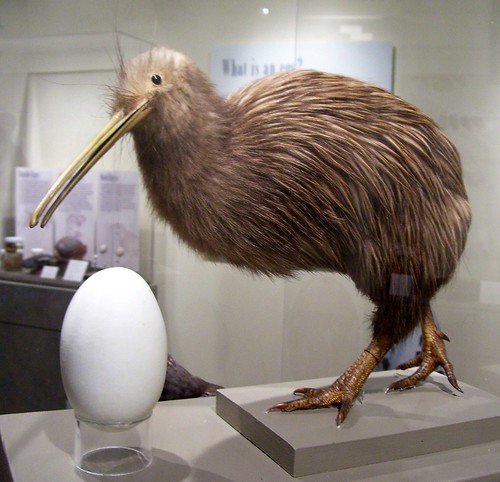
I intended to read this for the week of Charles Darwin's birthday (12 February), but forgot that I would need to order the book in advance. I've read two Darwin biographies in the past, so I was familiar with much of the content here. Quammen's approach is slightly different: rather than focus on Darwin's upbringing and trip aboard the Beagle, he begins the book immediately after Darwin steps foot back on Britain: his first chapter is titled "Home and Dry". The development of his theory -- evolution through means of natural selection -- unfolds in four chapters: "The Kiwi's Egg", "The Fabric Falls", "Point of Attachment", and "A Duck for Darwin". The titles are quite apt, and "The Kiwis's Egg" is almost poetic: the author explains that Darwin's theory burdened him the same way that a kiwi bird's oversized egg burdens it.

In the sixth chapter, His Abominable Volume, Quammen looks at The Origin of Species itself, examining its contents, style, and changes throughout its various editions. Following this, Quammen tracks evolution's development through the two hundred years that follow with "The Fittest Idea". The last chapter focuses on the declining years of Darwin's life and his death. This, like Darwin, his Daughter, and Human Evolution is a brief but very readable narrative. So far Cyril Agon's Charles Darwin: the Naturalist Who Started a Scientific Revolution has been the most thorough. This volume is more about Darwin's development of evolution and less about Darwin proper, though.

Thursday, July 10, 2008

This Week at the Library

Books this Update:
  • The History of Science, Ray Spangenburg and Diane Moser
  • The Handmaid’s Tale, Margaret Atwood
  • Murder in the Lincoln Bedroom, Elliot Roosevelt
  • Isaac Asimov’s Treasury of Humor by Isaac Asimov
  • Darwin, his Daughter, and Human Evolution, Randal Keynes

I began this week with The History of Science from 1895 to 1945. At usual, the book is separated into the physical and life sciences, but this book does away with the recap that the other books employed -- previous advances are summarized in their respective chapters. Some of the advances in this book include quantum theory and the discovery of viruses. While the book is as well-written as the ones preceding it, some of the topics -- like quantum theory -- are harder to understand, and so I enjoyed this book less. The book does mention “the Leakey’s brilliant son, Richard”, which amused me as a few weeks ago I read one of Richard Leakey’s works -- his commentary on The Origin of Species.

The next book I read was a recommendation from a friend. The book, by Margaret Atwood, is called The Handmaid’s Tale and is set in a dystopian world where the United States has turned into a monotheocracy, functioning as a military dictatorship where society is stratified along religious lines. How exactly this happened is unclear. A massive earthquake along the San Andreas vault causes numerous nuclear power plants to “explode”, and then a conspiracy takes over the government and suspends the constitution. It is unclear as to whether or not the conspiracy was already in place and just seized the moment or if it formed immediately after.

While it doesn't seem possible that dull-minded people like fundamentalists could manage to take over a country in one fell swoop, their job was made considerably easier by the fact that paper money had been done away with -- everything had become computerized. Once the unnamed group takes over the government by assassinating everyone in the Congress (it must not have been an election year), they suspend the Constitution and seize control of the money so they can make the United States a Christian nation -- or at least their version of a Christian nation. Now, you would think that the military would object to this, but they were fooled into thinking Islamic fanatics from Iran did it. Bear in mind, this book was written when fundamentalism was rising in both Iran and the United States -- when people like Pat Robertson and Jerry Falwell were gaining political power.

The new government is run along strict biblical lines, although the goons show a decided preference for the Hebrew scriptures; indeed, the stratification of women is completely based on Abraham's family. Abraham, for the uninitiated, is the legendary father of both the Hebrew and Arab peoples. According to the Hebrew bible, Abraham was a tradesman from Ur, which is not far from Babylon. Yahweh told him to leave Ur, and he did, and in return Yahweh promised Abraham that he would have a child and one day he'd have a mess of descendants. The promised kid doesn't come for a long time, though, and eventually Abraham's wife Sara becomes barren -- so Sara tells Abraham to knock up her handmaid Hagar so they'll have a child. So Abraham does: he knocks the girl up and they have a kid named Ishmael. Although Hagar wasn't Abraham's wife, she's Sara's handmaid, and Sara is Abraham's wife, so...the kid is technically Abraham and Sara's somehow. (Yahweh doesn’t think so, but fortunately his twin brother Allah does.)

That's what happens here. The people running the government -- old guys who like uniforms and call themselves "Commanders" and their wives, old "Ladies Against Women" types -- are all barren, so they need young hussies to propagate the species. The women are divided into five different castes -- "Wives", "Marthas" (old servants), "Handmaids" (whose job it is to get pregnant and give the commander and his wife a child), "Aunts" (who train girls to be handmaids), "Jezebels" (prostitutes, who serve the Republic by doing whatever prostitutes do), and "Unwomen", or women who are too educated or lesbian to be of any use to the Republic of Gilead. Unwomen are either killed, sent to The Colonies for hazardous duty, or turned into Jezebels.

The Handmaid's Tale is about one handmaid -- who before the takeover was a college graduate living with her husband and wife and working in a library. She only accepts her fate because she hopes that there is a resistance -- hopes that there are those working to destroy this New Order. This story is about her own personal resistance -- the story of a free mind rebelling against those with power over her. I won't say more. Once I found the book, I found it rather gripping. According to Wikipedia (the fount of all knowledge), The Handmaid's Tale is on the American Library Association's list of most-challenged books, as some see it as "anti-religious".

Even if that were so, intellectual cowardice is no excuse not to read the book. As it happens, though, the book is not anti-religious. While the Republic of Gilead is a religiously-defined world, the religion in question is practiced only by a nutty few. Most Christians in the United States are just ordinary people who happen to wear crosses at their necks. There are some who are assholes, but that's just the law of averages. This book isn't about the majority of Christians or even most fundamentalists -- it's about the ones who transcend batshit craziness and become positively evil -- like cells that turn cancerous just for the sake of being little microscopic dicks.

After The Handmaid’s Tale, I read Murder in the Lincoln Bedroom, a murder mystery set in the 1943 White House, during the Trident Conference. Murder…is part of a series of mystery novels starring Eleanor Roosevelt. I am amused by the idea of Eleanor Roosevelt dressed in Sherlock Holmes’ cloak, cap, and pipe, closely followed by FDR in a Watson-style bowler, who says ‘But Eleanor! How did you know?”, and her replying “Elementary, my dear Franklin.” The book was interesting. As it was penned by Elliot Roosevelt, one of the Roosevelt sons, I imagine it’s a fairly accurate depiction of 1943 D.C.  -- or at least as accurate a picture Elliot could paint from his own memories and research. The series of books appears to have been published after Elliot’s death.

I took a break from conspiracies and murder to read Isaac Asimov’s Treasury of Humor, which is a collection of some 600 jokes complete with commentary by Asimov. He included all sorts of jokes, from puns (some of which I’ve used to annoy my friends with already) to cultural/ethnic jokes. Asimov being Asimov, though, the jokes in question are not offensive and still funny. Here’s my version of a favorite from the book:

There’s this Palestinian walking in the desert, going from his school to his family home. As he’s walking, he suddenly gets an eerie feeling. Pausing to take things in, he realizes that a sandstorm is bearing on him and will overtake him in only minutes. There’s no way that he can make it to his home in time, so he decides to dig a small pit for himself. He figures that he can lay on his belly in the pit and tuck his face into his jacket so that he’ll protect his mouth, eyes, and nostrils from the sand. So he drops down and starts digging furiously. As he’s digging, he encounters a curious sort of container. It looks old. He tries to take the top of so he can use it as a cup to aid in his digging, but when he opens it he finds himself face to face with a genie.

The genie roars “Thank you for saving me, young master! For your reward, I shall grant you three wishes! Choose wisely.” The young guy is taken aback, but quickly asks that the genie get rid of the approaching sandstorm. All at once, the sandstorm is gone. The Palestinian is amazed -- this is real. “Your second wish, young master?” inquires the genie. The Palestinian stands and thinks for a while, then says that he wants a large home surrounded by lush farmland -- filled with servants and luxury goods, along with a wife. The genie nods, and suddenly the desert transforms into a magnificent estate, surrounded by farms that are ripe for the harvest. The estate looks like the old Hanging Gardens -- magnificent. There are sport cars in the driveway, and the young man is suddenly flanked by a beautiful woman who is his wife.

“For my first wish, I saved my life. For my second wish, I secured my future. For my third wish, I should look to the welfare of my people,” said the young Palestinian. “I want you to destroy the nation of Israel”, he says to the genie. All at once, the estate and wife are gone, and the sandstorm is seconds from overtaking the young man. The moral of the story? Be careful what you wish for: your genie may be Jewish.


Asimov’s version was more medieval -- an Arab dying of thirst in the desert who wishes for a palace with camels and who wishes for the destruction of the Jews. I made it contemporary. My favorite chapter was the chapter on wordplay, because I like puns. I like puns because I don’t have to memorize anything: all: mine are usually extemporaneous -- I just happen to hear an opportunity and I seize on it. I will do this even if the pun is a particularly terrible one, because groans can be rather melodious.

Next I read Darwin, his Daughter, and Human Evolution by Randal Keynes, who is related to both Charles Darwin and the economist John Maynard Keynes. As I mentioned last week, I basically checked this book out because the cover art caught my eye and the inside text looked fairly interesting. Like Charles Darwin: the Naturalist who Started a Scientific Revolution, this book focuses on Charles Darwin and his theory of descent with modification. Since both books are essentially on the same subject, a comparison is due. The Naturalist Who Started a Scientific Revolution is a much more comprehensive biography of Darwin and the theory. Its beginning chapters focused on Darwin’s family history, and the book went into depth exploring what books and what scientists inspired Darwin and so on. Darwin, his Daughter, and Human Evolution is different. While the book does cover the development of the theory, its author does not describe the voyage of the Beagle in detail. This book is about Darwin, the adult scientist and family man -- the man who pauses his daily trips around the Sandwalk to play with his children, who rented a home for his family while he was undergoing treatment in another city just so they would be close by -- the man who made notes about his children growing up, from the time they were babies -- and who monitored his daughter Annie’s death in hopes of finding a cure. I mentioned before that the author is related to the Darwins. Because of that, he has access to family items like Annie Darwin’s writing case -- complete with writing quills that still have dried ink on the tips.


Pick of the Week: Darwin, his Daughter, and Human Evolution
Quotation of the Week: “If I had to live my life again, I would have made a rule to read some poetry and listen to some music at least once every week.” - Charles Darwin, p. 308 of Darwin, his Daughter, and Human Evolution. Original source is his Autobiography.

Next Week:
  • -The Complete Idiot’s Guide to the World of Harry Potter. I’m not kidding. I saw it when looking for one of my other books, and the very idea of it amused me so much that I had to check it out.
  • Asimov’s Guide to Shakespeare, because I like Asimov and am only familiar with Shakespeare’s tragedies.
  • The Neanderthal Enigma, which I checked out because Neanderthals may be interesting.
  • The History of Science From 1945 to 1990, which is the last book in the On the Shoulders of Giants series -- alas.
  • The Undertaker’s Widow by Philip Margolin, which I checked out because I like Margolin.

Tuesday, June 10, 2008

This Week at the Library

Books in this Update:
  • The Origin of Species, Charles Darwin
  • The History of Science from the Ancient Greeks to the Scientific Revolution, Ray Spangenburg
  • Charles Darwin: the Naturalist Who Started a Scientific Revolution, Cyril Aydon

I began this week with The Origin of Species, by Charles Darwin. I read this book for historical, rather than scientific, reasons. I imagine that it is of little use as a scientific text today as it was published in 1859 -- before heredity and DNA were discovered. I decided to read it to see what the book was like, since it caused such a sensation in its day. I would do the same for other historically important texts -- The Wealth of Nations, The Communist Manifesto, The Jungle, etc. As a student of history, and a fledging student of the history of science in particular, I'm quite interested in this book. It also helps to be armed with facts for those chance encounters with fundamentalists who are prone to saying "Darwin said…". I figure if I read The Origin of Species, I could call them on their BS promptly. (Some people hunt. I call BS. We all have our sports.)

The Origin of Species, despite being written in the Victorian era, is actually rather readable. The edition of the book I'm reading features commentary (sometimes corrective) to help put things into perspective. While Darwin's book introduced the idea of descent with modification to a larger audience than the Royal Society, his chapter on "The Struggle for Existence" bespeaks of ecology to me. I do not know enough about the history of ecology to say if many naturalists had observed it, Darwin certainly did. Take, for instance, this passage:

I am tempted to give one more instance showing how plants and animals are bound together by a web of complex relations. I find from experience that [b]umblebees are almost indispensable to the fertilisation of the heartsease and some kinds of clover. [B]umblebees alone visit red clover, as other bees cannot reach the nectar. Hence we may infer that, if the whole genus of [b]umble-bees became extinct or very rare in England, the heartsease and red clover would become very rare, or wholly disappear. The number of [b]umblebees in any district depends in a great measure on the number of field-mice, which destroy their combs and nests. Now the number of mice is largely dependent on the number of field mice, which destroy their combs and nests. Now the number of mice is largely dependent […] on the number of cats; and as Col. Newman says, 'Near villages and small towns I have found the nest of [b]umblebees more numerous than elsewhere, which I attribute to the number of cats that destroy the mice.' Hence it is quite credible that the presence of feline animals in large numbers might determine, through the intervention from mice and then of bees, the frequency of certain flowers in that district. "

How else to describe ecology rather than 'plants and animals bound together by a web of complex relations'? Wikipedia says that "ecology" was coined in 1866, and that its founder was Eugenius Warming. I may read more on ecology later on; it's an interesting topic. Most of the chapters are fairly interesting. I thought "Instinct" was a little dull, but other chapters, like "Geographical Distribution", made up for it. That chapter was particular interesting, as Darwin describes his experiences in probing to see how seeds could be transferred from one island to the next. Three methods he came up with were (1) seeds carried by seawater, (2) seeds in dirt clumps attached to natural debris that is shuffled from island to island through the currents, and (3) through animal scat, since birds can often be blown hundreds of miles from their natural routes by prevailing winds. Darwin actually tests these ideas -- submerging seeds in seawater to see if they would germinate, liberating seeds from animal feces and successfully planting them, etc. The man was meticulous.

Next I read The History of Science from the Greeks to the Scientific Revolution. I am enjoying a growing interest in the history of scientific thought. It combines my lifelong interest in history and a newly awakened and burgeoning affection for science rather nicely. This book was quite excellent, I thought, in presenting its information. The book is divided into three parts. The first starts the development of natural philosophy in the Greek world and its progression and moves through the death of the classical world to the rebirth of knowledge in the medieval era with Copernicus. As I read about Copernicus and Galileo (who promoted Copernicus' idea of heliocentrism), it struck me that all Copernicus had to substantiate his claim that the Earth and planets moved around the Sun rather than the reverse was simple math. All either Copernicus or Galileo could do was observe the movement of the planets and other celestial happenings and say "This is what we think is happening. It seems to fit the facts at hand." There was no hard, undeniable evidence outside of the math, and there wouldn't be until the space age. Imagine that! For hundreds of years, people were taught that the Earth moved around the sun not through undeniable evidence but through simple rational and math. As I read about this, I realized that the same was true for both Darwin and Mendel. Darwin spent years observing the natural world, just as Copernicus and Galileo observed the heavens, and then made an observation. As I found out in a later reading, Darwin's initial title for The Origin of Species began with "An Abstract of an Essay On…". Darwin's idea was just that, an idea: a mental abstraction, just like Copernicus'. Here's where it gets interesting: Darwin saw natural selection as the basis for evolution, but had no idea what made that work. How did parents pass on traits to their children -- faster limbs, bigger brains, etc? Mendel figured that out when he realized what we now call genetics, but he lacked the tools to find the actual genes that were doing what he described. Later on, DNA was discovered, meshing Darwin, Mendel, and Watson's discoveries together. I find this sequence of events uncommonly fascinating. Anyway, after finishing the introduction, the book is split into two more sections: the physical sciences and the life sciences. Both are interesting in themselves. The history of medicine isn't something I know a lot about other than what I learned in Theories for Everything, but this book's section contained a wealth of information. Speaking of Theories for Everything, I wonder if the thrilling narrative presented by that book is what prompted my interest in the history of science?

Next, I read Charles Darwin: the Naturalist Who Started a Scientific Revolution. I found this book and the one preceding it by searching for "scientific revolution" at my local library in the interests of expanding my knowledge of the history of science. It's a biography of Charles Darwin. I recently watched a video that piqued my curiosity about the life of Charles Darwin, and specifically the voyage of the Beagle. As far as narratives go, I have to say this one is excellent. Biographies can be dull despite being about an interesting personality, but this book is anything but dull. The author presents a lively telling of Darwin's life, drawing conclusions about why he was able to do what he did based on his surroundings. The book concludes by saying that Darwin was marvelously fortunate. He was born into the landed gentry, which made his life as a naturalist much easier. His father supported him financially, allowing him to spend his time doing research and writing. He married a woman who gave him immense emotional support, and he was able to surround himself with some of the leading minds of the day, who inspired and encouraged him. This book gave me new insight into Darwin and his book. I got a good laugh when perusing the "Suggested Reading". The author mentions Richard Dawkins' The Blind Watchmaker, and says that Dawkins has taken Alfred Huxely's role as "Darwin's bulldog". The author says that 'like Huxeley, he is a tremendous popularizer [of science], and like Huxeley he takes no prisoners.' That's one way to characterize Richard Dawkins: a bit like saying FDR had a way with speeches.

I have other books -- namely, The History of the Ancient World, Modern Germany: Its History and Civilization, and Biology: Demystified. However, each presents problems: the first two are large, while the last is a self-teaching book, and as such I cannot read it straight through. I have to re-read sections to make sure I remember everything. I checked out Biology: Demystified in the interests of helping me better understand biology (as you might imagine) and thus far it is -- although I do have problems with the book, which I will elaborate on should I finish it and include it here.
Instead of trying to make more progress with those larger books, I decided to visit the library today (I had the day off of work because we had no work to do) and fetch some other books. I began with The History of Science in the 18th Century, which is the second book in the series that The History of Science […] to the Scientific Revolution began. Next I checked out Christopher Hitchens' god is not Great: How Religion Ruins Everything. I should note that I have read Hitchens before (his biography of Thomas Jefferson) and didn't really like his tone, which seemed to be…overly academic. I've seen the guy in interviews and enjoy him there, but not in that book. You can probably guess the book's theme from its title. I'm only reading it to say I have: I'm actually not interested in books about atheism. It does get old.

Next I'm reading -- or attempting to read -- Richard Dawkins' The Selfish Gene. I have tried to read this book twice before, only to be stymied by the fact that my brain yelps and hides under the couch when it encounters genetics. I know a smidge more about genetics now than I do the last time I read this book two years ago, but as evidenced by the slow progress I am making in Biology: Demystified, this subject does not come easily to me. I've heard that the third time's the charm, but even if I can't get through it, I will try again. I will continue trying to read the book until (1) I die or (2) Athena tells me not to. I don't know how long I have before case one is reached, but I doubt case 2 will be realized any time soon. Why am I so determined to read this book? Because I tried once, and failed. I won't have it said of me at my funeral that a book got the better of me -- even if it was written by an Oxford professor.

Next I checked out a book on Greek mythology and I finished my round with a collection of short stories by Isaac Asimov. I think that's everything. I was thrilled to find the Asimov collection: I was concerned that I had read all of his short-story collections at the library.