Earlier in the year, in an effort to better organize my science reading, I drew up a list of categories to guide me along. I kept a Word file on my computer and fill it out as the months progressed, almost like a scavenger hunt. The system worked in prompting me to look for books outside my usual areas, and I will use it again in 2018.
Cosmology and Astrophysics
Astrophysics for People in a Hurry, Neil deGrasse Tyson
Local Astronomy
Space Probes: From Sputnik to New Horizons, Phillipe Seguela. A largely-graphic history of various probe missions.
Geology
The Dragon Seekers: How an Extraordinary Circle of Fossillists Discovered the Dinosaurs, Christopher McGowan
Weather and Climate
Isaac’s Storm: A Man, a Time, and the Deadliest Hurricane in History Erik Larsen.
Chemistry and Physics
The Disappearing Spoon, Sam Kean
Flora and Fauna
Land of the Tiger: A Natural History of the Indian Subcontinent, Valmik Thapar
Biology
I Contain Multitudes, Ed Yong
Anthropology
Cro Magnons: How the Ice Age Gave Birth to the First Modern Humans, Brian Fagan (well, almost. Halfway through it. )
Neurology and Psychology
The Future of the Mind, Michio Kaku
Science and Society
Energy Myths and Realities: Bringing Science to the Energy Policy Debate, Vaclav Smil
Thinking Scientifically
Ask a Science Teacher, Larry Scheckel
The Canon: A Whirligig Tour of Science's Beautiful Basics, Natalie Angier
Pursuing the flourishing life and human liberty through literature.
"Once you learn to read, you will be forever free." - Frederick Douglass
Saturday, December 30, 2017
A journey's end
A few minutes ago, I finished Jawaharlal Nehru's The Discovery of India, and completed my Discovery of Asia series, or challenge, for 2017. My goal was to read two books per month on Asian history or culture, primarily Indian and Chinese, and despite being three months behind in the late fall, I made it! I'll post comments for Nehru's work in the coming week, and still owe myself a proper summary for This Brave New World. I'm not finished learning about Asia, however; this was just a breaking of the ground, an establishment of a foundation I can build on later. I already have some future reads in mind. For now, however, it's time to relax with coffee and a piece by Ravi Shankar, "The Discovery of India".
Geography
Land of the Tiger: A Natural History of the Indian Subcontinent, Valmik Thapar
General History
India in the Global Community, P. Paramundi Karan
The Silk Road: Two Thousand Years in the Heart of Asia, Frances Wood
Genghis Khan and the Making of the Modern World, Jack Weatherford
Japan: A Cultural History, Henri Stierlin
India: A New History, StanleyWolbert
Midnight's Furies: The Deadly Legacy of India's Partition, Nisid Hajari
The Tragedy of Liberation: The Chinese Revolution, Frank Dikotter
The Wonder That Was India, Arthur Llewellyn Basham
Embracing Defeat: Japan in the Wake of WW2, John Dower
Heart of the Dragon, PBS
The Emperor Far Away: Travels at the Edge of China, David Eimer
A History of China, Wolfram Eberhard
The Discovery of India, Jawaharlal Nehru
Asia in the age of Globalism
This Brave New World: India, China, and the United States, Anja Manuel (Review Pending)
In Spite of the Gods: The Rise of India, Edward Luce
China Road, Rob Gifford
China: An Introduction, Lucien Pye
The Elephant and the Dragon: What India and China's Rise Means, Robyn Meredith
China Wakes: The Struggle for the Soul of a Rising Power, Nicholas D. Kristof and Sheryl WuDunn
Korea Reborn, Ministry of Patriots
Dragon Rising: An Inside Look at China Today, Jasper Becker
Country Driving: A Journey through China from Farm to Factory, Peter Hessler
Factory Girls: From Village to City in a Changing China, Leslie Chang
Geography
Land of the Tiger: A Natural History of the Indian Subcontinent, Valmik Thapar
General History
India in the Global Community, P. Paramundi Karan
The Silk Road: Two Thousand Years in the Heart of Asia, Frances Wood
Genghis Khan and the Making of the Modern World, Jack Weatherford
Japan: A Cultural History, Henri Stierlin
India: A New History, StanleyWolbert
Midnight's Furies: The Deadly Legacy of India's Partition, Nisid Hajari
The Tragedy of Liberation: The Chinese Revolution, Frank Dikotter
The Wonder That Was India, Arthur Llewellyn Basham
Embracing Defeat: Japan in the Wake of WW2, John Dower
Heart of the Dragon, PBS
The Emperor Far Away: Travels at the Edge of China, David Eimer
A History of China, Wolfram Eberhard
The Discovery of India, Jawaharlal Nehru
Asia in the age of Globalism
This Brave New World: India, China, and the United States, Anja Manuel (Review Pending)
In Spite of the Gods: The Rise of India, Edward Luce
China Road, Rob Gifford
China: An Introduction, Lucien Pye
The Elephant and the Dragon: What India and China's Rise Means, Robyn Meredith
China Wakes: The Struggle for the Soul of a Rising Power, Nicholas D. Kristof and Sheryl WuDunn
Korea Reborn, Ministry of Patriots
Dragon Rising: An Inside Look at China Today, Jasper Becker
Country Driving: A Journey through China from Farm to Factory, Peter Hessler
Factory Girls: From Village to City in a Changing China, Leslie Chang
Wednesday, December 27, 2017
Fixing Your Computer
Fixing Your Computer: Absolute Beginner's Guide
© 2013 Paul McFedries
336 pages
This title is exactly as it describes itself, a beginner's guide to computer maintenance. McFedries begins with the computer as a whole, and takes readers through physical and digital cleanup -- going from compressed air canisters for keyboard gunk, to creating backup discs for your system. Then he takes readers inside the computer case itself, explaining the use of each component and offering information as to the specs for different parts one might see in the store. He offers lists of reputable parts suppliers, and then delivers step by step instructions for taking out and replacing parts -- including the processor itself. The sections are written to be read independent of one another, so someone just taking a look at one page won't miss any background advice, like how to avoid static electricity buildup.
This is a very useful book for reference, and despite the release of Windows 10, remains current. I checked it out because I'm contemplating cannibalizing one of my first computers, using its DVD drive to replace a sputtering one in another of my machines. I read the whole thing, though, as I've only lately even learned to identify all of the stuff inside the computer.
If you are interested in computer hardware, one my favorite YouTube channels' is LazyGameReviews, which despite its name is not just about gaming, nor is it remotely lazy. The host does a lot of work, and primarily features older and odder technology. I found him via his series on 'oddware', while looking for some computer design from the 1980s.
© 2013 Paul McFedries
336 pages
This title is exactly as it describes itself, a beginner's guide to computer maintenance. McFedries begins with the computer as a whole, and takes readers through physical and digital cleanup -- going from compressed air canisters for keyboard gunk, to creating backup discs for your system. Then he takes readers inside the computer case itself, explaining the use of each component and offering information as to the specs for different parts one might see in the store. He offers lists of reputable parts suppliers, and then delivers step by step instructions for taking out and replacing parts -- including the processor itself. The sections are written to be read independent of one another, so someone just taking a look at one page won't miss any background advice, like how to avoid static electricity buildup.
This is a very useful book for reference, and despite the release of Windows 10, remains current. I checked it out because I'm contemplating cannibalizing one of my first computers, using its DVD drive to replace a sputtering one in another of my machines. I read the whole thing, though, as I've only lately even learned to identify all of the stuff inside the computer.
If you are interested in computer hardware, one my favorite YouTube channels' is LazyGameReviews, which despite its name is not just about gaming, nor is it remotely lazy. The host does a lot of work, and primarily features older and odder technology. I found him via his series on 'oddware', while looking for some computer design from the 1980s.
Monday, December 25, 2017
Top Ten Books I'm Looking Forward To in 2018
This week le Broke and le Bookish are doing books they're looking forward to in 2018, either as new releases or just-getting-around-to-reading-it titles.
1. Frank Sinatra: The Chairman, James Kaplan
This has been on my to-read list since ...er, September 2016. I love ol' blue eyes, having been a collector of his music and movies since 2004. It's time to read the sequel to The Voice!
2. 1906:A Novel, James Dalessandro
I've read several factual histories of the San Franscisco earthquake and fire of 1906, and this one has been on my to-read list for a while.
3. The Grid: The Fraying Wires Between Americans and Our Energy Future, Gretche Bakke
You know I love reading about power lines.
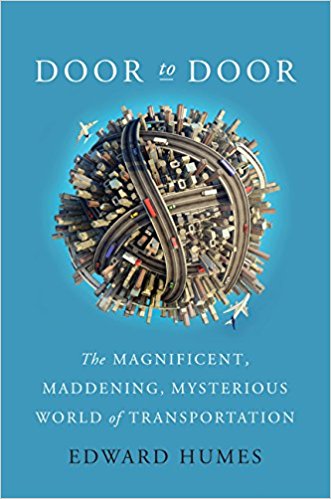
4. Door to Door: The Magnificent, Maddening, Mysterious World of Transportation, Edward Humes
Roads are also cool.
5. Munich, Robert Harris
"Robert Harris". Sold!
6. Fools and Mortals, Bernard Cornwell.
"Bernard Cornwell"...SOLD! Wait, is this about Shakespeare? Who do I see about er, getting it a little early? Know whatimean, nudge nudge, wink wink, say no more?
7. 9 Presidents Who Screwed Up America, Brion McClanahan
1. Frank Sinatra: The Chairman, James Kaplan
This has been on my to-read list since ...er, September 2016. I love ol' blue eyes, having been a collector of his music and movies since 2004. It's time to read the sequel to The Voice!
2. 1906:A Novel, James Dalessandro
I've read several factual histories of the San Franscisco earthquake and fire of 1906, and this one has been on my to-read list for a while.
3. The Grid: The Fraying Wires Between Americans and Our Energy Future, Gretche Bakke
You know I love reading about power lines.
4. Door to Door: The Magnificent, Maddening, Mysterious World of Transportation, Edward Humes
Roads are also cool.
5. Munich, Robert Harris
"Robert Harris". Sold!
6. Fools and Mortals, Bernard Cornwell.
"Bernard Cornwell"...SOLD! Wait, is this about Shakespeare? Who do I see about er, getting it a little early? Know whatimean, nudge nudge, wink wink, say no more?
7. 9 Presidents Who Screwed Up America, Brion McClanahan
Ahhahhahhah, finally! Someone who doesn't worship Teddy Roosevelt. Probably written in the same vein as Recarving Rushmore. Honestly, I like this most for the title..I don't know that I really want to read about politics at the moment. We'll see.
8. Amsterdam: A History of the World's Most Liberal City
Amsterdam! It has bikes, and canals, and very pretty houses. Apparently it also has a reputation for legalized weed and prostitutes. But who has time for that when you can bike by canals and look at the pretty houses?
*wolf whistle*
9. A Hobbit, a Wardrobe, and A Great War, Joseph Loconte
This one has been on the list for a while, and I recently snagged a copy on sale.
10. This is Your Brain on Parasites, Kathleen McAuliffe
This checks all the boxes, doesn't it? Science, brains, mind control...can't miss it!
Camino Island
Camino Island
© 2017 John Grisham
290 pages
Mercer Mann thought she'd reached the bottom of her career. After publishing early, and young, she's floundered ever since, and keeps herself eating -- and keeps the creditors for her $60,000 in student loans at bay -- by teaching English lit to disinterested freshmen. But now...she's lost even that. She's officially an unemployed and soon to be homeless writer. Happily, however, a discrete insurance firm who is trying to track down some priceless and recently stolen manuscripts from Princeton University has a job for her. They want her to return to her childhood home of Camino Island, Florida, and -- under cover of taking the summer off to write a book -- get to know one Bruce Cable, owner of Bay Books, owner of many seersucker suits, don of the local literary set, and suspected architect of a twenty-five million dollar heist. Her mission: get as close to him as possible, find out if he's their man, and obtain any information that would help recover the books.
Camino Island is a confused novel, despite having one of Grisham's more interesting setups. It opens with a heist and closes with the police and lawyers, but the seventy percent in the middle reminds me a little of The Last Juror, in that the meat of the story lays in the goings-on of a community of eccentrics, in this case all writers, publishers, or (in Bruce's case) those associated with the bookstore. Bay Books is the community center, housing not only the bookstore but a popular cafe, and despite its size it attracts all manner of authors, from Stephen King to Scott Turow. Mercer's spy mission involve fewer tuxedos and gadgets and more trying to hold her daiquiries during long dinners in which writers gather to encourage or mock one another as they struggle to get their stories out. As Mercer gains more acceptance with the locals, she begins learning about the rare book trade -- and that, combined with the fact that so many of the characters are book-lovers, makes Camino Island of immediate interest to those of us who genuinely love books and literature. The appeal of the novel is mostly in the setting, however, as none of the characters have a full "story": they're merely characters with small stories that intersect at times, but don 't really cohere into some grand narrative. Mercer, the closest thing we have to a main character, disappears in the last few chapters of the book, and I almost didn't mind. Frankly, the only character who is remotely interesting in Bruce, who turns a struggling bookstore into a community center and does most of the legwork that keeps it alive by working there six days a week -- despite being wealthy with shady friends.
Although Camino Island's organization leaves much to be desired, I enjoyed the literary theme enormously. I received it as a Christmas gift this morning and just finished it off, so it was a good story...just a weirdly organized one.
© 2017 John Grisham
290 pages
Mercer Mann thought she'd reached the bottom of her career. After publishing early, and young, she's floundered ever since, and keeps herself eating -- and keeps the creditors for her $60,000 in student loans at bay -- by teaching English lit to disinterested freshmen. But now...she's lost even that. She's officially an unemployed and soon to be homeless writer. Happily, however, a discrete insurance firm who is trying to track down some priceless and recently stolen manuscripts from Princeton University has a job for her. They want her to return to her childhood home of Camino Island, Florida, and -- under cover of taking the summer off to write a book -- get to know one Bruce Cable, owner of Bay Books, owner of many seersucker suits, don of the local literary set, and suspected architect of a twenty-five million dollar heist. Her mission: get as close to him as possible, find out if he's their man, and obtain any information that would help recover the books.
Camino Island is a confused novel, despite having one of Grisham's more interesting setups. It opens with a heist and closes with the police and lawyers, but the seventy percent in the middle reminds me a little of The Last Juror, in that the meat of the story lays in the goings-on of a community of eccentrics, in this case all writers, publishers, or (in Bruce's case) those associated with the bookstore. Bay Books is the community center, housing not only the bookstore but a popular cafe, and despite its size it attracts all manner of authors, from Stephen King to Scott Turow. Mercer's spy mission involve fewer tuxedos and gadgets and more trying to hold her daiquiries during long dinners in which writers gather to encourage or mock one another as they struggle to get their stories out. As Mercer gains more acceptance with the locals, she begins learning about the rare book trade -- and that, combined with the fact that so many of the characters are book-lovers, makes Camino Island of immediate interest to those of us who genuinely love books and literature. The appeal of the novel is mostly in the setting, however, as none of the characters have a full "story": they're merely characters with small stories that intersect at times, but don 't really cohere into some grand narrative. Mercer, the closest thing we have to a main character, disappears in the last few chapters of the book, and I almost didn't mind. Frankly, the only character who is remotely interesting in Bruce, who turns a struggling bookstore into a community center and does most of the legwork that keeps it alive by working there six days a week -- despite being wealthy with shady friends.
Although Camino Island's organization leaves much to be desired, I enjoyed the literary theme enormously. I received it as a Christmas gift this morning and just finished it off, so it was a good story...just a weirdly organized one.
Sunday, December 24, 2017
Crimson Shadow
Star Trek the Fall: Crimson Shadow
© 2013 Una McCormack
352 pages
After ten years of reconstruction, the Federation is preparing to leave Cardassia. Not all the locals gathering outside are there to wish its engineers and social workers a fare-thee-well, however. A new political movement representing the old Cardassia is growing in strength, and styles itself "Cardassia First". Infiltrating civil institutions and orchestrating riots, it promises to field a candidate against the Federation-friendly administration and disrupt Cardassia's growing relationship with the Federation and its allies. Worse yet, a high-profile political assassination puts both powers on the edge of falling away from one another. Assassinations and unruly mobs, with the fate of Cardassia hanging in the balance -- this looks like a job for....Garak, Intergalactic Man of Mystery!
© 2013 Una McCormack
352 pages
After ten years of reconstruction, the Federation is preparing to leave Cardassia. Not all the locals gathering outside are there to wish its engineers and social workers a fare-thee-well, however. A new political movement representing the old Cardassia is growing in strength, and styles itself "Cardassia First". Infiltrating civil institutions and orchestrating riots, it promises to field a candidate against the Federation-friendly administration and disrupt Cardassia's growing relationship with the Federation and its allies. Worse yet, a high-profile political assassination puts both powers on the edge of falling away from one another. Assassinations and unruly mobs, with the fate of Cardassia hanging in the balance -- this looks like a job for....Garak, Intergalactic Man of Mystery!
No longer the mere mysterious spy-turned-tailor of Deep Space Nine, Garak is Cardassia's ambassador to Earth, having previously served in other Reconstruction governments.The Garak of Crimson Shadow has grown much from the Garak of the television show, who was already complex. Garak's past association with an organization so ominous that it chills Cardassian spines fifteen years after its demise has left him with blood on his hands that cannot be rubbed out. His conscience was once becalmed by the thought that he was acting for the good for Cardassia, in the service of the State, but witnessing nearly a trillion deaths and the obliteration of so much of what he loved has broken Garak's faith. Now, ever wrestling with his conscience, he hopes to help Cardassia find a new way -- one that includes more engagement with the rest of the Quadrant -- and gropes for how to fight monsters without again becoming a monster himself. Garak hasn't hung up his cloak and dagger for good, though, as he proves to have a few tricks up his sleeve that don't involve discretely killing someone. This quandry is also present in the stories of several police officers, who are trying to establish and protect their Constabulary's integrity after past versions of it were co-opted by the State to hurt the people. One of the few non-Cardassian characters here is Jean Luc Picard, who with Garak has to somehow mitigate the damage that each man's civil superiors threatens to wreack in the wake of both books' events.
I enjoyed The Crimson Shadow enormously, as I'm partial to Cardassian stories and especially to Garak. While there's still a little obviousness in how McCormack portrays her villains, she did introduce an interesting idea about the origin of the Obsidian Order. Her portrayal of Garak, as he and his castellan (president) try to navigate away from the sirens that might destroy them, even as they attract so many citizens, more than makes up for the mustache-twirling antagonists. As a bonus, McCormack indirectly quoted CS Lewis, when she makes Garak observe that people are much more dangerous when their tyranny is effected with sincere intentions to help others. A comparative Lewis quote is here.
Wednesday, December 20, 2017
Factory Girls
Factory Girls : From Village to City in a Changing China
© Leslie Chang
420 pages
China as a whole may have a third more men than women because of the one-child rule and a preference for male children, but in Dongguan it's a different story. There, women outnumber the men, for it is they who fill the factories and help expand the Chinese economy. When Leslie Chang learned how many Chinese women -- girls, really, for many are teenagers -- were leaving their villages to find work on the coast, she wanted to know and tell their story. In her seven years living in China, Chang also discovered a link to the lives of these women who opened up to her; her grandfather had once "gone out" of the village and sought his fortune, and both would do their part to build out China's future. Factory Girls is not an expose, but a long-term project of both journalistic and personal interest, as Chang befriends a few women to learn about their lives as a whole: their work, their leisure, their aspirations, and their attempts to find meaning in their associations and relationships.
Chang believes there are two key reasons women are so predominant in China's factories. First, they're more likely to leave home for the factories, as sons are encouraged to stick close to the homes they'll one day inherit. Men who go to the city are often relegated to dead end positions as cooks and security guards, because factory owners prefer hiring young women -- they being more patient and easier to manage. The Chinese cheerfully embrace sex discrimination in their want ads: tall men are solicited for one job, pretty women for another. Chang muses that women have embraced the development zones more readily than their male counterparts because they don't have the security of the family farm to take for granted. After moving to the cities, few daughters want to go back home, anyway. They might yearn to see their family and visit once a year, but once there they miss the energy of the cities and resent their parents' authority. That authority is further compromised given that these families often depend on the money sent to them by their wandering children.
As with Country Driving, Factory Girls bears witness to the sheer amount of energy on China's southern coast, how companies and people are scrambling. "Jumping factories" to find better positions is the norm, but this does impose a cost on the employees: no sooner do they make friends at a factory do those friends disappear, sometimes leaving the city altogether. Although the first generation of migrant employees were self-conscious of their in-between status, and read magazines and sang songs specifically about the migrant experience, most women who move to the cities quickly embrace their status as residents of the New China. They constantly re-invent themselves, trying new hairstyles and styles of clothing seemingly every week. This is not merely curiosity or vanity; many takes classes to instruct them in how to find white-collar work, and it's more about presentation than skills. Skills can be learned on the job; what has to be learned before that is how to sell one's self as a confident, personable professional who can shake hands and trot out a little English from time to time. There's also a growing class of courtesans, 'karaoke girls', and prostitutes who take 'selling themselves' somewhat more literally. With the right madam, in the right area, ladies of the night can make in a week what their sisters in the factories make in a month. Chang also notes a search for meaning among these new urbanites, who explore previously forbidden religions, including China's traditional occult practices with obscure origins.
Chang occasionally includes chapters about her own search for her roots, and the discovery that her grandfather had once "gone out" of China, only to return and be killed by the Communists. Chang sees a big difference between her grandfather's story and those of her new friends in China: while he viewed his travels and work as something done to better China and his family, the women were largely concerned with themselves and their own stories. Chang seems to approve of the change, even as she documents the loneliness and restlessness that has resulted from these young people not having any larger purpose in mind in their lives; supporting their parents is obligatory, and done more out of reflexive duty than purposeful choice.
Although this book is approaching its fifteenth anniversary and China's economy and society have presumably changed much in the past two decades, all of his is consistent with books like Country Driving which were published a few years later. Like Country Driving, the chief appeal here is human interest, concentrating around the lives of few young women whose stories illuminate the loves of millions of others. Definitely of interest to those curious about modern China, and particularly its women.
Fun fact: Leslie Chang is married to Peter Hessler, author of Country Driving. No wonder there was so much overlap! They were working the same territory, so to speak..
© Leslie Chang
420 pages
China as a whole may have a third more men than women because of the one-child rule and a preference for male children, but in Dongguan it's a different story. There, women outnumber the men, for it is they who fill the factories and help expand the Chinese economy. When Leslie Chang learned how many Chinese women -- girls, really, for many are teenagers -- were leaving their villages to find work on the coast, she wanted to know and tell their story. In her seven years living in China, Chang also discovered a link to the lives of these women who opened up to her; her grandfather had once "gone out" of the village and sought his fortune, and both would do their part to build out China's future. Factory Girls is not an expose, but a long-term project of both journalistic and personal interest, as Chang befriends a few women to learn about their lives as a whole: their work, their leisure, their aspirations, and their attempts to find meaning in their associations and relationships.
Chang believes there are two key reasons women are so predominant in China's factories. First, they're more likely to leave home for the factories, as sons are encouraged to stick close to the homes they'll one day inherit. Men who go to the city are often relegated to dead end positions as cooks and security guards, because factory owners prefer hiring young women -- they being more patient and easier to manage. The Chinese cheerfully embrace sex discrimination in their want ads: tall men are solicited for one job, pretty women for another. Chang muses that women have embraced the development zones more readily than their male counterparts because they don't have the security of the family farm to take for granted. After moving to the cities, few daughters want to go back home, anyway. They might yearn to see their family and visit once a year, but once there they miss the energy of the cities and resent their parents' authority. That authority is further compromised given that these families often depend on the money sent to them by their wandering children.
As with Country Driving, Factory Girls bears witness to the sheer amount of energy on China's southern coast, how companies and people are scrambling. "Jumping factories" to find better positions is the norm, but this does impose a cost on the employees: no sooner do they make friends at a factory do those friends disappear, sometimes leaving the city altogether. Although the first generation of migrant employees were self-conscious of their in-between status, and read magazines and sang songs specifically about the migrant experience, most women who move to the cities quickly embrace their status as residents of the New China. They constantly re-invent themselves, trying new hairstyles and styles of clothing seemingly every week. This is not merely curiosity or vanity; many takes classes to instruct them in how to find white-collar work, and it's more about presentation than skills. Skills can be learned on the job; what has to be learned before that is how to sell one's self as a confident, personable professional who can shake hands and trot out a little English from time to time. There's also a growing class of courtesans, 'karaoke girls', and prostitutes who take 'selling themselves' somewhat more literally. With the right madam, in the right area, ladies of the night can make in a week what their sisters in the factories make in a month. Chang also notes a search for meaning among these new urbanites, who explore previously forbidden religions, including China's traditional occult practices with obscure origins.
Chang occasionally includes chapters about her own search for her roots, and the discovery that her grandfather had once "gone out" of China, only to return and be killed by the Communists. Chang sees a big difference between her grandfather's story and those of her new friends in China: while he viewed his travels and work as something done to better China and his family, the women were largely concerned with themselves and their own stories. Chang seems to approve of the change, even as she documents the loneliness and restlessness that has resulted from these young people not having any larger purpose in mind in their lives; supporting their parents is obligatory, and done more out of reflexive duty than purposeful choice.
Although this book is approaching its fifteenth anniversary and China's economy and society have presumably changed much in the past two decades, all of his is consistent with books like Country Driving which were published a few years later. Like Country Driving, the chief appeal here is human interest, concentrating around the lives of few young women whose stories illuminate the loves of millions of others. Definitely of interest to those curious about modern China, and particularly its women.
Fun fact: Leslie Chang is married to Peter Hessler, author of Country Driving. No wonder there was so much overlap! They were working the same territory, so to speak..
Subscribe to:
Posts (Atom)