Showing posts with label prehuman America. Show all posts

Friday, November 16, 2012

This Week at the Library (16 November)


The postman was kind to me this week, delivering a batch of reading I'm very much looking forward to. Some of the books I received include works I’ve been intending to read all year long: Neil deGrasse Tyson’s Space Chronicles and Charles C. Mann’s 1493: Discovering the World Columbus Created. Adding to that is The Humans Who Went Extinct, which I’ve had on my 'book wishlist' since its inception, and the most recent book in the Star Trek Voyager Relaunch, The Eternal Tide. And who is that on the cover?
Janeway's back and you're gonna be in trouble
Hey-la, hey-la, Janeway's back...


Oh, what fun times we’ll have. Also, to go along with The Humans Who Went Extinct, I’m going to be exploring Robert Sawyer’s Neanderthal Parallax series, which establishes an alternate universe where Neanderthals, not Homo sapiens, are supreme on Earth. I have the first book, Hominids, checked out from the library.  My reading tends to flow in moods, and right now the prevailing wind is one of natural history.


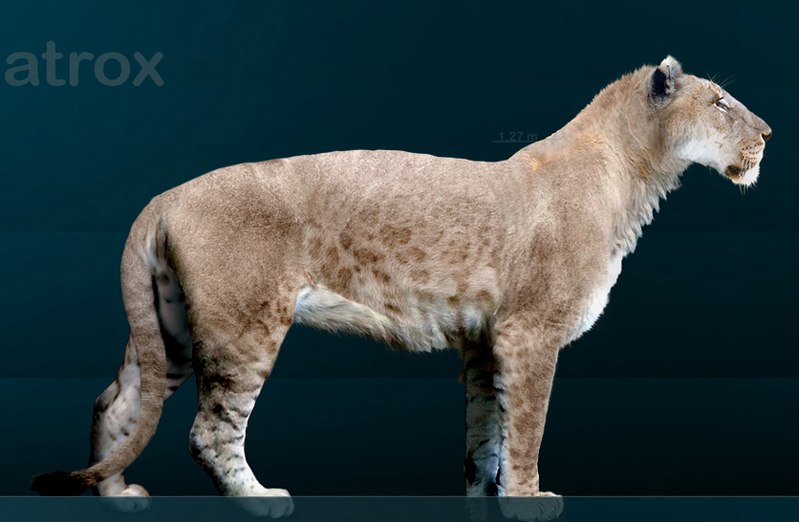
Speaking of which, I finally finished Twilight of the Mammoths, which I began....months ago. I'd wanted to learn more about the megafauna that dominated the Americas before humans arrived. I'm utterly fascinated by the idea of primitive North America as a land of lions and cheetahs, a wilderness teeming more with large life than even Africa. As it turns out, a primary source for learning about ancient mammalian behaviour is...dung. Dung is mentioned more  in Twilight of the Mammoths than it is in Flushed: how the Plumber Saved Civilization. That I mark impressive, but it's versatile stuff, dung. The oh-so-serious dung dissection didn't interact well with my desire to be awed, so my interest trailed off until being reignited by Baxter and Pratchett's The Long Earth, which involves as part of its setting an Earth in which humans never spread to the Americas, and so the native ecology is intact. Twilight exists to argue that human predation ("overkill") was the primary cause of megafauna extinctions in the Americas, as opposed to climate change.  In the decades since Martin released this book, I believe overkill has become the standard explanation, but even so this is a worthwhile book for the curious mind. It puts overkill on solid ground for those new to it, provides a catalog of large animals that were driven into extinction,  and ends with a smaller argument advocating for the restoration of the prehuman ecology, one using still-living animals to replace the many gaps the spread of human civilization created. He suggests, for example, using camels to counter the spread of mesquite in the southwest.  


Tuesday, July 31, 2012

The Ghosts of Evolution

The Ghosts of Evolution: Nonsense Fruit, Missing Partners, and Other Ecological Anachronisms
© 2000 Connie Barlow
291 pages

Grocery stores are excellent places to encounter ghosts. They lurk in the fruit section, feasting on anachronisms.


The biological world is a wondrous web of connections between various animals and plants, and such connections are the source of evolution’s “endless forms most beautiful”. Not only does the contest between predators and prey – a biological ‘arms race’ – drive evolution, creating faster feet, sharper brains, and more discrete camouflage, but the mutually-supportive relationships between species shape them toward one another’s uses, , like leather molding itself into a glove over an offered hand. But what happens to the glove when the hand is ripped away – when one part of a cooperative pair vanishes into the mists of history and leaves its partner alone? Said partner becomes a living anachronism, and such anachronisms and their ghostly partners are the subject of this fascinating bit of science journalism that may be most readers’ introduction to the field of paleoecology.

Like an ethereal spectre waiting at a window for her beloved, every spring trees throughout the western hemisphere produce fruit for animals which no longer exist to consume them. The two American continents once looked very much like Africa,  being home to massive beasts. While some are familiar to us, like the mammoth, others are fantastic (sloths that make grizzlies look like pups?) and still others just seem misplaced, like American species of lions and tigers (andbearsohmy).  Barlow and her associates take a forensic approach to uncovering relationships between extinct and extant species. Although some bits of evidence seem obvious -- fruits and seeds which are too large for the mouth of any living species, but would have been easily gobbled up by the elephant-like gomphotheres --  her work relies on a wide variety of evidence.  Mouth sizes aren't everything: a given animal's intestines must also be taken into consideration. Some fruit require the digestive assistance of bacteria; some seeds need to be softened by stomach acid, or battered by gizzard stones before they can germinate.  So varied are the pieces of the puzzle that Barlow establishes a diagnostic profile for ascertaining if a given species is anachronistic, one that also determines the degree of anachronism.  While some species have found new markets for their produce (so to speak) in the form of horses and cattle brought over from Europe, others see their entire offering of fruit go to waste every year, and have survived the death of the megafauna only because they're exceptionally long-lived species who sometimes get lucky.In addition fruit, Barlow also illustrates how many plants are attempting to defend themselves against the muzzles and digestive systems of animals who haven't been around for centuries


Ghosts of Evolution is one of the most fascinating science books I've read in a long while. Like Sherlock Holmes taking Watson along to investigate a mystery in Victorian London, so Barlow takes the reader through the Pleistocene jungles with a grand mystery of her own. The text isn't as formal as most -- more a journalistic account of Barlow's investigation, and replete with dialogue between herself and a colleague as they puzzle matters through - but it's teeming with interest. Not only does she illustrate the rich biological heritage of the Americas while piecing together the puzzle, but what she does find offers lessons for modern-day conservation efforts. If we can figure out what kind of dynamics kept the landscape healthy in the past, perhaps we can make efforts to restore it. Her epilogue contains information about ecological approaches that have been inspired by work in this field: for instance, the idea that camels should be introduced to the North American desert plains to feast on certain pervasive species of scrub that have been allowed to become overly dominant thanks to a lack of natural predators....a lack created when said predators suddenly disappeared shortly after the arrival of humans in the Americas.