Tuesday, July 31, 2012

The Artificial River

The Artificial River: the Erie Canal and the Paradox of Progress, 1817-1867
© 1997 Carol Sheriff
272 pages


At the dawn of a new century, the two-decade old American republic stood hemmed in between storm-tossed Atlantic ocean and the towering Appalachian mountains. Beyond them lay the west, sparsely settled but full of potential, stifled only by the dangers and isolation of the wilderness. But then the state of New York summoned the will and resources to create a river where there had been none before, to turn the woods and rolling hills to an avenue for expansion. The Erie Canal opened the west to development and changed the nation’s history, but how did it effect the lives of the people who used it and lived along its course? Such is the question Carol Sheriff attempts to answer in The Artificial River: the Erie Canal and the Paradox of Progress.

The Erie Canal was the first major infrastructure project in the early Republic, and changed the relationship between the state government and the people in a variety of ways. First, Sheriff demonstrates, it led to a stronger governmental hand in economic affairs, but the Canal Board allowed people a more direct voice in government than the House of Representatives. “The people” included farmers who were annoyed that access to their land had been limited or the land itself diminished by flooding and the actions of laborers, but the phrase also covered businessmen who were beginning to link their own prosperity with ‘the nation’s” and eager to enlist government financial support in matters that would – quite coincidentally, of course! – improve their own business prospect while furthering the nation's interests. It didn’t include so much the laborers who made the canal possible – the men who dug the ‘ditch’ by hand an in era without mechanized tools, and the boys who helped run the boats up and down the canal, seven days a week, finding their pleasures in the taverns and brothels when they could, and constantly under attack by the wealthy as the scourge of society or viewed as a band of sinners who needed to be saved from themselves by the burgeoning Temperance movement.

Aside from the government becoming more involved in the affairs of life, the canal's presence in people's lives drove home the idea of what was possible. The 19th century would be one dominated by the ever-forward March of Technology. A century earlier, a given technological triumph might be enjoyed only by a particularly wealthy lord or merchant, but in the 19th century progress became a democratic institution. The Erie Canal's swiftness was not limited to the the wealthy: the locks opened and the river flowed for all, and it became an active link to "civilization" for the initial settlers even as it served as the agent of the west's own civilization. Indeed, so quickly did the area along the canal become civilized that it was soon taken for granted and its annual winter closings were greeted not with stoic understanding, but annoyance -- like that which cell phone users experience when experiencing choppiness. The fact that they have their personal phone which is operating by sending signals into space is utterly lost on them in comparison to the impression that they have been inconvenienced. So when the railroads followed the canal down the paths it blazed through wilderness and rendered the marvelous waterway obsolete within only a few decades, no one thought it strange When Thomas Jefferson first heard the proposal to build the canal, he snorted that it would make a fine project in a century. He could have never imagined how much change would be wrought before then.

The Artificial River differs from most Erie histories in that its focus is not on the politics and history of the canal's construction and operation  but on the people whose lives it touched. There it demonstrates what a transitional period the United States was in, shifting from an agrarian republic run by a relative elite to a bustling, noisy commercial democracy where property qualifications were increasingly passe, and the future of the country was in the now very noticeable working class. It's very fine history as far as its focus goes, but for a fuller appreciation of the canal I would probably read it along with other books.

Related:
Bond of Union: Building the Erie Canal and American Empire, Gerared Koeppel

The Ghosts of Evolution

The Ghosts of Evolution: Nonsense Fruit, Missing Partners, and Other Ecological Anachronisms
© 2000 Connie Barlow
291 pages

Grocery stores are excellent places to encounter ghosts. They lurk in the fruit section, feasting on anachronisms.


The biological world is a wondrous web of connections between various animals and plants, and such connections are the source of evolution’s “endless forms most beautiful”. Not only does the contest between predators and prey – a biological ‘arms race’ – drive evolution, creating faster feet, sharper brains, and more discrete camouflage, but the mutually-supportive relationships between species shape them toward one another’s uses, , like leather molding itself into a glove over an offered hand. But what happens to the glove when the hand is ripped away – when one part of a cooperative pair vanishes into the mists of history and leaves its partner alone? Said partner becomes a living anachronism, and such anachronisms and their ghostly partners are the subject of this fascinating bit of science journalism that may be most readers’ introduction to the field of paleoecology.

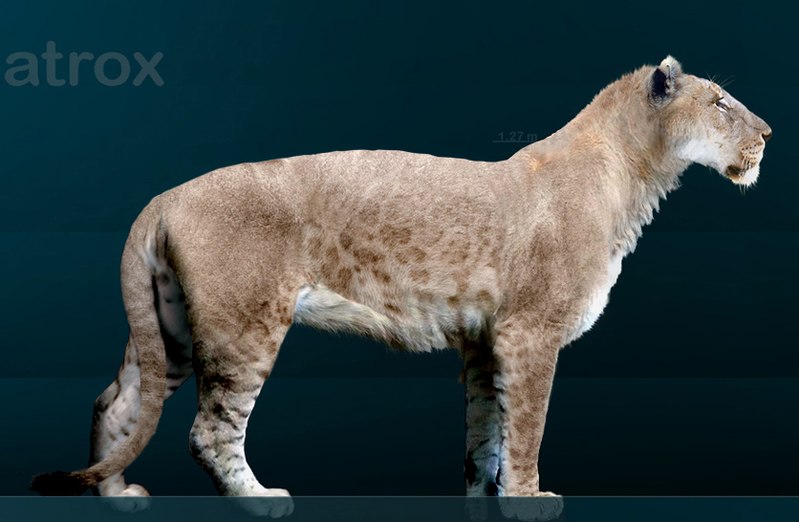
Like an ethereal spectre waiting at a window for her beloved, every spring trees throughout the western hemisphere produce fruit for animals which no longer exist to consume them. The two American continents once looked very much like Africa,  being home to massive beasts. While some are familiar to us, like the mammoth, others are fantastic (sloths that make grizzlies look like pups?) and still others just seem misplaced, like American species of lions and tigers (andbearsohmy).  Barlow and her associates take a forensic approach to uncovering relationships between extinct and extant species. Although some bits of evidence seem obvious -- fruits and seeds which are too large for the mouth of any living species, but would have been easily gobbled up by the elephant-like gomphotheres --  her work relies on a wide variety of evidence.  Mouth sizes aren't everything: a given animal's intestines must also be taken into consideration. Some fruit require the digestive assistance of bacteria; some seeds need to be softened by stomach acid, or battered by gizzard stones before they can germinate.  So varied are the pieces of the puzzle that Barlow establishes a diagnostic profile for ascertaining if a given species is anachronistic, one that also determines the degree of anachronism.  While some species have found new markets for their produce (so to speak) in the form of horses and cattle brought over from Europe, others see their entire offering of fruit go to waste every year, and have survived the death of the megafauna only because they're exceptionally long-lived species who sometimes get lucky.In addition fruit, Barlow also illustrates how many plants are attempting to defend themselves against the muzzles and digestive systems of animals who haven't been around for centuries


Ghosts of Evolution is one of the most fascinating science books I've read in a long while. Like Sherlock Holmes taking Watson along to investigate a mystery in Victorian London, so Barlow takes the reader through the Pleistocene jungles with a grand mystery of her own. The text isn't as formal as most -- more a journalistic account of Barlow's investigation, and replete with dialogue between herself and a colleague as they puzzle matters through - but it's teeming with interest. Not only does she illustrate the rich biological heritage of the Americas while piecing together the puzzle, but what she does find offers lessons for modern-day conservation efforts. If we can figure out what kind of dynamics kept the landscape healthy in the past, perhaps we can make efforts to restore it. Her epilogue contains information about ecological approaches that have been inspired by work in this field: for instance, the idea that camels should be introduced to the North American desert plains to feast on certain pervasive species of scrub that have been allowed to become overly dominant thanks to a lack of natural predators....a lack created when said predators suddenly disappeared shortly after the arrival of humans in the Americas.


Teaser Tuesday (31 July)

Jim Lovell was having dinner at the White House when his friend Ed White burned to death.  Actually, it was't dinner Lowell was having, just finger sandwiches, orange juice, and unmemorable wine laid out on covered tables in the Green Room.

p. 1, Lost Moon: the Perilous Voyage of Apollo 13. Jim Lovell, Jeffrey Kluger

Teaser Tuesday is a weekly event hosted by ShouldBeReading, in which participants share excerpts from their current reads.

Sunday, July 29, 2012

First Family


First Family: Abigail and John Adams
© 2010 Joseph Ellis
320 pages
'Til then, 'til then, I am, as I ever was....yours, yours, yours. 

1776, a musical film which celebrates the Declaration of Independence, is an absolutely delightful movie, as funny as it is inspiring. But increasingly I enjoy it for the tender way it portrays the relationship between John Adams and his distant wife, Abigail.  Committed whole-heartedly to the Revolution, Adams is its most ardent advocate. He struggles throughout the film against the cautious  conservatism of his fellow congressmen, and even his marginal successes seem ruined by the compromises that were necessary to achieve them. In times of crisis, Adams retreats and finds a place to himself....where he finds consolation in the thought of his wife. Throughout the movie, Abigail appears in his thoughts and the two sing and comfort one another, the lyrics and dialogue being taken from their letters. It is those letters that provide the source of this, Joseph Ellis' lovely biography of the Adams family.

Ellis proved in Founding Brothers that he's a gifted storyteller, and the same strength is at play here. It helps that he has such extraordinary characters to write about. Abigail is no prim and proper personality stifled by petticoats: she's strong, vibrant, and independence, giving as good as she gets in terms of political and philosophical conversations as well as sly innuendo  that no one would expect from a couple living in Puritan country.  She is in the truest sense of the word, Adams's partner; his dearest friend and most constant source of intellectual stimulation. Her interest in politics influences his career directly,  and she takes an active hand in his personal and political relationships with men like Thomas Jefferson.  The affection these two feel for one another -- the strength and power of their relationship -- is abundantly evident in their letters, especially when they are estranged during Adams' time as an diplomat in Europe.  Abigail's role as confidant allows the reader to see inside Adams' mind, and the man revealed is endearing for his faults and fascinating in his beliefs.  Adams' progressive realism contrasts with Jefferson's conservative idealism, and demonstrates the frailty of the false liberal-conservative divide. No man is so easy to box up.  Although politics plays a large role given Adams' place in history as revolutionary leader and president,  John and Abigail's family is never far from sight, and the losses they endure can't help but inspire sympathy.

I thoroughly enjoyed First Family. To be sure, it does have the weakness of maintaining a one-sided view of the Revolution that sees Britain as entirely in the wrong; here, Britain is taxing America to pay for its empire just because it's fun to be oppressive like that.  It's also not quite as varied as Founding Brothers, but even so I couldn't stop reading it. (The story of John and Abigail fairly well enraptures me: even though the Fourth is long past, the taste I had of their relationship in Sacred Honor and Founding Brothers only gave me an appetite for more, and I may wind up having to find and purchase a collection of their letters to find satisfaction!).  It's a story of romance, family, and politics -- one which reveals the mind-boggling insanity of the Adams White House, where the second president is beset by friend and foe alike. Not only does his vice president conspire with the French and instruct them not to pay Adams any attention, but a member of his own party has Bonaparte-esque delusions of grandeur and tries not only to run the presidential cabinet in secret, but put himself at the head of an army he can use to root out spies and traitors....like the vice president. If nothing else, First Family demonstrates the remarkable pillar of contrarianism that was Adams more easily than David McCullough' denser biography might.

Related:


Tuesday, July 24, 2012

This Week at the Library (24 July)

I've spent this last week recovering from over-doing it on the French front, zipping through no less than three Star Trek novels for relaxation while working on a science read I received in the post a week or so ago. I've just finished that one ("just", as in no less than ten minutes ago), and comments should follow within a day or two. I plan to focus on science for the next few weeks, and The Ghosts of Evolution was a great start.  There'll be a delay before that reading starts, though, because I just ordered the books. Among their ranks.....THE TELL-TALE BRAIN, by V.S. Ramachandran. Yes, after...two years of waiting, I'm finally going to revisit a man whose first work absolutely astonished me.  In the meantime  look for a little history (The Artificial River: The Erie Canal and the Paradox of Progress) and maybe some fiction.

=============T=H=E===W=E=E=K===I=N===Q=U=O=T=E=S===========
 Grocery stores are excellent places to encounter ghosts. They lurk in the fruit section, feasting on anachronisms.

p. 7, Ghosts of Evolution: Nonsense Fruit, Missing Partners, and Other Ecological Anachronisms, Connie Barlow


Logically, Abigail should have felt torn between her two sides as a traditional New England woman and a fiercely independent personality. But she did not. The apparent contradiction felt to her like a seamless continuity. She could mend a  hem while engaging you in a discussion of Macbeth's fatal flaw. If that caused trouble for some people, that was their problem.

p. 14, First Family: Abigail and John Adams, Joseph Ellis

"It appears that the mother of your untaken road will be joining us," sighed Picard, "Lwaxana Troi is being sent by Betazed to be their representative at the joining of the houses of Graziunas and Nistral aboard the U.S.S. Enterprise."
"Do they ever miss an opportunity to send her off planet?" Riker wondered.
Picard glanced at him. "Would you?"

p. 28, Q-in-Law. Peter David

"Why would Sehra of Graziunas give you a naked young woman?"
"She didn't know my shirt size? I don't know!"

p. 122, Q-in-Law. Peter David.

"I'll get you some tea. Just the way you like it." Riker snapped out of his relationship with the numbers and turned to the replicator. "Tea, Earl Grey, hot."
"Sounds funny with you saying it," Picard remarked.

p. 81, Ship of the Line, Diane Carey


Monday, July 23, 2012

A People's History of the Civil War

A People's History of the Civil War: Struggles for the Meaning of Freedom
594 pages
© 2005 David Williams


No war has left such an impression on the American character as its civil war. That conflict (1861-1865) claimed more American lives than either World War 2 or Vietnam, and remains the only great war to have taken place on American soil. (The war of independence took place here, but didn't occupy or ravage the landscape to any comparable degree.) The memory of it lives on, especially in the south where people fly Confederate flags from their yards and speak still of states' rights and the Cause. Despite its human and material costs, when the war is spoken of it is usually romanticized, depicted a battle between good and evil -- though whether the good was the Union fighting to destroy slavery or the South fighting to defend its rights varies on who is involved in the discussion. Enter A People's History of the Civil War,  a merciless and fascinating treatment that exposes the weaknesses of traditional narratives and butchers illusions. It is both dynamite and bitter medicine -- powerful, necessary, and sometimes painful.

No serious historian would maintain that the Union invaded the South to free the slaves, or that the South severed ties with the Union purely in the defense of principle: anyone with an ounce of integrity would acknowledge contributing economic and material influences. At the very least one might say that the war was simply the violent expression of an conflict between two economic systems, that of the industrial and commercial north versus the traditional, agrarian south.  Williams' account is more direct: the war was about money and power, just the same as any war. Even the abolitionists were motived in part by greed: northern businessmen didn't want their expansion into the west having to compete with the free labor of southern powers.  Although Brooks' work is organized more thematically than chronologically (containing distinct sections on the role of women, labor,  the lives of soldiers, reaction to conscription, the governments' treatment of women etc) he jumps in feet first by critically examining the legitimacy of secession. Contrary to popular belief -- the Confederate government is more loved now than it was when it actually existed -- secession was not a popular mandate. Brooks reveals how election on the question of secession were rigged, stolen, or done away with outright by the planters who saw the election of Lincoln as a threat to their way of life.  Not only was the cutting of ties unpopular: so was the war that followed.  Economic powers in the north were patently unwillingly to allow the south's resources to simply walk away from the union. Following Lincoln's call to arms, support for the two governments' cause rallied briefly, but soon fell away, leading to conscription acts in both parts of the country and fostering popular resentment against the government.  Why did the South lose? The conventional answer of our usual narrative is that the South's lack of material resources doomed her against the industrious north...but Brooks notes on several occasions that the South never lost a battle for want of arms or ammunition: time and again, its weakness was the faltering support of the people for an uninspiring government and a cause not their own: Davis and Lee noted with urgent concern the rising deseration rates in their ranks as early as 1862.

The American Civil War was in short a rich man's war and a poor man's fight: not only was it created by the economic rivalry of competeing business interests, but these same men declined to take part in the fight once it was begun. When the initial emotional spasm of patriotism subsided and the volunteers fell away, both sides instituted conscription acts...but the wealthy were functionally exempt, either for practical reasons (because they could purchase substitutes) or by law (planters with more than twenty slaves were exempt from the draft).  At least the northern elites contributed to the war effort through industrial production: in the south, planters took advantage of increased wartime prices for cotton and shifted emphasis to producing it instead of food, leading to mass and chronic starvation that endured throughout the war.  The producers of war materials also looted soldiers and the government for all they were worth in selling supplies; a practice evidently a staple of American warmaking, for this was a principle complaint of Major General Smedley Butler's War is a Racket, dated 1935 and drawing on suppliers' behavior in the Great War.  The soldiers' experience was generally one of misery:  Brooks documents the inferior food, ghastly medical practices, harsh disicpline (promoted by the contempt of the wealthy officer class for the proles under their command), and the obscene misuse of soldiers using traditional tactics against modern weapons.  A massed body of men in bright uniform makes a marvelous target for the gunners, a fact that Europe learned in 1914. Little wonder that the soldiers and their families at home protested so mightily; little wonder that they deserted. The loyalty they had, Brooks wrote, was to their comrades: though "The Cause" rung hollow after the first year of conflict, few soldiers were willing to simply abandon their friends and comrades to the dangers of war.  They fought on not for the country, but for each other.

Alas, such solidarity is not to be found outside the soldiers' ranks. The war was a truly a civil war, not because it pit Americans from the north and south against one another but because it pit the common people against one another. They're horrifyingly fickle, "the people", first lyching one another for not supporting the war, then for supporting it;  while the tale has a reliable villain in southern planters, there are precious few heroes to be found here in this text where the abolitionists are viciously anti-labor;  the rich abuse the poor, men abuse the women, governments mistreat the Indians, and everybody hates the blacks.   The usual strength of the People's History series is that its infuriating and saddening accounts of exploitation are redeemed by inspiring feats when the people rally together and overcome their oppressors. That never happens here: the people are continually set against one another, and as the bodycount rises one looks for a small sliver of hope in the fact that at least the slaves were freed and the south was forced to modernize. No such luck:  freedmen were trapped in slavery by another name, tenancy-farming, or migrated northward to be abused in the factories by men who were just as fearful and prejudiced as planters of the south.  This is no account for the faint of heart: it will force those who believe in popular sovereignty to face hard questions.  How can a just and peaceful government be possible when people are so easy to set against one another? Such is the question posed to us by the legacy of the Civil War.

A People's History of the Civil War is a mighty contribution to American Civil War literature. It asks questions no other account would, explores facets of the conflict that would otherwise have gone hidden: it ignores military campaigns and politics to look at the lives of the people who were forced to fight and endure through the war. I read about the war obsessively during my high school years, and still time and again Brooks' work left me reeling.   As powerful as it is, it has its weaknesses -- the editing is rough around the edges, and as much as the pages are saturated with primary sources protesting the war or bewailing the rich,  it's easy to cherry pick --  but what it reveals is worth considering for anyone with an interest in the war.


Thursday, July 19, 2012

Ship of the Line

Ship of the Line
© 1997 Diane Carey
320 pages


Two captains, each without a ship. The first, Captain Picard, lost his when it plowed into the surface of Viridian III while he struggled to prevent a grief-stricken madman from destroying a world. The other's, Captain Bateson's, became a historical artifact when he was thrust into the future in the midst of a battle against a Klingon cruiser. His attempt at self-sacrifice saved a starbase from destruction and prevented a war, but his legendary ship is still not viable against the Federation’s modern foes, like the Dominion and the Borg. After running into one another (dozens of times) in “Cause and Effect”, Bateson and Picard’s fates are again linked with the creation of the USS Enterprise-E. While Picard questions his future as ship’s captain, Bateson is eager to earn the captaincy of the not-yet-commissioned Enterprise despite being ninety years behind the times. While Picard is dispatched on a secret mission inside Cardassian lines, Bateson sees cracks in the Khitomer Accords and is eager to prove himself against an old enemy. Thus the two captains struggle for their reputations at the brink of war.

Ship of the Line is a strikingly odd but fun book. Diane Carey seems to have wanted to write a classic naval adventure novel.  Not only do the characters speak and think as though they're living in the Romantic period, but Captain Bateson is a walking anachronism, a man who seems to live in the heyday of the age of "iron ships and wooden men". His ship is a "clipper", and when he's not cheerfully pointing out the etymology of a given expression, he's musing on naval traditions. This combined with his status as a temporal refugee plays off well, though, because Picard relates to this man the way we would relate to someone from the 18th or 19th century.  References to the Horatio Hornblower series abound: not only do quotations from various Hornblower stories start off each section, but  at least two characters seem to have been named after members of Hornblower's crew, which actually spoiled part of the book for me because I knew straightaway  who the turncoat in Bateson's crew was.

TNG fans in general will find a lot to appreciate it here, for Carey gives us a story of Picard and his people after they were off the air, connecting their stories to those of the then-contemporary Star Trek universe.  going for it, giving TNG readers a look at their captain and his crew between ships and connecting their stories  (post "All Good Things...") to Deep Space Nine's Klingon story arc. The novel takes place at the same approximate time as DS9's "Way of the Warrior":  Commander Wof has already accepted a position onboard the station, but the Klingons have not yet invaded Cardassia nor revoked the Khitomer Accorrds. The Federation and the Klingon Empire are thus at peace, but Klingon belligerence strains relations.The Klingon captain whose invasion Bateson thwarted ninety years ago is enraged and humiliated that his 'vanquished' foe is alive and well, and both he and Bateson are easy for a rematch. Relations between the UFP and Klingon Empire are already strained, and the feud may be the firestarter for war. Picard is also engaged with an old enemy -- Gul Madred, the man who tortured him in "Chain of Command". He gets some marvelous comeuppance.

Carey is an efficient writer, never wasting time with extensive transitions or letting a conclusion drag out. The pace is fast, but not hurried, and there are scenes of rich, thoughtful dialogue that allow for a break in the action and give the reader a chance to savor  the interplay between characters -- particularly between Picard and Captain Kirk, who Picard visits in holographic form as a way of searching his own soul. It captures an opportunity that wasn't quite taken advantage of fully in Generations.

Although I've had this novel for years, I shied away from reading it at first because I found the idea of anyone but Picard manning the Enterprise-E to be distasteful. I'm glad I gave it a chance:  its quaintness ensnared my interest, and it fleshes out a hole in the TNG timeline rather nicely with a dandy 'good show'.