Wednesday, August 8, 2018

Force and Motion

 ST DS9: Force and Motion
© 2016 Jeffrey Lang
352 pages


All Miles O'Brien wanted to do was visit a research lab and catch up with an old friend, along with his engineering chum Nog.  He didn't expect to be thrown into a fight for his life, one involving giant robotic spiders and a massive blob of organic materials using a dead engineer's head as a sock puppet. But that's a day in the life of Miles Edward O'Brien.

Force and Motion had two immediate lures for me: first, the friend O'Brien is visiting is none other than Benjamin Maxwell, the captain who went 'rogue' in TNG's "The Wounded", insisting the Cardassians were re-arming and launching a one-man war to stop them.  Maxwell  was cashiered and imprisoned after that,  but it's been twenty years and now he's out and about, actively avoiding any serious responsibilities.  He just wants to serve, why is why a twice-decorated captain is now the maintenance engineer of a private space station.  No one watches "The Wounded" and regards Maxwell as villainous; by the end we know perfectly well the Cardassians are up to mischief, and Maxwell had lost so much at their hands -- his wife and children -- that he was determined they'd never ambush the Federation again.  Maxwell was a good man, merely one who had made an error in judgement, and I was eager to know him better.

The space station was the other lure for me: it's a privately-owned science station. Star Trek and economics are like reality and political rhetoric; they never intersect.  The show writers invariably portrayed business owners as rats and pirates, so I was hoping that a novelist might produce a...well, novel approach.  A privately owned research station,  home to fringe scientists and the hub for otherwise outlawed genetic engineering? Cool!  But....the premise fails to launch.  Our enterprising private-owner-of-a-space-station is not a visionary trying to push science outside the smothering watch of a Federation bureaucracy; he's just an amoral eccentric whose self-absorption gets people killed and absolutely ruins O'Brien and Nog's day off.   We don't learn too much about the kinds of science and tinkering being done, besides (1) bacteria-eating bacteria (2) robot spiders and (3)..rumors of a shrink ray.  

What Force and Motion delivers is good content on the growing friendship between O'Brien and Nog, both of whom have seen their friends drift away.  Maxwell himself is a central character, but mostly we find him in flashbacks, brooding with his shrink and doing things like building robotic legs to amuse himself.  At the end he takes charge of a crisis and earns redemption, which is nice -- but the book's promise never catches fire and delivers for me.

My introduction to Maxwell, with he and O'Brien singing "The Minstrel Boy". Star Trek has introduced me to so much good music over the years...


Tuesday, August 7, 2018

Cloud from the Machine


"The Internet is a funny thing.Then and now, it has been a thing: an infrastructural backbone of immeasurable complexity, a scaffolding over modern life that has grown stronger than the building itself, which seems to have crumbled under its weight. And yet despite its inherent physicality -- the routers, the interchanges, the telephone poles strung with wires, and the fiber optic cables crossing the sea -- we persist in our belief that the Internet is inchoate, a cloud. The phenomenon can be traced back to its origins, to Jake's time. The hardware was built with a purpose, to share computing resources across universities and labs. But the Internet as a communications medium practically willed itself into being, transforming the computer fro ma calculator to a box full of voices. Jake, catching up on emails from the very beginning, could only perceive the future as it was: an information age.

pp. 199 - 200, Broad Band: The Untold Story of the Women Who Made the Internet.

Sunday, August 5, 2018

Inside the mind of a thief

This is a related video for A Burglar's Guide to the City. It's an interview between a Plano City police officer and a three-time offender (Michael Durden) about his experience breaking into homes.  According to the interview,  Duren was a 'thief' and not a home invader -- he avoided running into people, carefully casing homes and limiting his time there to five to seven minutes.  In the video he answers questions about what attracts or deters him from a home,  how he might obtain entry, and how he prioritized targets inside.   I took some notes for those who are curious but not interested enough to watch a 40 minute video.  (I live in high-crime county, so  security issues are never far from my head!)  

 A news story about the interview can be read here.  


NOTES:

  • A well-kept home with a nice fence indicates a target worth robbing.  Durden avoided poorly-kept or ill-maintained homes.
  • Older burglar alarms rely on a wired connection to the telephone system which can be easily cut. Wireless or cellular systems are a stronger deterrent.
  • Simple devices that remotely turn on lights or play sounds on certain triggers (like someone knocking on the door) are a deterrent.
  • Cameras which face down at an angle can be defeated with a cap;  cameras at face level are better for identification, but should be concealed. 
  • Active, nosy neighbors can deter a would-be burglar, as can a car left parked in the driveway.
  • Speaking of neighbors, if  you're out of town for a few days you should ask one to collect your papers/mail. A full mailbox and a driveway littered with papers are an obvious sign that no one is home. A poorly-kept house in a wealthy neighborhood may also give away the fact that its owners are on vacation.
  • Burglars or package thieves can  case neighborhoods by jogging or walking. 
  • Cul de sacs are generally harder for a burglar to operate in: with no through traffic, he's more likely to be spotted as a nonresident. 
  • Transparent doors that allow a good view of the home are attractive but incredibly foolish. Would be thieves can case the inside, looking for  potential entrypoints, the presence of people, or the alarm system, simply by approaching the home and knocking. 
  • For the same reason, windows should be closed and shuttered if no one is at home, as they allow for studied surveillance of the interior.  
  • Lights left on when no one is at home might deter a potential thief,  but said lights should not be left on in the rooms near front/back entries, as they make it easier for thieves to look for security vulnerabilities. 
  • Small dogs, even the yappy kind, won't stop a home invader. Larger dogs probably will. Interestingly, dogs often give away the presence of an owner by looking for them once they become alarmed. 
  • Inside the home, the primary target for Durden was the master bedroom, as he focused on jewelry and cash.  If the home was obviously expensive but little jewelry was out, that indicated the presence of a safe.  Safes are often 'hidden' in the closet. A better place would be the attic or garage, hidden among tools. 
  • Care should be taken about personal information, like drivers' licenses,  checkbooks, etc;  a passing-through thief can use the documents or the information in them to committ identity theft later. 


Saturday, August 4, 2018

Artemis

Artemis
© 2017 Andy Weir
320 pages


"This is a results-oriented profession. The moon's a mean old bitch. She doesn't care why your suit fails. She just kills you when it does."

Jazz Bashara only wanted to engage in a little industrial sabotage to make a quick buck. She didn't intend to poison her entire hometown.  But that's the Moon for ya.    Andy Weir's potent mix of hard science, space exploration, and a smart-aleck central character make a return with Artemis,  in which a perfectly innocent criminal enterprise leads to a mob war. A heist novel in space,  Artemis'  most attractive element is right there in the title: the city of Artemis,  whose technical designs and economy Weir planned out before he wrote the novel.  Artemis is an intriguing look what an established lunar colony might actually look like, and readers explore it through the eyes of a young petty criminal, a woman named Jasmine ("Jazz") Bashara, who knows its systems as well as she knows its underbelly.

Jazz is an interesting character in her own right, an Arabian near-native of the moon.  Artemis restricts immigration by age,  but she arrived at age six with her master-welder father and together they forged a new life for themselves. Although Jazz didn't follow in her father's footsteps -- she accidentally destroyed his shop and livelihood, long story  -- her welding background proves useful when she escalates from smuggling to sabotage. The book's plot is inseparable from science and technical reality,   but Weir also explore social structures.  There's no police force or prisons,  just a constable, but  ne'er do wells do meet retaliatory justice: a pedophile might be beaten by a crowd of incensed parents, for instance, or a wife-beater might have every blow inflicted on his wife imposed on him by the constable. Although I doubt I'll see a lunar colony in my lifetime,  the amount of imaginative and detailed knowledge that went into Artemis made it a fascinating place to explore and accidentally cripple.

Readers of both novels may grouse that Jazz sounds a little too much like Mark Watney.   That's actually fine by me, because they're both amusing to spend time with. Besides, Jazz moved to a frontier town when she was six,  she was raised by a single father and spent her youth working with him in his welding shop, and all of her friends are working-class guys.  Is it really that shocking that she sounds like a guy?

I enjoyed Artemis completely, and if they make a movie of it  I'll be there when it opens.

Related:
The Moon is a Harsh Mistress, Robert Heinlein.  Another lunar-colony story, this one inspired by the American revolution.
The Martian, Andy Weir.  A favorite read from 2014.

Friday, August 3, 2018

Versatile Blogging Award

Sarah of All the Book Blog Names Are Taken has nominated me for a Versatile Blogger's Award, the acceptance of which means I have to share seven facts about myself and then nominate seven other people.   Strangely enough when this award was making the rounds ten years ago I was tagged then, too,  and since I've kind of done it before I'm just going to list facts about myself  and...not nominate anyone.  Vive l'anarchie!


1. Despite being a lifetime resident of a very deep-south state, I don't have a southern accent. At least, not in public. At home the drawl surfaces, but then it's competing with whatever voice I'm playing with at the moment. Certain potable beverages may also illicit a drawl.


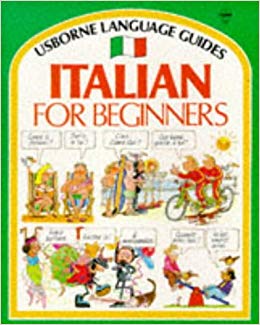
2. I've been fascinated by language in general since I was a kid, and somewhat comically tried to teach myself Italian from a book in 2nd grade. My childhood library still has that same book.  While I've never learned Italian, I have a good elementary Spanish and still retain a little of my college German. I'm currently working on the Spanish with DuoLingo.

3. One of my stranger hobbies is collecting, listening, and memorizing folk music. For obvious reasons I tend to focus on the Anglo-American traditions.  This hobby came from my being exposed to and enchanted by the music of the American Civil War at reenactments.

4. I can't swim. The first time I ever went to a beach was in May 2017, when I stood in the surf of St. Augustine, feeling the sand shift beneath my feet and thinking I get why people become beachcombers now.

5. I've been a Trekkie since I spent three weeks in traction at age 7, unable to read and consigned to watch television all day long from my hospital bed. My favorite series is Deep Space Nine, unrivaled for grand storytelling after the first couple of seasons. Back in the early 2000s my interests in PC gaming and Trek converged to make me the member of a trek-themed gaming clan, StarFleet.   I still have a few friends from those nights -- nearly  twenty years ago now -- when we'd stay up late fighting ship-to-ship battles in ST: Armada.  The game had a sequel made,but


This is an actual screenshot from a buddy of mine and I winning a match of Armada against two other players. Judging by the in-screen chat,  we must have been up to mischief. (I was using the handle, "InnocentBrownBag".)   This would be circa...2001/2002.   


6. I'm a lifelong shutterbug, something that runs in the family.  When I began using reddit last year, it was its user-contributed photographs which drew me in. 

7. I'm an active PC gamer, and have been since I saw a display computer at WalMart running SimCity 2000.    I mostly play older games, however, with the exceptions of The Sims 4 and GTA V.    I have two gaming computers (for different generations of games) and have considered finding a 32-bit Windows 98/XP machine to run legacy titles, but I don't have desk space currently.  My 'favorite' titles are varied, but the most surprising would be Star Trek Away Team (2001). It was not a ground-breaking game, or one with remarkable production quality, but as a young Trek fan the ability to choose my own away team, with different mission developments depending on the people I chose,  was extremely fun.  I was used to the squad-based strategy from Commandoes,  and can still remember  sequences of actions needed to play mission ten successfully. (That mission could be unwinnable based on the order in which you chose your team, because the first two members were instantly separated from the rest, forcing you to solve the first part with your third and fourth choices, and specific gear was needed to rescue them.) I was so into this game I used to write fanfiction about the crew.

Actual screenshot from mission ten of ST Away Team.  


Thursday, August 2, 2018

Machine Man

Machine Man
© 2009 Max Barry
277 pages


Who knew crushing your limbs in the industrial machinery at work could be so addictive?  When Charlie Neumann accidentally crushed his leg in a fit of absentmindedness and was fitted with state-of-the-art prosthesis, he could only stare in dismay. This was state of the art?  Combing his engineering mind, his company's resources, and his ability to fixate on a project beyond all reason, Neumann promptly built a better leg. Then, realizing it would work better as a pair, he decided to recreate his accident and crush the other leg.  When his employer, a research-and-production firm caught on, they didn't fire him and sue him for abusing his insurance and using company materials to make himself a pair of super-legs. Instead, they promoted him.   This has potential, they said. An entire product line. Better Legs! Better Skin! Better Eyes!   We can rebuild him, WE HAVE THE TECHNOLOGY!

Too bad they were kind of evil.  Machine Man is the fourth book by satirist Max Barry, who has previously had fun with novels mocking corporate culture and advertising.  Machine Man definitely has humor, primarily in its main characters' utter obliviousness to social cues and his often deadpan responses,  but it's not absurdist fiction like that that PG Wodehouse. Instead the humor softens what otherwise might be a somewhat horrifying tale of a man who serially butchers himself, awakening the interest in a morally dubious company and empowering them to get even more dubious. Things get rather out of end, with one of the endgame chapters involving a fight to the death between two cyborgs, both of whom are increasingly schizophrenic.  One character winds up as a brain-in-a-box, which takes us to "I have no mouth and I must scream" territory.  While I'm labeling this science fiction, given the contents and transhumanist interest,   I don't know if the nerve interfaces mentioned here were based on any then-current research;  the first that I know of was announced in 2016.

All in all,  I enjoyed this. Of course, I like the author -- I've read most of his previous novels, albiet ten years ago.  I have a certain fascination with the idea of 'augmented humanity', even as most of my being recoils at the idea of it. Barry's combination of humor, emotional drama, and the able use of the company as an amiable villain made it a swift and engaging read. 

Related:
Latest developments in prosthetics, from The Independent

Wednesday, August 1, 2018

Reads to Reels: Ready Player One


The Redbox technician hadn't long placed copies of Ready Player One in my local machine before I eagerly rented one. I experienced the  book a few weeks back, enthralled by the story and Wil Wheaton's delivery of it,  and so launched into this with a stupid grin on my face as the move rolled to Van Halen's "Jump". It didn't take me long to realize this wasn't the story I'd  experienced, but knowing that adjustments have to made for the sake of different mediums, I  resolved to enjoy it nontheless. 

  As a movie it's a perfectly fun action-adventure thriller with a bounty of pop-culture references.  The acting is fine, and the production seamessly integrates live-action scenes and characters with pure-CGI ones, since the characters themselves spend most of their time within a computer-generated gameworld called the Oasis.  For those who haven't read the book,  Ready Player One is set in the near fuure in which everything has gotten worse: poverty, unemployment, the environment, pick your poison. What has improved is massively multiplayer online games, and the only one that matters is the Oasis.  There players can appear  however they like, and visit planet after planet of adventures and activities.   Aside from eating, sleeping, and excretion, everything is done in the Oasis.     When the creator of the Oasis dies, his will invites the entire world to a treasure hunt. He's hidden an Easter egg somewhere in the Oasis,  accessible only to those who find three concealed keys guarded by riddles and challenges.  The reward? Control of the Oasis and trillions of dollars.  Not bad.

While I'm actively resisting the urge to compare the movie too much for the book,  that is in fact the whole purpose of Reads to Reels: to comment both on adaptions' worth in themselves and as re-tellings of literary originals.  The broad outline of the RPO novel and movie are the same, as are its characters -- but the story told is much different. The movie opens with a drag race,  something oddly out of place in the novel's  fantasy-questing theme. The entire atmosphere of the book -- the massive revival of eighties culture inspired by global study of Halliday's own fixation on his childhood -- just isn't there.  Those who watch the movie without reading the book will probably find the eighties soundtrack a little odd, because there's nothing to explain it.

In fairness to the movie, though, the author helped with this screenplay and the mediums of book and cinema have different demands. A big-budget production couldn't have a plot with a lot of pondering over intricate riddles and fooling with text-based games, let alone a sequence where a character has to log into a TRS-180 and play Zork. It's a lot easier to sell a race laden with T-Rex and King Kong as obstacles instead of an eight-bit arcade game as the challenge, I get it.  Ditto for the emphasis on action drama (the lead characters are in mortal peril for pretty much the entire movie), instead of Parzival's  relationships with his friends, the turmoil their bonds undergo, and the growing realization that a planet lost in the Oasis is just..wrong.  Instead we get action-adventure and then we're hit with the reality/unreality moral  with all the subtly of a baseball bat.

While Ready Player One is a fun action movie, one I wouldn't mind watching again,  it doesn't succeed as an adaptation of the original for me.

On a side note,  I was amused that my mental image of the villain, casting him as Ben Mendelsohn, proved to be on the nose, as he appears here as the big bad. (I was mostly inspired by his performance in The Dark Knight Rises.) I didn't care for the characters in-game avatars, particularly Art3mis, but that's subjective. I imagined her as the hero of Dungeon Siege: 


 The producers went a...different direction. 


 That's not a cartoon of the character, that's how the character actually looks  Kind of like a cat.